


Black Framed Pencil Drawing
A black framed pencil drawing brings intimacy and immediate hand-rendered detail to a wall, offering direct contact with the artist's initial mark.
Black Framed Pencil Drawing
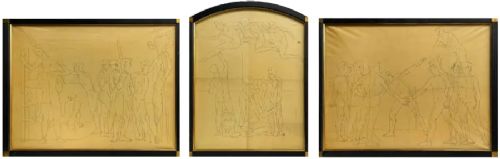
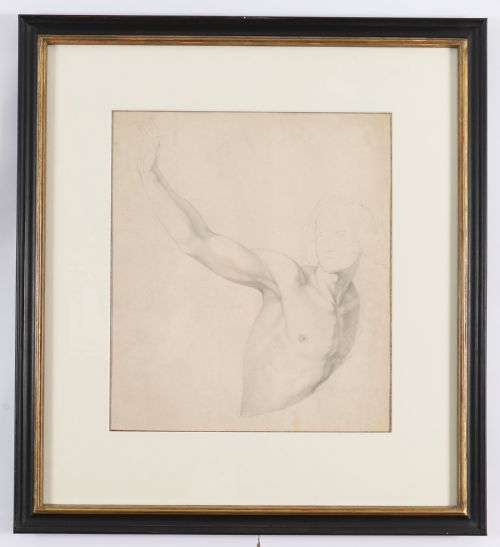
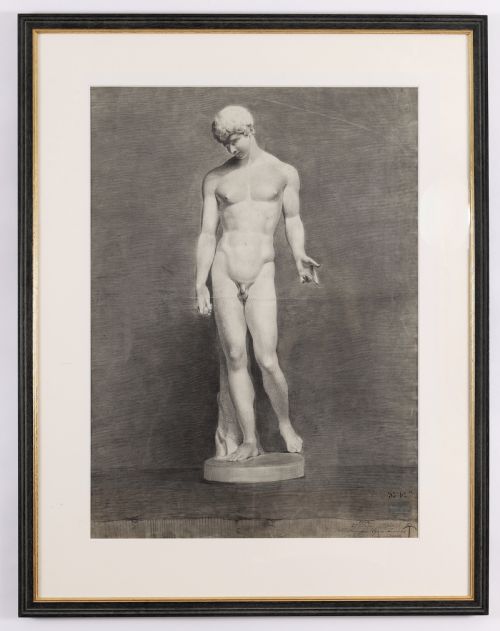
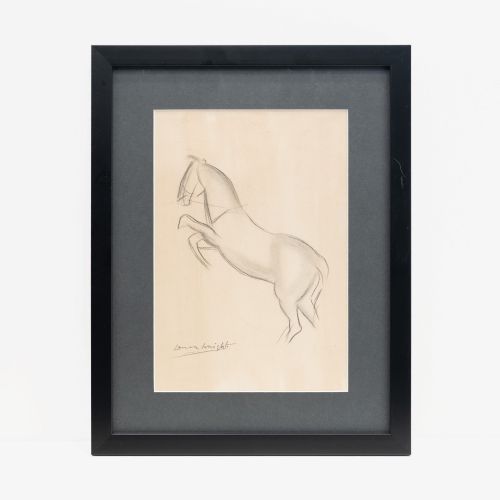
A black framed pencil drawing encompasses works executed in graphite, plumbago, charcoal, and ink on paper, spanning from the Georgian period through the nineteenth century and into mid-century modernism. Buyers exploring black framed pencil drawing find various forms ranging from figural studies and portrait miniatures to architectural and landscape scenes.
Origins stretch across British, American, and African schools, showing diverse regional hands at work within these centuries. The framing typically consists of dark wood which anchors the delicate monochromatic lines of the paper within a stark border.
Materials and technique
The physical foundation relies on paper supports marked with graphite, pencil, charcoal, plumbago, or ink. Artists sometimes combined mediums, integrating chalk or watercolour alongside the primary pencil lines to build depth and tone.
Protective glass covers the delicate paper surfaces, held inside wood frames that are frequently finished in black to complement the dark monochrome media. Gold leaf occasionally appears as an accent within the framing or presentation.
The selection spans multiple centuries, incorporating Georgian plumbago portraits, nineteenth-century academic studies, and mid-century modern modernist sketches on paper.
Assessing quality and execution
Quality rests upon the sureness of the draughtsmanship and the expressive precision of the line work. Stronger examples display confident control of tone and perspective, whether capturing a portrait subject or architectural rigging.
The significance of the subject and the recorded provenance also separate standard studio exercises from important exhibition pieces. Works by documented artists or those carrying historical association command greater attention from collectors.
James Stroudley·John Taylor·Dame Laura Knight·Demetrios Galanis·Michael Lyne·J D Fergusson·Raoul Millais·James Ferguson·Fred Lawson·Ernest Borough Johnson
The Black Framed Pencil Drawing Glossary
- Plumbago
- A delicate drawing executed in graphite, named after the Latin word for lead ore. These finely rendered works were particularly popular during the Georgian period for intimate portraiture.
- Graphite
- A form of carbon used as the core material in pencils, allowing artists to achieve varied tones from soft greys to deep blacks. It forms the primary medium for many traditional sketches.
- Deux crayon
- A drawing technique utilising two distinct coloured chalks or pencils on tinted or white paper to create tonal contrast and highlights. This method adds sculptural volume to monochromatic compositions.
- Figural study
- An artistic practice piece focusing on the human body or specific anatomical forms, often created to test composition before painting a larger canvas.
- Academic realism
- An artistic style governed by the rigorous standards of nineteenth-century European art academies, prioritising precise observation, anatomical accuracy, and classical proportions.
Black Framed Pencil Drawing: Frequently Asked Questions
How should I hang a paper drawing?
Keep drawings out of direct sunlight to prevent the paper from yellowing and the graphite from fading over time.
Ensure the room maintains stable humidity levels so the paper support does not warp inside the frame.
What is plumbago?
Plumbago refers to early graphite portraiture executed with exceptional fine detail, often found in Georgian pieces.
These delicate works require secure glass glazing to protect the soft graphite powder from smudge damage.
How do I date an old drawing?
Examine the watermark on the paper, the style of the script in any inscriptions, and the framing materials.
Stylistic conventions of the period, such as clothing in portraiture or academic hatching techniques, also provide clear chronological clues.
Are these works original art?
Every piece recorded here is an original hand-drawn work rather than a mechanical print or reproduction.
Signatures, artist studio stamps, and direct graphite impressions on the paper surface confirm their unique status.