



Black Frame Mantel Mirror
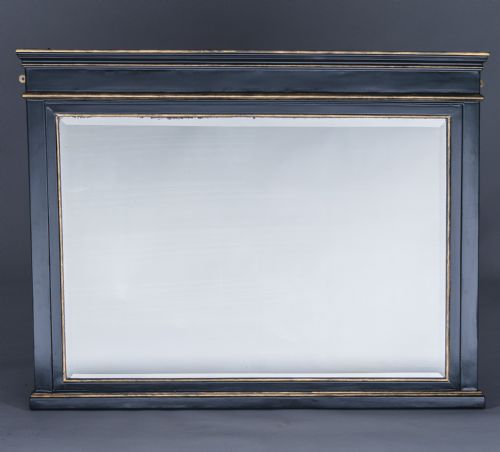
A black frame mantel mirror brings gravitas and focus to a room, offering deep dark mouldings and reflective glass that command the space above a fireplace.
Black Frame Mantel Mirror
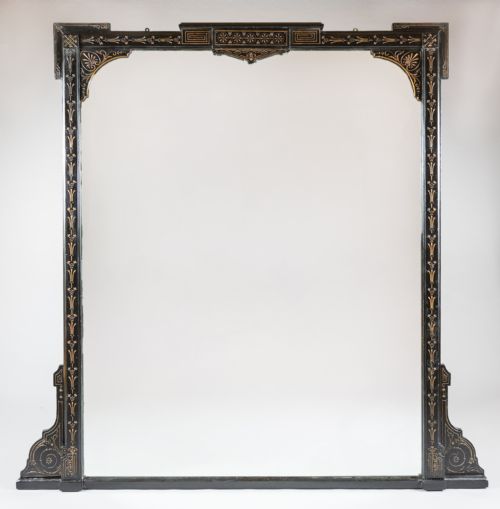
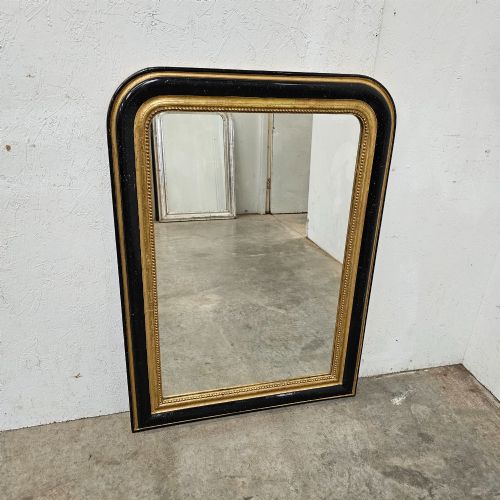
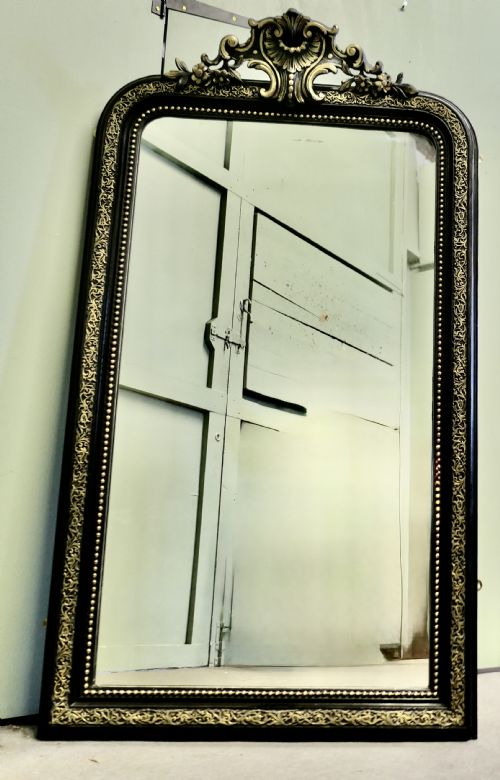
A black frame mantel mirror is typically a large architectural glass plate set within a heavy timber frame, designed specifically to sit upon a chimney breast. These pieces mostly date from the nineteenth century, encompassing Victorian, Napoleon III, and Louis Philippe periods.
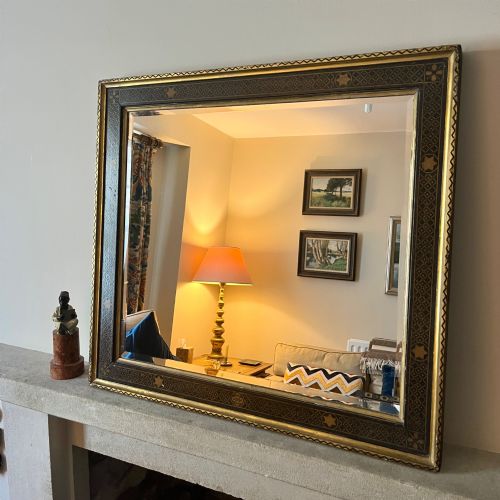
The dominant forms on this page are substantial overmantle mirrors, featuring arch tops and rectangular formats built to anchor grand principal rooms. Makers frequently utilised ebonised finishes paired with parcel-gilt highlights to create striking contrast against light walls.
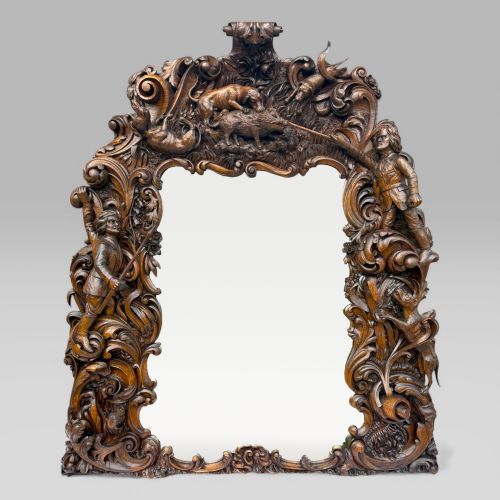
Beyond standard Victorian examples, the selection includes pieces displaying Aesthetic Movement design, carved oak hunting lodge motifs, and painted or parcel-silvered surfaces. Each variation reflects the period taste for dark, imposing woodwork combined with reflective depth.
How they were made
The construction relies on solid wood frames, often carved from oak or pine, which receive successive layers of gesso to build up intricate ornamentation. Artisans then apply ebonised finishes to the timber, turning plain surfaces into deep black woodwork.
Gilding and parcel-silvering bring brilliance to the dark frames, using gold leaf or metallic paint applied selectively to raised mouldings and carved details. Heavy glass plates are secured within these rebated frames to withstand the substantial scale of the overmantle format.
Black Frame Mantel Mirror Retail Price Guide 2026
Typical asking prices for black frame mantel mirror among the pieces listed under this phrase on Sellingantiques today, from the lower quarter to the upper quarter. They describe what is for sale here now, not the wider market.
Materials recorded across these items include ebonised wood, gesso, gold leaf, and painted timber surfaces.
What varies in quality
The sophistication of the frame carving and the crispness of the gesso moulding distinguish superior examples from simpler production. Master craftsmen achieved sharp relief and balanced proportions that elevate the entire object.
The depth and integrity of the ebonised finish, alongside the preservation of original gold leaf or parcel-silvering, mark the better pieces. Furthermore, the clarity and original character of the heavy glass plate dictate the visual weight of the mirror.
The Black Frame Mantel Mirror Glossary
- Ebonised wood
- Timber treated with stain, dye, or paint to imitate expensive ebony. This dark finish became immensely popular during the Victorian and Napoleon III periods for creating stark contrast.
- Overmantle mirror
- A large horizontal or arch-top mirror designed explicitly to hang or rest upon the mantelpiece above a fireplace. These pieces were scaled to fill the visual space of the chimney breast.
- Parcel-gilt
- A decorative technique where only specific portions of an object are gilt with gold leaf. It highlights raised mouldings and carved details against a contrasting background.
- Aesthetic Movement
- A late nineteenth-century design style emphasising visual beauty over narrative subject matter. Pieces from this movement often incorporate clean ebonised surfaces with subtle gilt detailing.
- Napoleon III style
- A French nineteenth-century design aesthetic known for opulent eclecticism and rich surface treatments. These mirrors frequently combine dark frames with elaborate gilt ornamentation.
Black Frame Mantel Mirror: Frequently Asked Questions
Where should a black frame mantel mirror be hung?
These mirrors are proportioned to rest on a chimney breast directly above a fireplace, anchoring the vertical space of the room.
They also function effectively mounted securely to a main living room wall, provided the wall structure supports the heavy weight.
How do I identify a Victorian mantel mirror?
Victorian examples typically display heavy ebonised wooden frames, often featuring arch tops and parcel-gilt highlights.
They frequently incorporate materials like gesso and heavy glass plates characteristic of nineteenth-century manufacturing methods.
What is an ebonised finish?
An ebonised finish is a treatment applied to wood to simulate solid ebony by turning the timber a deep, uniform black.
Craftsmens used stains and paints during the nineteenth century to achieve this dark, formal appearance on decorative frames.