
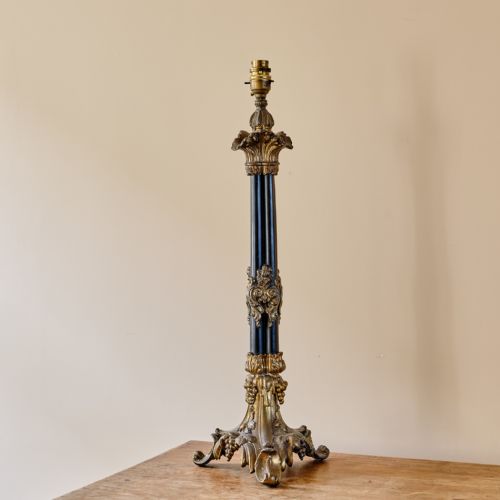
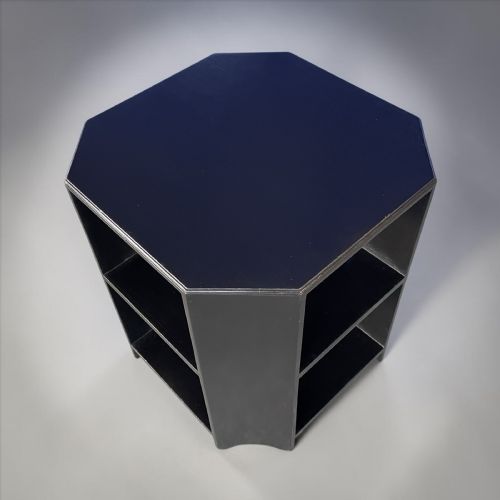
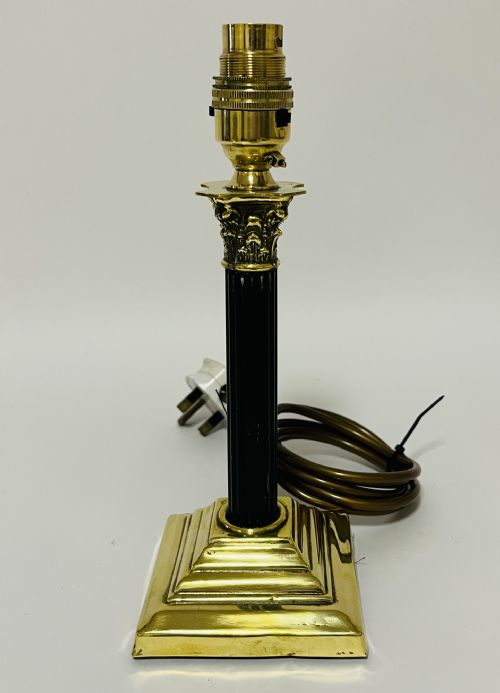
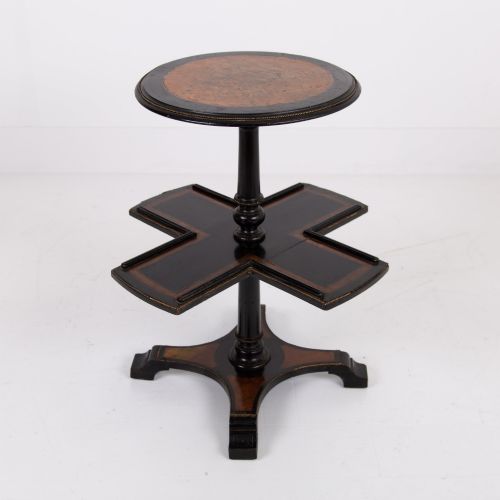
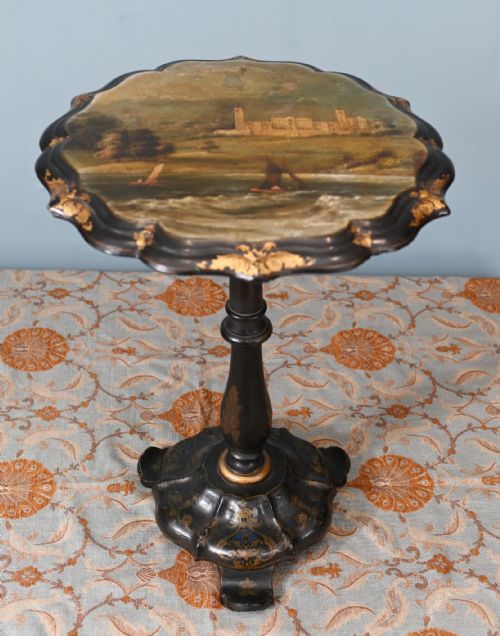
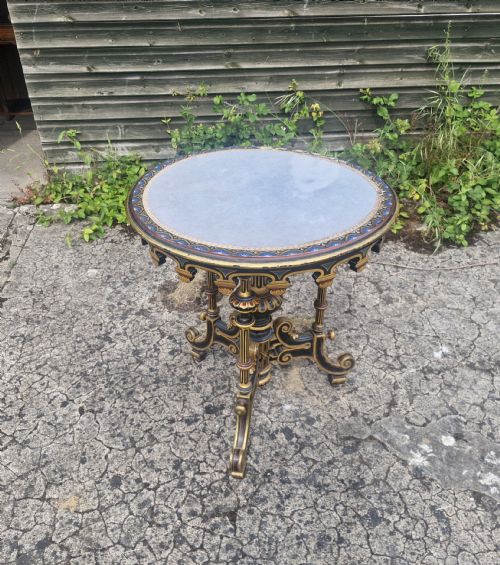


Black Ebonised Lamp Table
A black ebonised lamp table brings dark, heavy presence and sharp silhouette to a room, offering a functional surface rooted in centuries of dark wood craft.
Black Ebonised Lamp Table
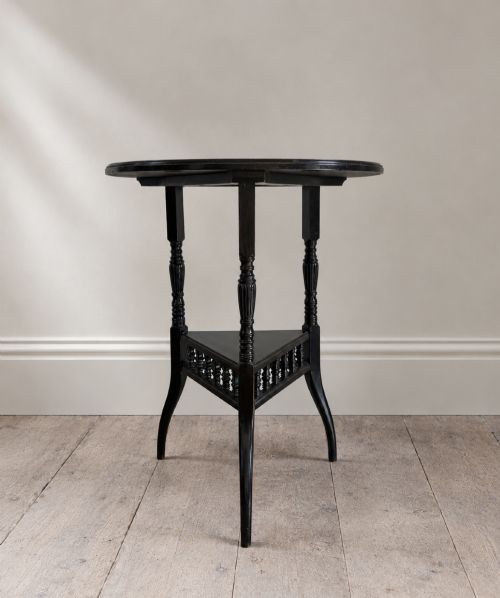
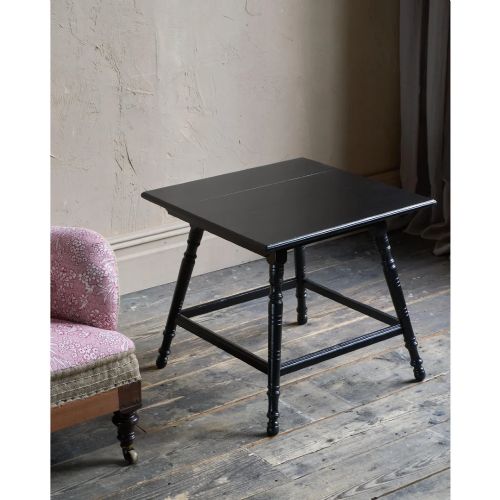
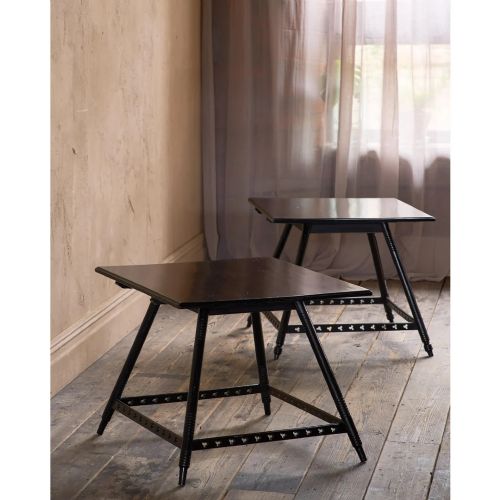
A black ebonised lamp table appears primarily across nineteenth-century Victorian and Aesthetic Movement periods, alongside later Art Deco examples. These pieces typically manifest as side tables, occasional tables, two-tier tables, and occasional stands designed to hold lamps or display ornaments.
Makers and designers of the nineteenth century drew inspiration from Japanese design, Moorish styles, and classical revival forms, resulting in diverse structural silhouettes. The selection ranges from circular and square occasional tables to multi-tiered etageres and pedestal tables.
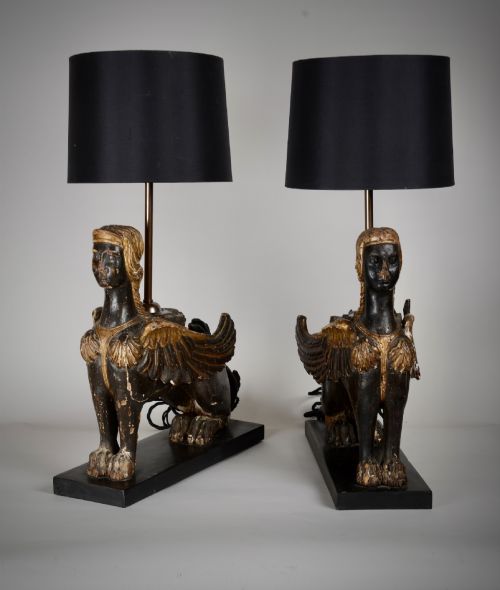
Buyers encounter forms executed in ebonised hardwood, ebonised elm, and painted woods, frequently accompanied by contrasting brass, bone inlay, marquetry, or gilt highlights. The versatile scale of these small tables suits placement beside seating or in hallways.
How they were made
Cabinet makers utilised dense hardwoods, staining or painting timber black to imitate expensive ebony, a technique central to the creation of an ebonised lamp table. Surfaces were often layered with black lacquer or paint, sometimes finished with fine hand-painted decoration or gilding.
Construction methods incorporated brass fittings, gilt brass elements, marble inserts, and intricate bone inlay or marquetry details. Artisans joined tiers and pedestals using traditional cabinet-making joints designed to support the weight of heavy lamps and decorative objects.
Some nineteenth-century tables served double duty as whimsical gypsies' stands, bringing portable dark elegance directly to the Victorian parlour tea service.
What varies in quality
The standard of execution rests upon the depth of the ebonisation process, the crispness of turned or carved details, and the integrity of secondary timbers. Superior pieces display precise joinery, stable tier construction, and well-preserved surface decoration without heavy flaking of the black finish.
Material refinement separates standard production from exceptional work, particularly the inclusion of hand-painted motifs, inlaid bone, marquetry panels, or cast brass mounts. The presence of authentic period hardware and sound structural weight dictates the standing of an individual table.
Hindley and Sons·Bertram and Son·Gillows·Liberty·EW Godwin
The Black Ebonised Lamp Table Glossary
- Ebonised
- Wood treated with stain, paint, or chemical processes to imitate the dark, dense appearance of solid ebony. This finish became especially popular during the Victorian and Aesthetic periods.
- Aesthetic Movement
- A late nineteenth-century design style emphasising art for art's sake, drawing heavy influence from Japanese art and employing clean ebonised surfaces with gilt or painted accents.
- Etagere
- A set of open shelves or tiers used for displaying small objects or lighting. These pieces often feature multiple levels supported by slender ebonised columns.
- Marquetry
- Decorative veneer applied to furniture structures in geometrical or pictorial patterns. Sorrento and Victorian examples frequently incorporate contrasting light woods or bone.
- Chinoiserie
- European imitation and interpretation of Chinese and East Asian artistic traditions. It appears on black lacquered surfaces with painted motifs of figures, landscapes, and flora.
Black Ebonised Lamp Table: Frequently Asked Questions
What is an ebonised lamp table?
An ebonised lamp table is a small occasional table finished in a dark, black stain or paint designed to mimic ebony. These tables were produced extensively during the Victorian and Aesthetic Movement eras to hold heavy oil lamps or decorative items.
They appear in various forms including square, circular, and multi-tiered designs, often incorporating brass, gilt, or inlaid details. Their compact dimensions make them suitable for placing beside seating or within hallways.
How do I identify an Aesthetic Movement table?
Aesthetic Movement tables typically date from the late nineteenth century and feature ebonised wood surfaces with minimalist or Japanese-inspired geometry. Look for slender legs, contrasting gilt or painted highlights, and tiered shelving structures.
Many examples reflect the design principles associated with makers such as EW Godwin, prioritising functional form and exotic ornamentation over heavy Victorian carving.
Can these tables support modern lighting?
These tables were originally built to support heavy nineteenth-century oil lamps and decorative objects, meaning their structural frames are generally robust. Modern electrical table lamps sit securely upon their flat top surfaces.
Multi-tiered examples also provide lower shelves for storing books or managing cords, though placing items carefully protects delicate painted or lacquered surfaces from scratching.
How should I care for ebonised wood?
Ebonised wood surfaces require gentle cleaning with a soft, dry cloth to remove dust without abrading the dark finish. Avoid using harsh chemical cleaners or excess moisture, which can degrade the black stain or paint.
Applying a light, neutral wax occasionally helps protect the timber and maintains the subtle sheen characteristic of nineteenth-century furniture finishes.