




Gilded Victorian Accent Table
A gilded victorian accent table brings warmth and reflected light to a room through gold leaf, brass, and carved wood.
Gilded Victorian Accent Table
When you search for a gilded victorian accent table, you find decorative smaller surfaces produced during the nineteenth century alongside related pieces in revival and adjacent styles. The selection spans occasional tables, side tables, and centre tables, often finished with gilt or brass highlights.
You are most likely to meet examples incorporating mahogany, marble tops, and lacquered surfaces from the Victorian period and the decades immediately following. These items function practically as lamp tables and tea supports while serving as prominent decorative focal points.
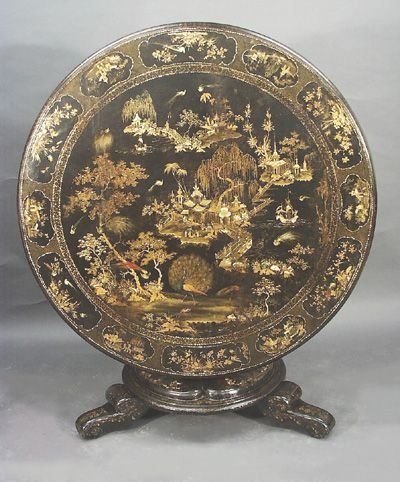
The materials reflect a period of confident eclecticism, encompassing Chinoiserie lacquer, Aesthetic Movement designs, and ornate French influences. Each piece demonstrates how nineteenth-century makers combined utility with rich surface decoration.
How they were made
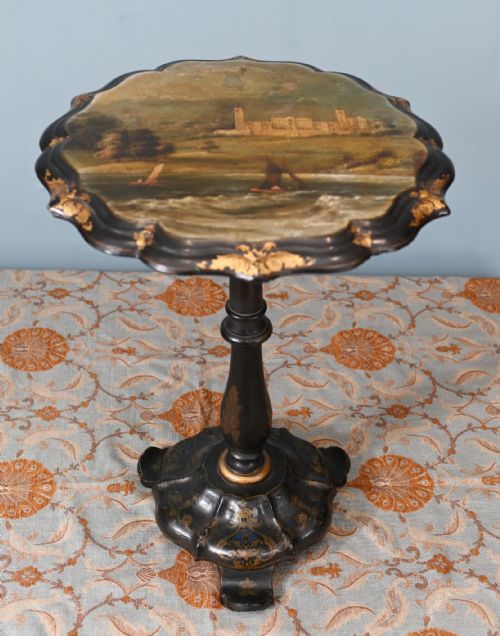
The construction relies on solid timbers like mahogany and engineered frames finished with black lacquer, gold leaf, or applied ormolu. Artisans united cabinetmaking with surface ornamentation, employing hand painting and japanning to create glossy, decorative finishes.
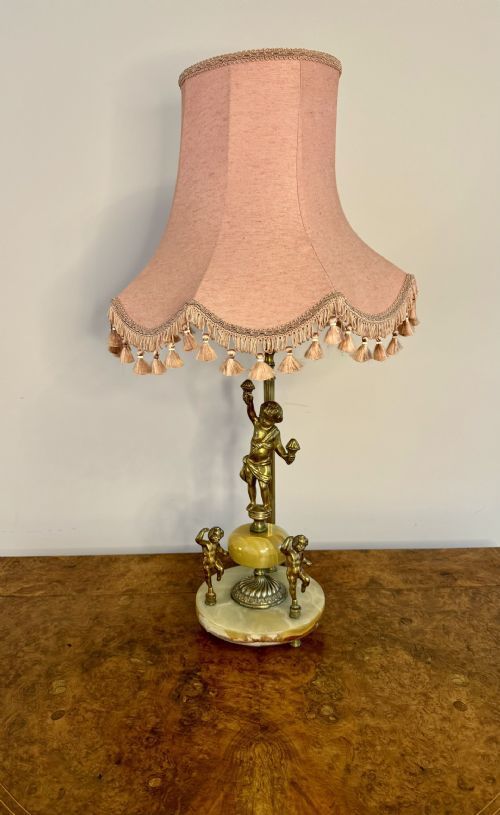
Many examples incorporate inset marble tops, brass mounts, and carved wooden supports that required specialised joinery and metalworking skills. Ormolu mounts and cast brass elements provide structural accents and decorative contrast against dark wood or fabric surfaces.
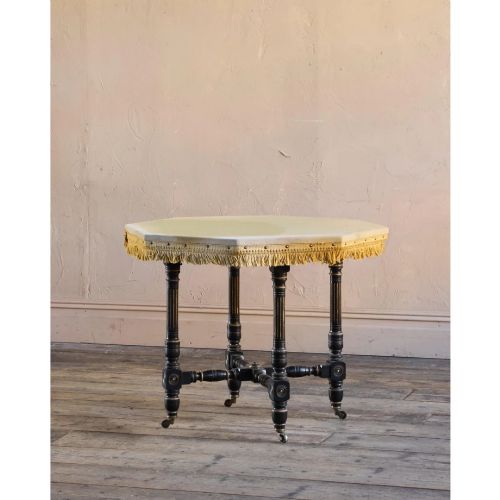
One unexpected survivor wears red velvet beneath its bobbin-turned frame, proving Victorians loved texture just as much as gold.
What varies in quality
The distinction between tiers of production rests on the depth of hand carving, the weight and finish of cast brass or ormolu mounts, and the preservation of original gilding and lacquer. Superior pieces display crisp detailing in the woodwork and refined application of gold leaf rather than plain painted substitutes.
Subtlety of design and the integrity of secondary woods further differentiate the range, as better workshops utilised high-grade mahogany and superior marble slabs. Original surface treatments and intact decorative schemes carry greater visual cohesion than later alterations.
Hindley And Sons
The Gilded Victorian Accent Table Glossary
- Ormolu
- Gilded bronze or brass used for decorative mounts and furnishings. It provides a bright metallic contrast against dark timber surfaces.
- Japanning
- A European imitation of East Asian lacquerwork achieved through layered varnishes and heat curing. This technique produced glossy black and red decorative surfaces.
- Boulle-work
- Inlay work utilising tortoiseshell and brass, named after a master cabinetmaker. It creates ornate patterned surfaces on luxury furniture.
- Tripod table
- A small freestanding table supported by three legs. This form allowed for stable placement on uneven floors.
- Occasional table
- A small, movable table designed for specific, temporary uses within a room. These pieces provide flexible surface space.
Gilded Victorian Accent Table: Frequently Asked Questions
Where were these tables placed?
These tables sat in principal reception rooms, drawing rooms, and hallways as decorative surfaces for lamps, ornaments, or tea.
Their compact scale allowed them to be moved easily to wherever an extra surface was required during social gatherings.
How do I care for gilt surfaces?
Gilt and lacquered surfaces require gentle dusting with a soft, dry cloth to prevent abrasion of the delicate gold leaf.
Moisture and harsh cleaning agents must be avoided entirely to preserve the original nineteenth-century finish.
Can these tables support heavy objects?
Most occasional and side tables are designed for moderate loads such as lamps, books, or decorative porcelain.
Heavier items like large marble figures require robust centre tables or reinforced frames to prevent structural strain.
How do I distinguish Victorian from Edwardian pieces?
Victorian examples often feature heavier proportions, rich dark timbers, and ornate ornamentation drawn from historic revival styles.
Edwardian pieces generally lean towards lighter structures and refined, simplified interpretations of earlier decorative traditions.