
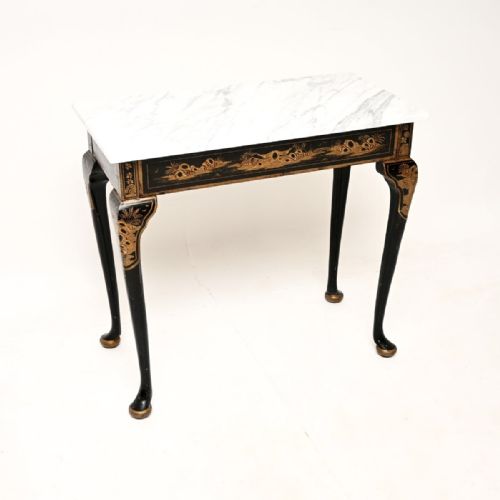
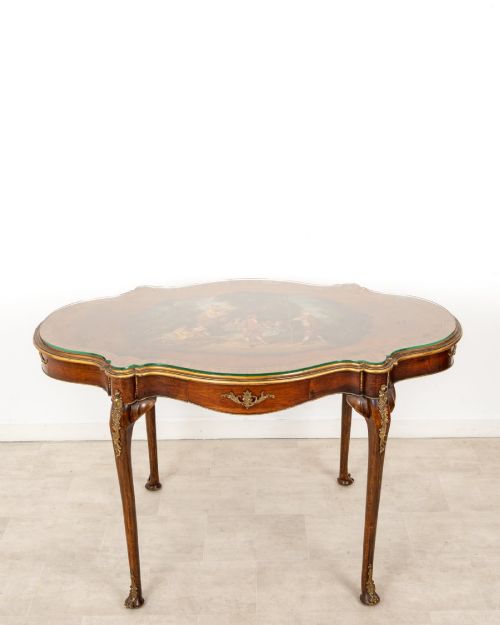
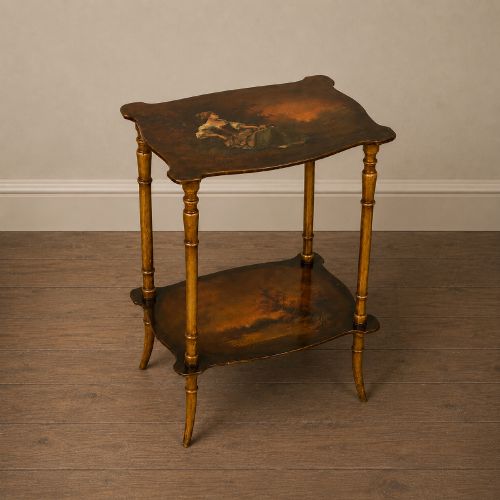
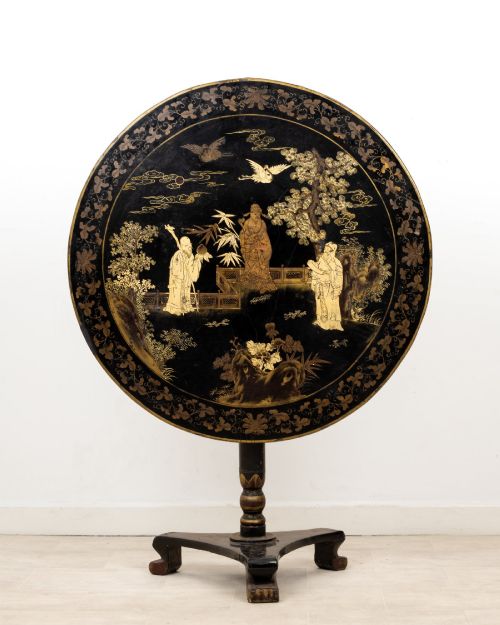
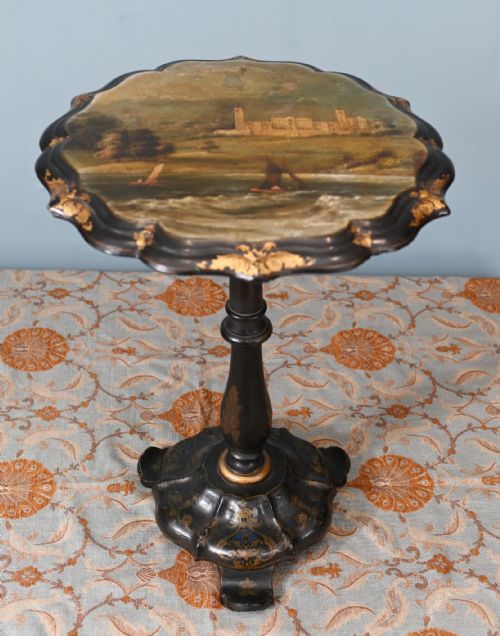
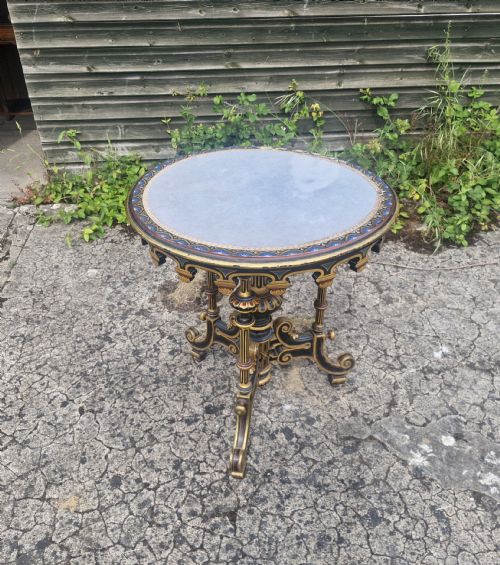


Gilt Painted Occasional Table
A gilt painted occasional table brings a bright, decorative touch to a room, functioning as a handy stand for lamps and small objects.
Gilt Painted Occasional Table
When you search for a gilt painted occasional table, you encounter a variety of forms designed for light use in domestic interiors across different periods. The selection includes side tables, centre tables, nested sets, and tray tables adapted for daily utility.
Most examples originate from the nineteenth century and the Edwardian era, spanning styles from Victorian Chinoiserie and Louis XV to Regency and neoclassical designs. These small tables appear in formats such as two-tier étagères, tilt-top tables, and pedestal stands.
Makers utilised diverse regional aesthetics, incorporating Italian, French, Chinese, and Japanese influences alongside British Victorian craftsmanship. Each form serves a specific function, whether acting as a bedside lamp table or a drawing-room centrepiece.
How they were made
Wood serves as the primary structural material, often paired with papier-mâché for lightweight tray tops or combined with marble inserts for durability. Artisans applied multiple layers of paint and lacquer to the timber base before introducing decorative motifs.
Gilding techniques involved the application of gold leaf or parcel-gilt highlights to accentuate carved details, mouldings, and edges. Hand-painted floral scenes, Chinoiserie landscapes, and porcelain mounts completed the decorative surface.
Listings feature wood, papier-mâché, marble, and gold leaf applied across Victorian, Edwardian, and Regency styles.
What varies in quality
The distinction between standard and superior pieces rests on the finesse of the hand-painted decoration and the crispness of the gilt work. Finely executed Chinoiserie scenes or intricate mother-of-pearl inlay elevate a piece beyond basic surface ornamentation.
Construction methods also dictate standard, where stable joinery and original stands for detachable trays demonstrate superior workshop origin. The integrity of the underlying lacquer and the preservation of the original painted surface determine the overall standing of the object.
E Daligny
The Gilt Painted Occasional Table Glossary
- Chinoiserie
- European decorative style reflecting Chinese artistic traditions, featuring motifs of figures, pagodas, and landscapes rendered in paint and lacquer.
- Étagère
- A piece of furniture consisting of open shelves for displaying small objects, appearing here in multi-tiered side table formats.
- Parcel-gilt
- Wood or metal partially gilded with gold leaf, leaving portions of the painted or polished base material exposed.
- Papier-mâché
- A composite material made from paper pulp mixed with glue, moulded and lacquered to form durable table and tray tops.
- Vernis Martin
- A simulated Japanese lacquer technique developed in France, known for its translucent and polished decorative finish.
Gilt Painted Occasional Table: Frequently Asked Questions
What is a gilt painted occasional table used for?
These tables provide a portable surface for lamps, drinks, and decorative items within reception rooms and bedrooms.
Their lightweight construction allows them to be moved easily as needed for entertaining or daily tasks.
What periods do these tables come from?
The available pieces span the nineteenth century, the Edwardian era, and the early twentieth century around 1930.
Styles range from Victorian Gothic Revival and Louis XV to Regency neoclassical and Chinoiserie.
How do I care for a lacquered surface?
Lacquered and painted surfaces require gentle dusting with a soft, dry cloth to protect the delicate finish.
Avoid placing these items in direct sunlight or near heat sources to prevent the paint and gilt from cracking.