
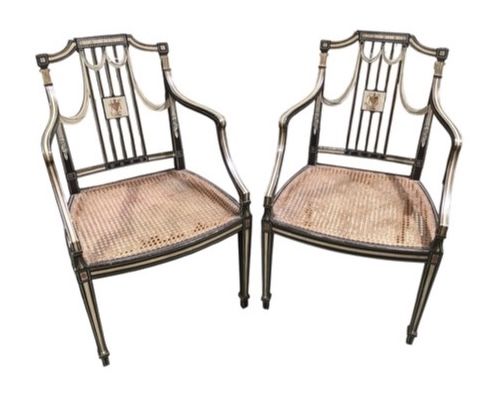


Black Ebonised Dining Chairs
Black ebonised dining chairs offer dark, striking silhouettes shaped across the eighteenth, nineteenth, and early twentieth centuries in Regency, Victorian, and Arts and Crafts styles.
Black Ebonised Dining Chairs
Black ebonised dining chairs encompass seating designed to mimic costly ebony through dark finishes, spanning side chairs, armchairs, and salon chairs. Buyers encounter forms ranging from George III and Regency models to Victorian and Arts and Crafts interpretations.
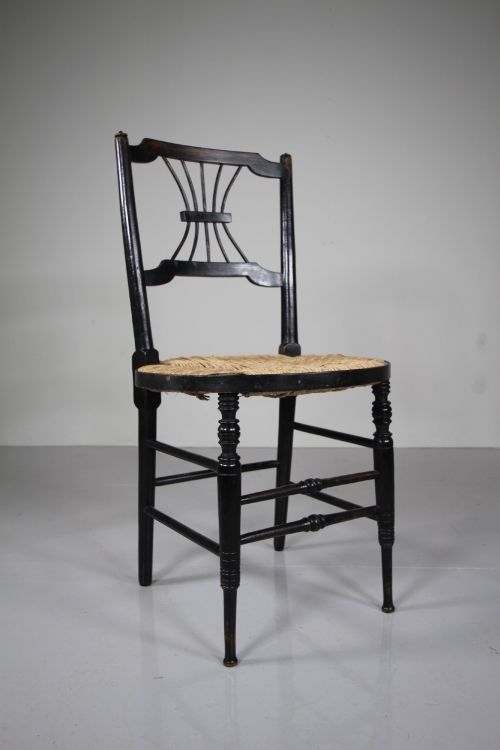
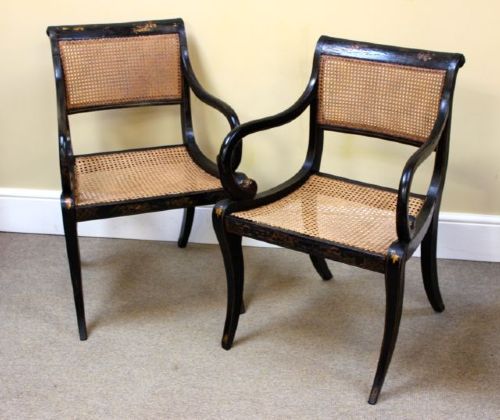
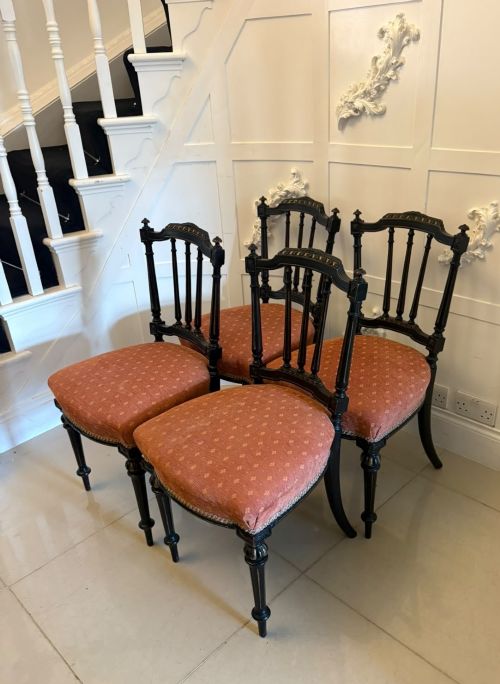
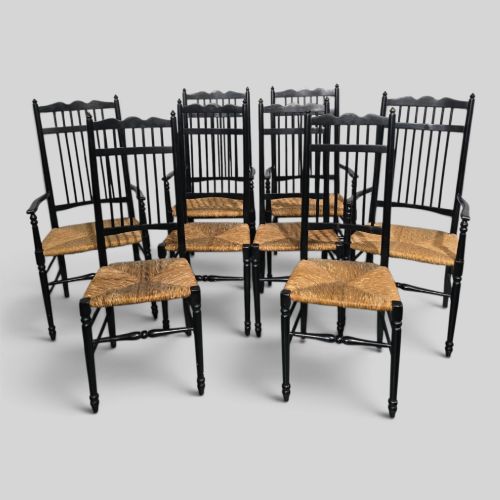
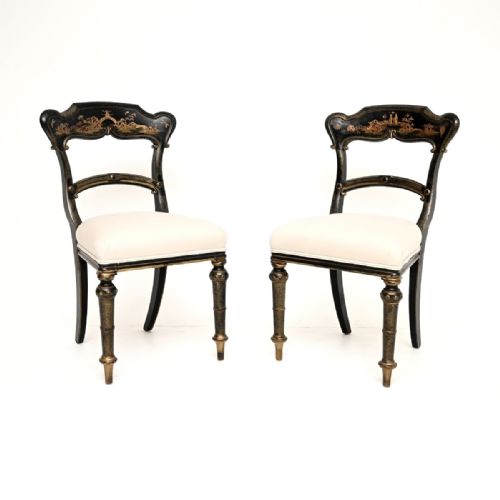
The selection on this page shows significant variety in framework and seating material, including caned panels, rush, fabric upholstery, and painted or gilded decoration. Pieces vary from single decorative bedroom chairs to large sets intended for formal dining rooms.
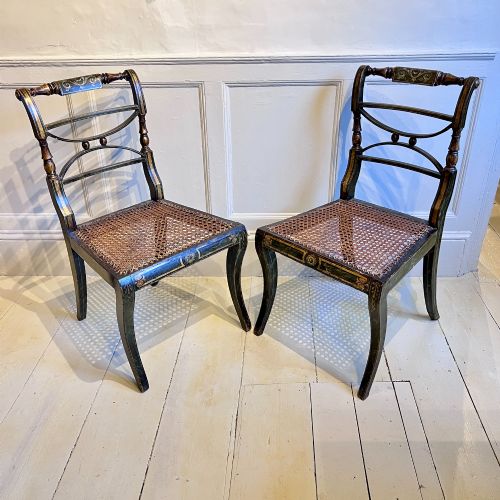
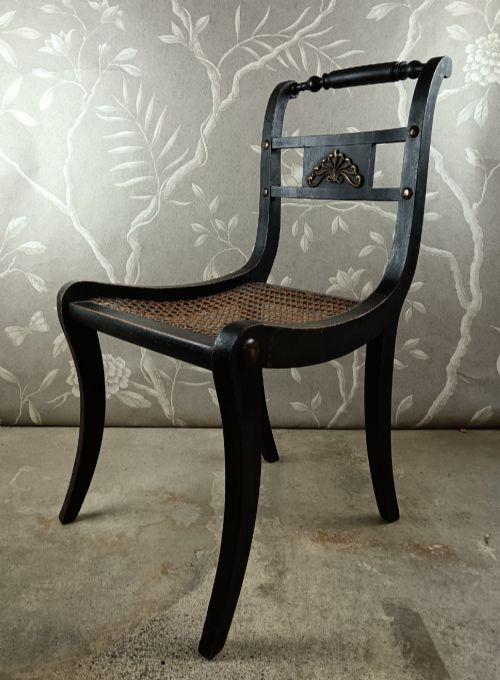
Origins stretch from early nineteenth-century Regency pieces featuring saber legs and rope backs to late nineteenth-century Aesthetic Movement and Morris & Co designs. This broad span allows collectors to source matching sets or individual statement chairs.
Materials and Construction
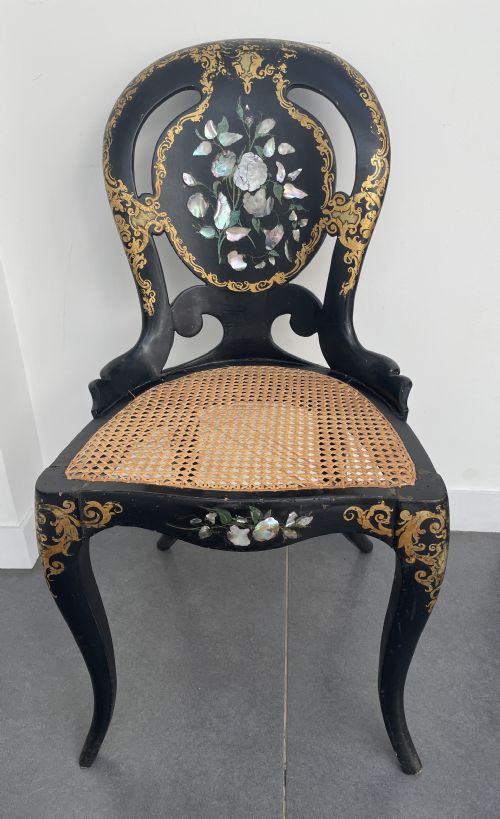
Wood serves as the primary structural material, heavily treated with dark paint, lacquer, or ebonising processes to achieve a dense black surface. Artisans frequently added gilt highlights, painted motifs, or inlaid mother-of-pearl to contrast against the dark background.
Seat construction relies on traditional methods, pairing wooden frames with woven cane, natural rush, or upholstered pads covered in fabric. Metal elements such as brass occasionally appear in structural detailing or decorative mounts.
Listings feature ebonised wood combined with cane, rush, fabric, and brass across periods spanning the eighteenth to the twentieth centuries.
Factors Defining Quality
Quality rests in the crispness of carved details, the integrity of the ebonised finish, and the originality of integrated elements like cane seats or parcel gilding. Superior examples maintain structural tightness in their joints without excessive modern reinforcement.
The distinction between standard commercial seating and higher-grade commissions shows in the refinement of turned members, such as faux bamboo work or saber legs, and the balance of decorative painted or inlaid accents.
William Morris·Rossetti·Bruce J. Talbert·Philip Webb·Hitchcock
The Black Ebonised Dining Chairs Glossary
- Ebonised
- Wood treated with stain, paint, or chemical processes to simulate the appearance of solid ebony. This dark finish became particularly popular during the Victorian and Regency periods for formal seating.
- Caned
- Woven rattan material used to form light, flexible seat panels or backrests. It appears frequently on Regency and Victorian chairs.
- Parcel Gilt
- Partial application of gold leaf or gilt paint to highlight specific carved details, mouldings, or motifs against a dark ebonised ground.
- Sabre Leg
- A curved chair leg that tapers toward the foot, resembling the profile of a cavalry sword. This form defines many Regency dining chairs.
- Rope-Back
- A chair back featuring horizontal turned members carved or shaped to resemble twisted rope. This design is characteristic of early nineteenth-century seating.
Black Ebonised Dining Chairs: Frequently Asked Questions
How do I care for ebonised wood?
Maintain ebonised surfaces by dusting with a soft, dry cloth and avoiding harsh chemical polishes that can degrade the dark finish.
Keep chairs away from direct sunlight and extreme temperature fluctuations to prevent the wood and any applied lacquer from cracking.
Are these chairs suitable for daily use?
Many nineteenth-century dining chairs remain sturdy enough for regular use, provided the joints are stable and the frames are sound.
Caned or rush seats require more careful treatment than upholstered pads to avoid puncturing or stretching the natural fibres.
How do I distinguish Regency from Victorian examples?
Regency chairs typically exhibit cleaner neoclassical lines, such as saber legs, rope backs, and restrained use of paint or gilding.
Victorian models often display heavier carving, darker elaborate decoration like mother-of-pearl inlay, or stylistic revivals including Gothic and Chinoiserie.
Can I mix different styles around a table?
Mixing individual side chairs and armchairs from related nineteenth-century periods creates an eclectic look common in historic interiors.
Matching heights and seat depths helps maintain comfort and visual balance when combining disparate ebonised chairs.