


Black Curved Cabinet
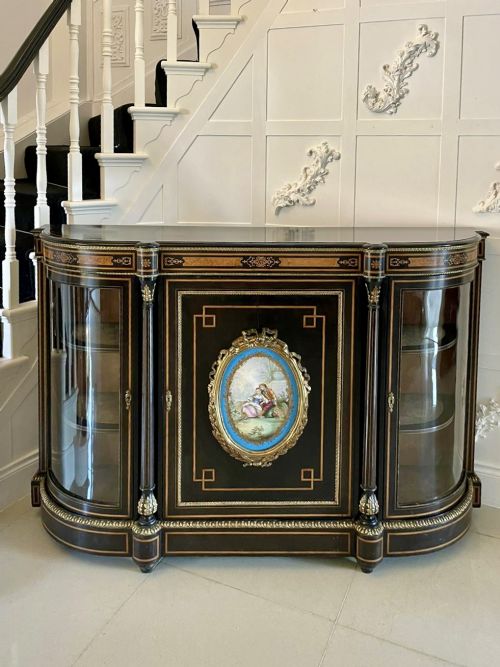
A black curved cabinet brings deep ebonised surfaces and sweeping lines into a room, offering both display and storage for a serious interior.
Black Curved Cabinet
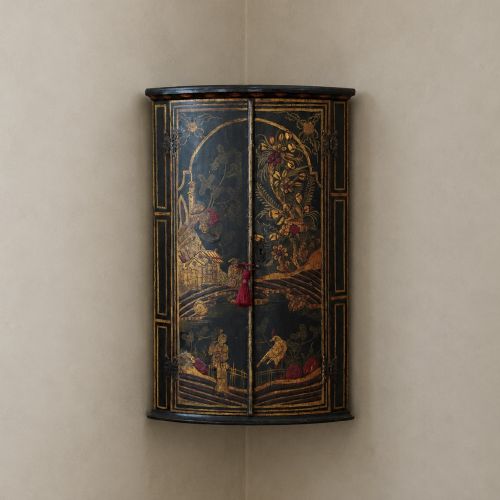
A black curved cabinet encompasses forms such as credenzas, corner cupboards, demi lune cabinets, and bow front display pieces found in nineteenth century and eighteenth century examples. These pieces typically feature ebonised wood or japanned finishes paired with glass doors, mirrored backs, or brass inlay.
The version most commonly met on this page is the Victorian ebonised credenza or side cabinet, often detailed with marquetry, ormolu mounts, and curved glazing at the ends. French Napoleon III and Boulle styles also appear frequently alongside Dutch rococo and Chinoiserie corner pieces.
Buyers select these cabinets to anchor a room with dark, reflective surfaces while providing enclosed shelving for porcelain, books, or collections. The curved silhouette softens the formality of dark wood and draws the eye across the polished contours.
How they were made
The makers of these cabinets relied primarily on ebonised wood, applying dark finishes to common timbers to emulate expensive ebony, often enriched with amboyna wood, tortoiseshell, and marquetry. Brass, ormolu, and gilt bronze mounts were cast and applied to corners, borders, and friezes.
Curved glass and bowed doors required specialised joinery to shape timber and fit glazing without losing structural integrity. Boulle work incorporated tortoiseshell and brass marquetry into the surface, while japanning utilised layered paint and varnish to create Chinoiserie scenes.
Listings feature Victorian, 18th century, and 19th century pieces utilising ebonised wood, brass, ormolu, velvet, and tortoiseshell.
What varies in quality
The refinement of the marquetry inlay and the crispness of the ormolu or gilt bronze mounts distinguish finer examples from simpler production. Hand cut brass work and detailed floral floral marquetry demand exceptional skill compared to printed or stamped substitutes.
The quality of the ebonising and the preservation of the curved glass panes significantly influence the overall character of the piece. Superior cabinets maintain tight joints along the curved fronts and retain their original mirrored backs and internal velvet linings without warping.
SAGE AND CO
The Black Curved Cabinet Glossary
- Ebonised Wood
- Timber treated with stain, dye, or paint to imitate the dark, dense appearance of true ebony. This finish became especially popular during the Victorian period.
- Marquetry
- Decorative patterns formed by fitting together thin veneers of wood, metal, or shell onto a structural surface. Floral and geometric designs appear often on these credenzas.
- Ormolu
- Gilded bronze mounts used as decorative trim on furniture. The technique involves applying a gold amalgam to bronze before heating.
- Demi Lune
- A half moon or semicircular shape in furniture design, seen frequently in side cabinets and commodes. This outline allows pieces to sit flush against a wall while offering curved front dimensions.
Black Curved Cabinet: Frequently Asked Questions
Where should I place a curved cabinet?
These cabinets suit living rooms, dining rooms, or hallways where their curved silhouettes soften corners and provide useful surface area. Placing them away from direct sunlight protects the ebonised finishes and delicate marquetry.
Because many examples include glass doors or mirrored backs, positioning them near natural light enhances their reflective qualities without risking heat damage to the wood.
How do I care for ebonised wood?
Dust the surfaces regularly with a soft, dry cloth to prevent accumulation in the fine crevices of marquetry and brass mounts. Avoid silicone polishes that can build up a film over the dark finish.
Maintain a stable room humidity to keep the underlying timbers from expanding, which protects delicate veneer work and glass fittings from stress.
What is a credenza?
A credenza is a low cabinet traditionally used for serving food or displaying valuables, often featuring central doors flanked by curved end compartments. Victorian iterations frequently include mirrored backs and glazed side panels.
They function well in modern interiors as sideboards or media consoles while retaining their original nineteenth century character and storage capacity.
How can I tell French styles apart?
French pieces from the nineteenth century often incorporate elaborate ormolu mounts, tortoiseshell, and Boulle marquetry reflecting revival movements. They lean towards ornate, polished grandeur with symmetrical curves.
English Victorian pieces tend to focus on ebonised wood paired with restrained brass inlay and floral marquetry, prioritising domestic utility alongside display.