


Black Charcoal Portrait
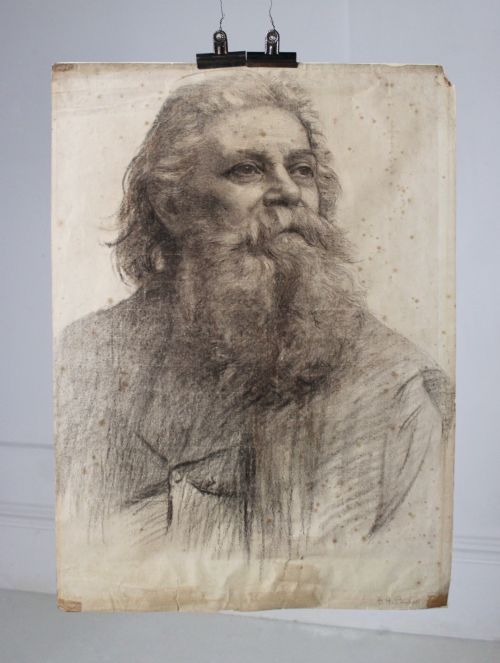
A black charcoal portrait captures character through expressive monochrome marks, offering direct connection to past sitters.
Black Charcoal Portrait
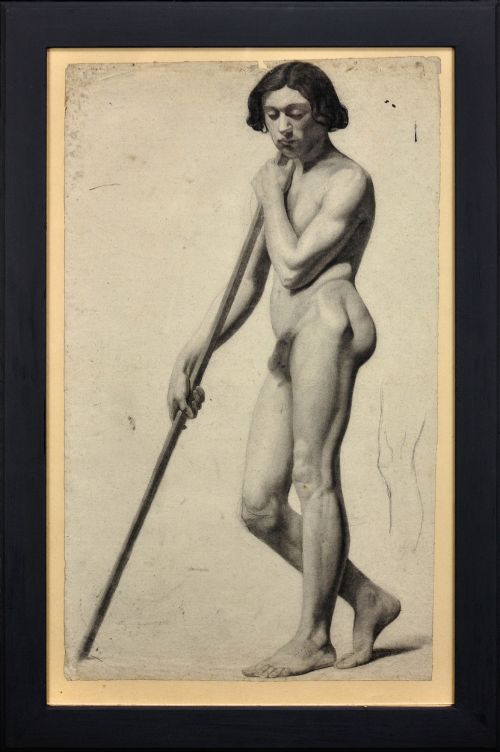
A black charcoal portrait presents a study in tone and line, utilising the immediacy of the medium to capture a likeness. When exploring a black charcoal portrait, buyers encounter examples originating from the seventeenth century through to the mid-twentieth century.
The selections span academic life studies, formal portraiture, and atmospheric sketches on paper. Works range from early British academic drawings to continental European pieces from the art deco period.
Framed presentation forms the standard format, often preserved behind glass within wood or giltwood frames. Pieces include single character studies and paired life drawings originating from various international schools.
Assessing Quality and Execution
Quality rests in the sureness of the draughtsmanship and the artist's ability to convey bone structure and expression with minimal hesitation. Stronger works demonstrate confident handling where tonal gradation brings the sitter to life.
Condition of the paper and stability of the friable medium dictate the preservation level of the piece. Superior examples retain their original sharpness without excessive fading or loss of pigment to the glazing.
Some sitters gaze back with such intensity that they seem ready to join the room's conversation.
Sir Edwin Landseer·J D Fergusson·Winifred Eugene Ballard·John Hoppner·Ernest Borough Johnson·Frank O. A. Haviland·Francis Dodd·Juliet Pannett
The Black Charcoal Portrait Glossary
- Charcoal
- A dry drawing medium made from charred organic material, producing deep black marks. It allows for both broad strokes and fine linear detail depending on the hardness of the stick.
- Academic Realism
- A style of painting and drawing produced under the influence of European academies of art. It emphasises precise anatomical accuracy and adherence to classical traditions.
- Giltwood
- Wood that has been covered with a thin layer of gold leaf. Frames finished in this manner are frequently found on nineteenth-century and earlier works.
- Heightened
- The technique of adding white or light tones to a drawing to create highlights and contrast. This method is often applied to toned paper for dramatic effect.
- Life Study
- A drawing executed directly from a live human model. These exercises form the foundation of academic training across many periods.
Black Charcoal Portrait: Frequently Asked Questions
What periods do these portraits cover?
The available works span from the seventeenth century through the Victorian era and into the twentieth century. Mid-century examples also appear alongside earlier academic studies.
Each era brings distinct paper types and framing styles that help contextualise the origin of the artwork.
Are these works original or reproductions?
Every piece presented is an original drawing created by hand rather than a mechanical reproduction. Artists applied charcoal directly to paper during the recorded periods.
Brushwork and tonal variation remain distinct under close inspection, confirming the unique nature of each sheet.
How are these drawings usually framed?
Most pieces arrive in period wood or giltwood frames fitted with protective glass. Mounts often separate the delicate charcoal surface from the glazing to prevent smudging.
Original frames provide valuable clues regarding the age and historical context of the artwork.