


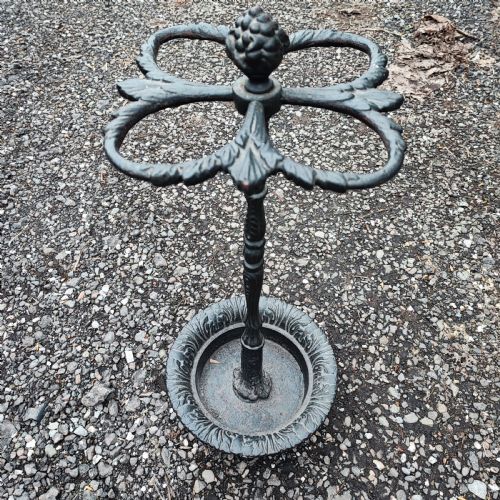


Black Cast Iron Hall Stand
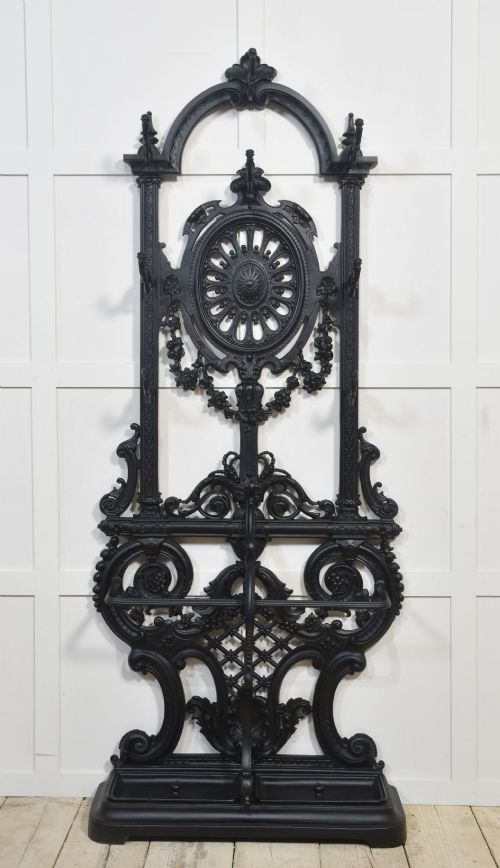
These black cast iron hall stands offer heavy-duty utility and gothic presence to an entranceway, built to hold coats, hats and wet umbrellas.
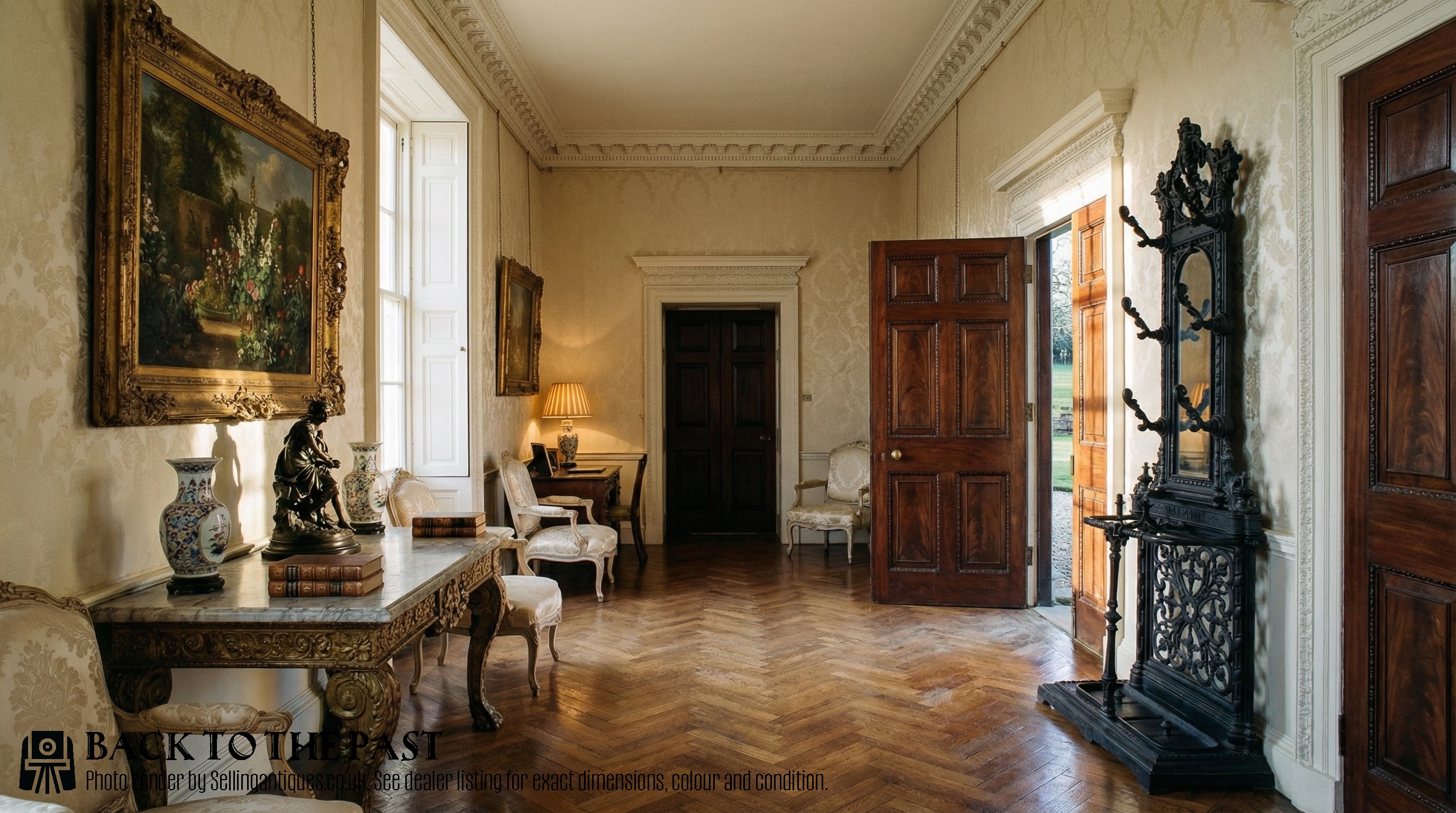
Black Cast Iron Hall Stand
A black cast iron hall stand is a practical entranceway furnishing designed to hold coats, hats, sticks and umbrellas. When searching for this phrase, buyers encounter substantial metal pieces primarily originating from the nineteenth century, including the Victorian and Edwardian periods.
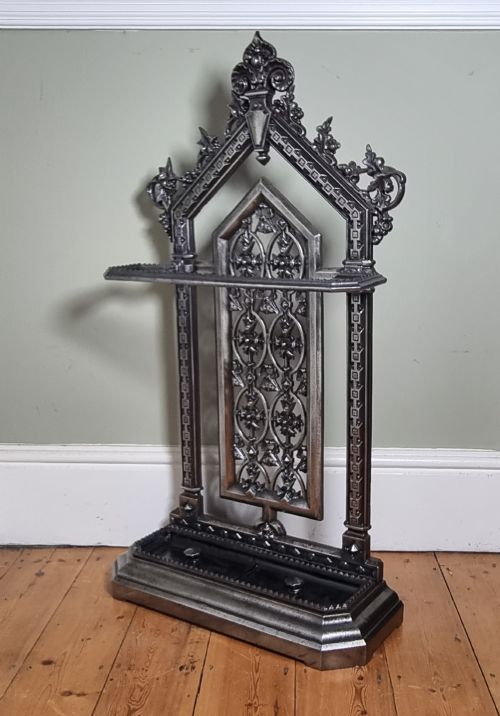
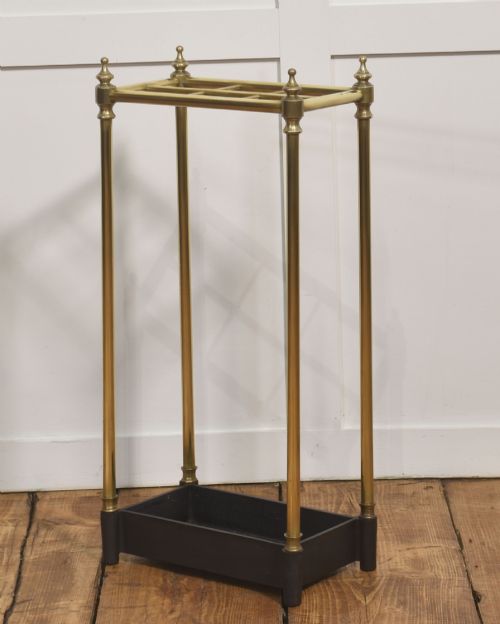
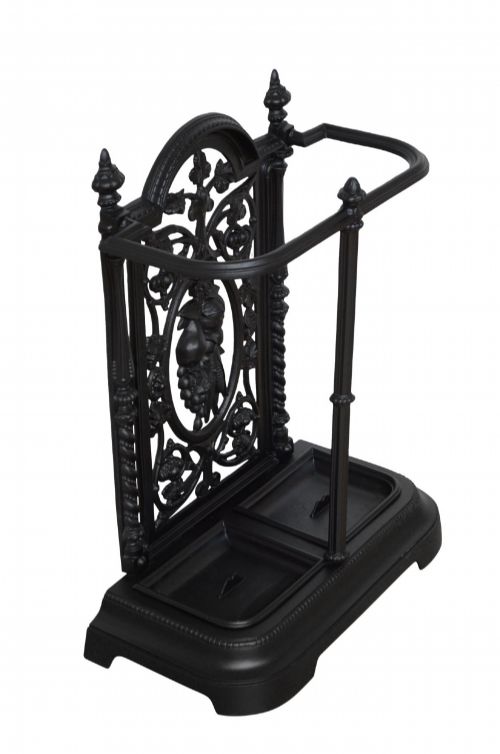
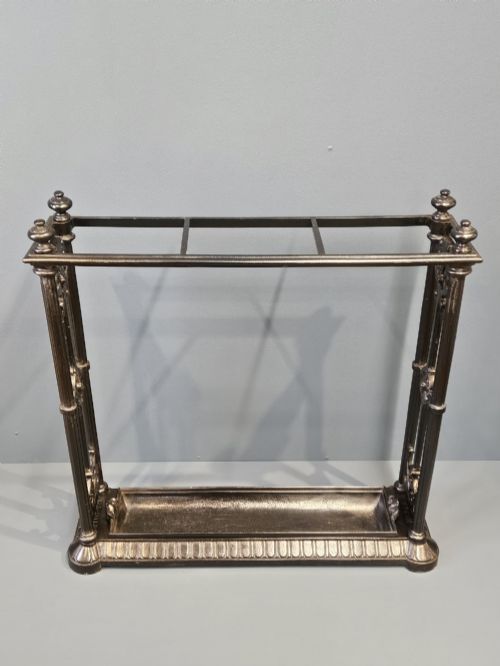
The most common examples on this page are stick and umbrella stands, often finished in black paint, alongside larger hall stands that incorporate hooks and umbrella racks. Many pieces reflect design influences such as Victorian Gothic, Aesthetic Movement and Art Deco.
Makers ranged from major British foundries to French workshops, producing utilitarian items that doubled as decorative focal points for the hallway. These items combine structural permanence with intricate cast ornamentation.
Materials and construction
The primary material is cast iron, poured into sand moulds to create rigid frames, decorative scrollwork and pierced panels. This metal provides the immense weight required to keep a tall rack stable when laden with heavy coats and damp umbrellas.
Makers combined cast iron with brass, tubular metal, nickel plating and wrought iron for hooks, rails and drip pans. Surfaces were frequently finished with black paint, and some models incorporated glass or marble elements.
Foundries utilised maker marks, date stamps and registration numbers cast directly into the metal or stamped on the base, allowing historians to trace pieces to specific makers like Coalbrookdale or Falkirk.
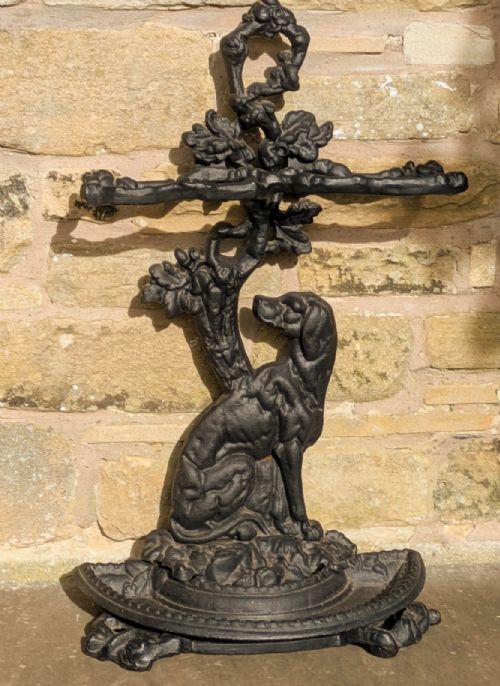
Look closely for the Jack and the Beanstalk stick stand, where a giant's legs form part of the frame.
Judging quality in cast iron furniture
Quality in a black cast iron hall stand rests in the crispness and depth of the casting. Superior examples retain sharp leaf, bamboo or figurative details without the blurring that occurs when moulds are reused too many times.
The sophistication of the design dictates the tier of the piece, moving from plain utilitarian twenty-four ring umbrella stands to elaborate portico designs or pictorial models like the Jack and the Beanstalk stick stand. Integration of secondary metals such as nickel plating or brass also signals a more ambitious manufacture.
Coalbrookdale·Falkirk Foundry·Kenrick
The Black Cast Iron Hall Stand Glossary
- Cast iron
- A strong, hard iron-carbon alloy produced by pouring molten metal into a mould. It forms the heavy, rigid structure of these hall stands.
- Demi-lune
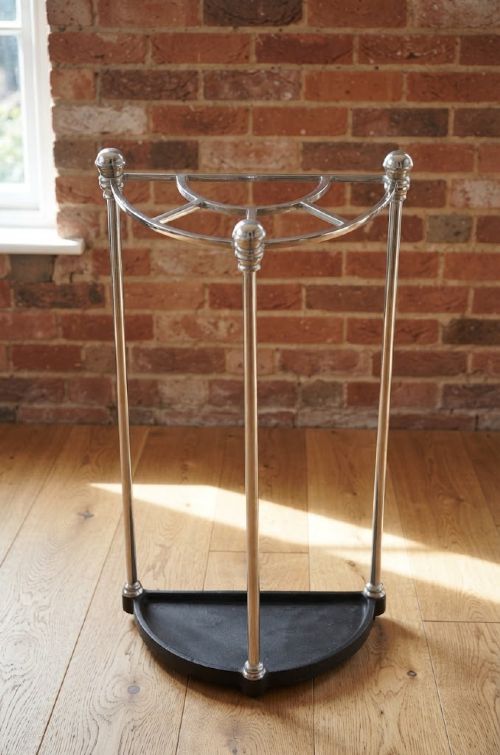
- A half-moon shape used for umbrella stands designed to sit flush against a hallway wall. This profile saves floor space in narrow corridors.
- Faux bamboo
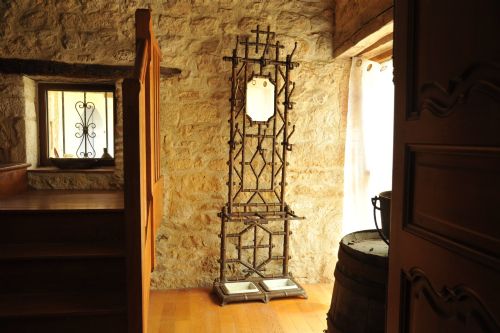
- A decorative treatment mimicking natural bamboo stalks, popular in nineteenth-century metalwork and furniture. It appears on several French and English stands.
- Stick stand
- A compact floor-standing rack dedicated to walking sticks and canes. These often share forms with umbrella racks.
- Drip pan
- A removable metal tray fitted at the base of an umbrella stand to catch water from wet items. It protects the floor from moisture.
Black Cast Iron Hall Stand: Frequently Asked Questions
How do I stop rust on a cast iron stand?
Keep the metal dry and apply a light coat of paste wax to seal the painted surface against moisture from wet umbrellas.
Avoid placing damp items directly into unlined iron rings if the paint has worn thin to prevent surface corrosion.
Are these stands heavy enough to hold heavy coats?
Cast iron provides substantial natural weight, making these stands remarkably stable under heavy winter garments and damp umbrellas.
Larger Victorian hall stands are engineered to distribute this weight safely across a broad footprint.
How do I date a cast iron hall stand?
Examine the piece for registration numbers, stamped dates or foundry marks on the reverse or base. Stylistic clues like Aesthetic Movement motifs or Gothic Revival arches also point to specific decades.
Construction methods, such as the use of threaded bolts versus cotter pins, help narrow down the manufacturing era.
Can I use these stands outdoors?
While cast iron withstands outdoor conditions well, historical stands feature delicate paintwork and secondary metals that suffer in constant rain.
Protecting the piece inside a covered porch preserves the finish and prevents structural damage from standing water.