

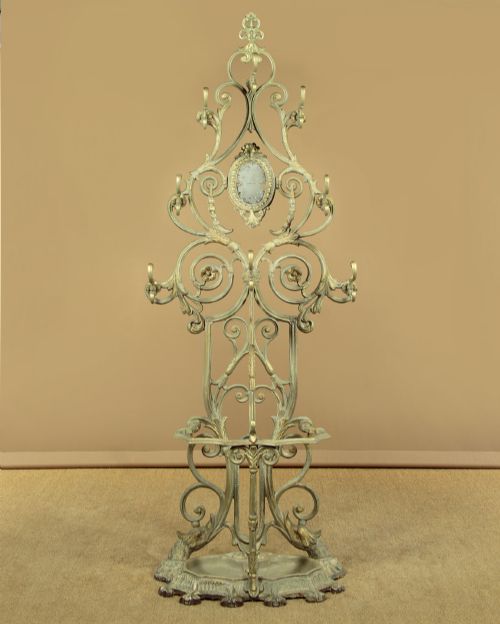
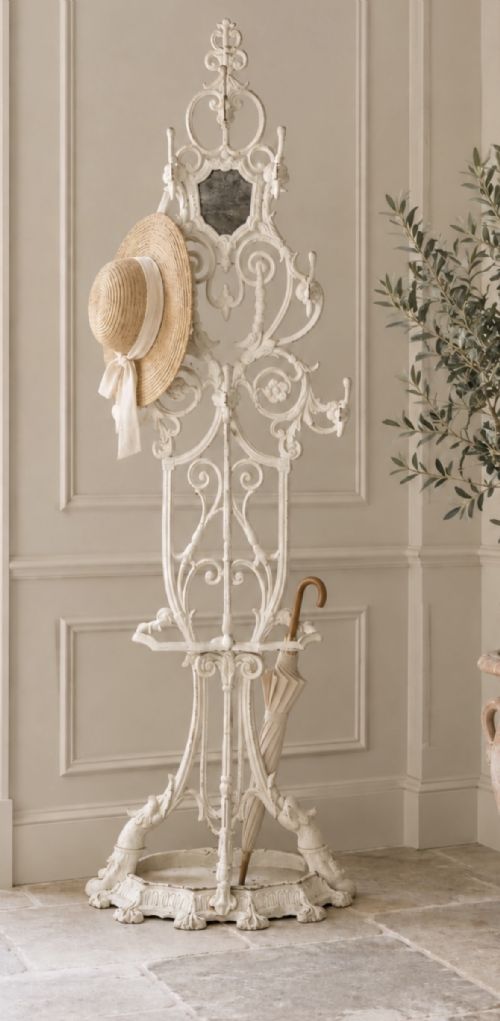
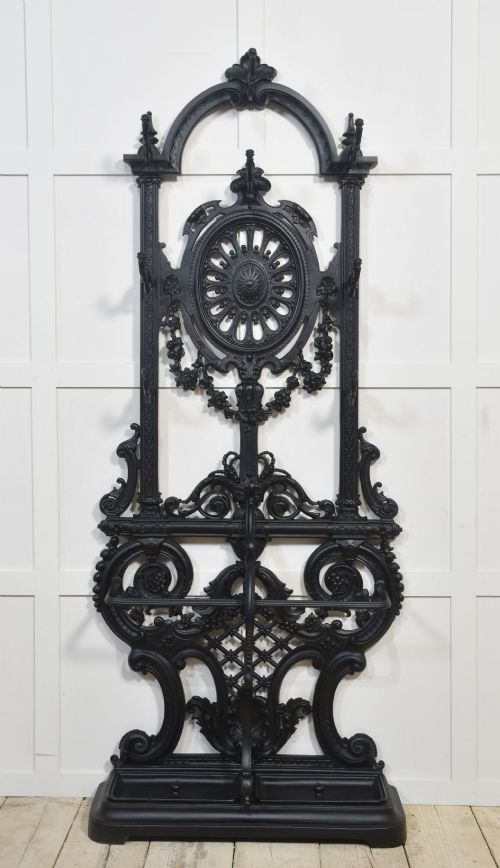


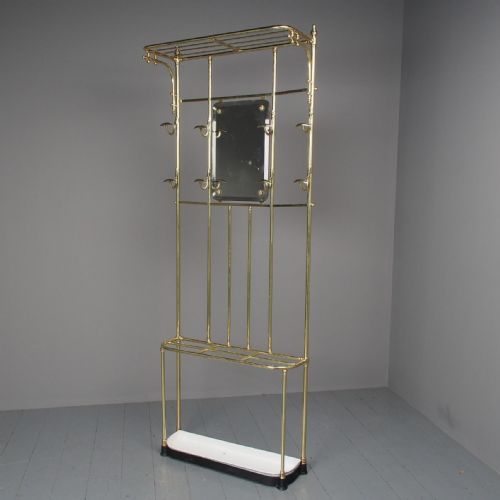


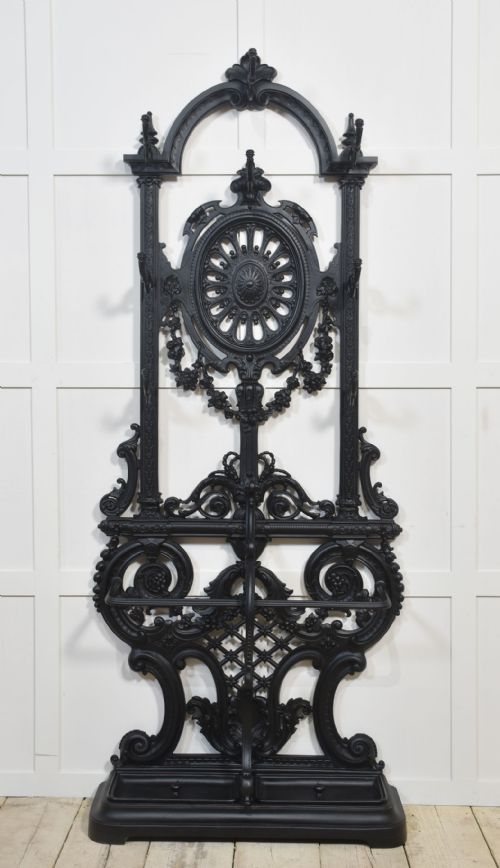


Victorian Cast Iron Hat Rack
These Victorian cast iron hat rack options bring robust utility and architectural presence directly into your hallway.
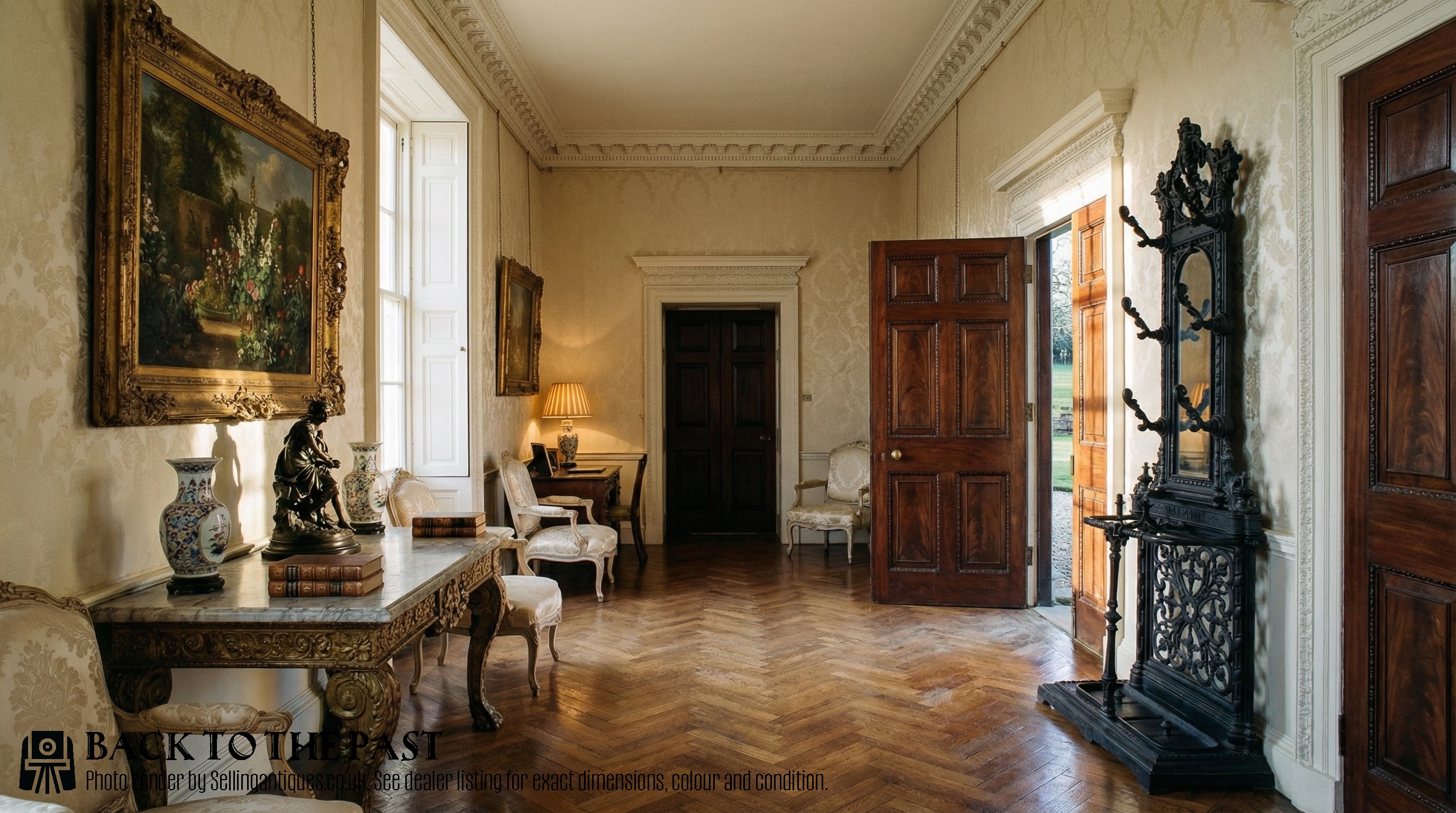
Victorian Cast Iron Hat Rack
A Victorian cast iron hat rack serves as a substantial piece of entranceway furniture, often combining hooks for outerwear with storage for hats and walking gear. You will most frequently meet hall stands and coat stands on this page, spanning the Victorian and Edwardian periods.
Many examples incorporate umbrella racks and drip trays alongside the primary metal framework. The forms range from wall-mounted coat racks to freestanding hallstands standing several feet tall.
Origin points across the current selections include English workshops and French foundries. Pieces frequently display specific design influences such as French Chateau or Victorian Gothic Revival styles.
Materials and Manufacture
Foundries utilised heavy cast iron poured into intricate moulds to create the rigid structural framework and decorative scrollwork of these stands. This metalwork was often finished with paint to protect the surface and enhance architectural detail.
Secondary materials such as brass, glass, and marble frequently appear in combination with the iron frame. Some iterations incorporate mahogany or mirror panels to provide utility and visual contrast in the hallway.
Victorian Cast Iron Hat Rack Retail Price Guide 2026
Typical asking prices for victorian cast iron hat rack among the pieces listed under this phrase on Sellingantiques today, from the lower quarter to the upper quarter. They describe what is for sale here now, not the wider market.
The listings here feature cast iron combined with materials like marble, glass, mahogany, and brass across Victorian and Edwardian periods.
Assessing Quality and Execution
The sophistication of the casting work dictates much of the visual merit, with finer pieces showing crisp definition in botanical or scroll motifs without surface pitting. The integration of auxiliary components like cast brass hooks or marble inserts marks the distinction between standard utility items and high-status hall furnishings.
Structural stability relies on the original joining methods and the preservation of the heavy iron base or mounting points. Finer examples retain their original painted finishes and functional elements such as intact drip trays.
The Falkirk Foundry
The Victorian Cast Iron Hat Rack Glossary
- Cast Iron
- Molten iron poured into a sand mould to form rigid objects with intricate relief decoration. This material allows for both slender structural members and heavy load-bearing frames.
- Hall Stand
- A piece of entrance hall furniture combining a coat rack, hat hooks, mirror, and umbrella stand. They anchor the reception space in larger nineteenth-century houses.
- Faux Bamboo
- Moulded or carved decoration that mimics the jointed stalks of natural bamboo. Foundries utilised this popular aesthetic during the late nineteenth century.
- Portico Coat Stand
- A tall freestanding hall stand featuring architectural columns or framing reminiscent of a classical entrance porch. These grand pieces dominate large reception halls.
Victorian Cast Iron Hat Rack: Frequently Asked Questions
Where were these stands placed?
These pieces sat in the entrance hall or reception room of a nineteenth-century home to receive outdoor garments upon arrival.
They provided an immediate drop-off point for hats, coats, and walking umbrellas before guests entered the main living spaces.
How do I secure a tall stand?
Freestanding floor models often rely on their substantial iron weight and wide footprint for stability against tipping.
Some taller forms require wall tethering for safety, particularly when loaded with heavy winter overcoats.
What is faux bamboo iron?
Foundries cast iron into stalks with raised nodes to mimic natural bamboo canes popular in late nineteenth-century design.
This technique provided an exotic, lightweight visual appearance while retaining the heavy strength of metal.
How do I date these pieces?
Stylistic markers such as Gothic Revival motifs or faux bamboo detailing point to specific decades within the Victorian era.
Foundry marks and registration numbers cast into the metal frame can also help pinpoint the exact period of manufacture.