
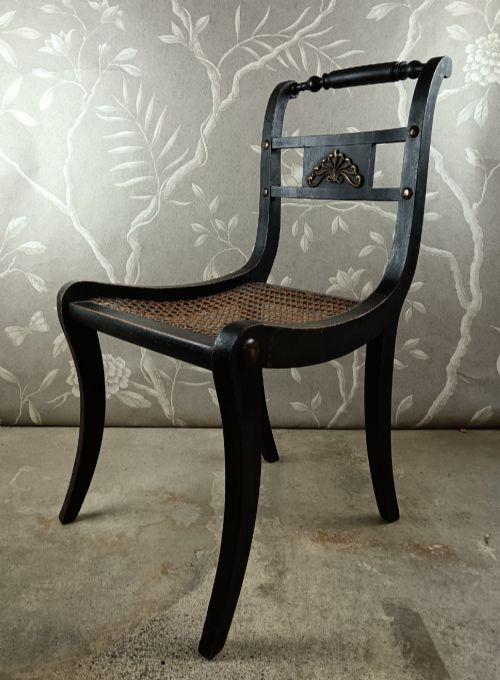
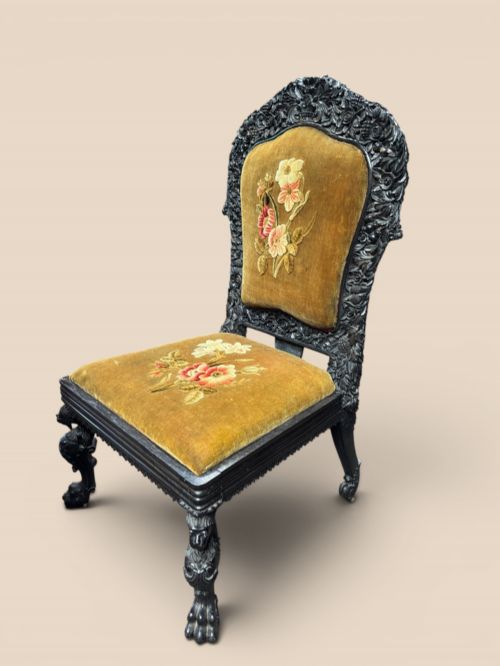
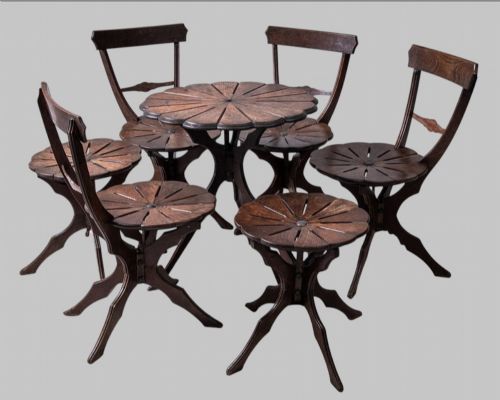


Black Carved Dining Chairs
These black carved dining chairs bring together dark timber, intricate chisel work and formal seating from the seventeenth century onwards.
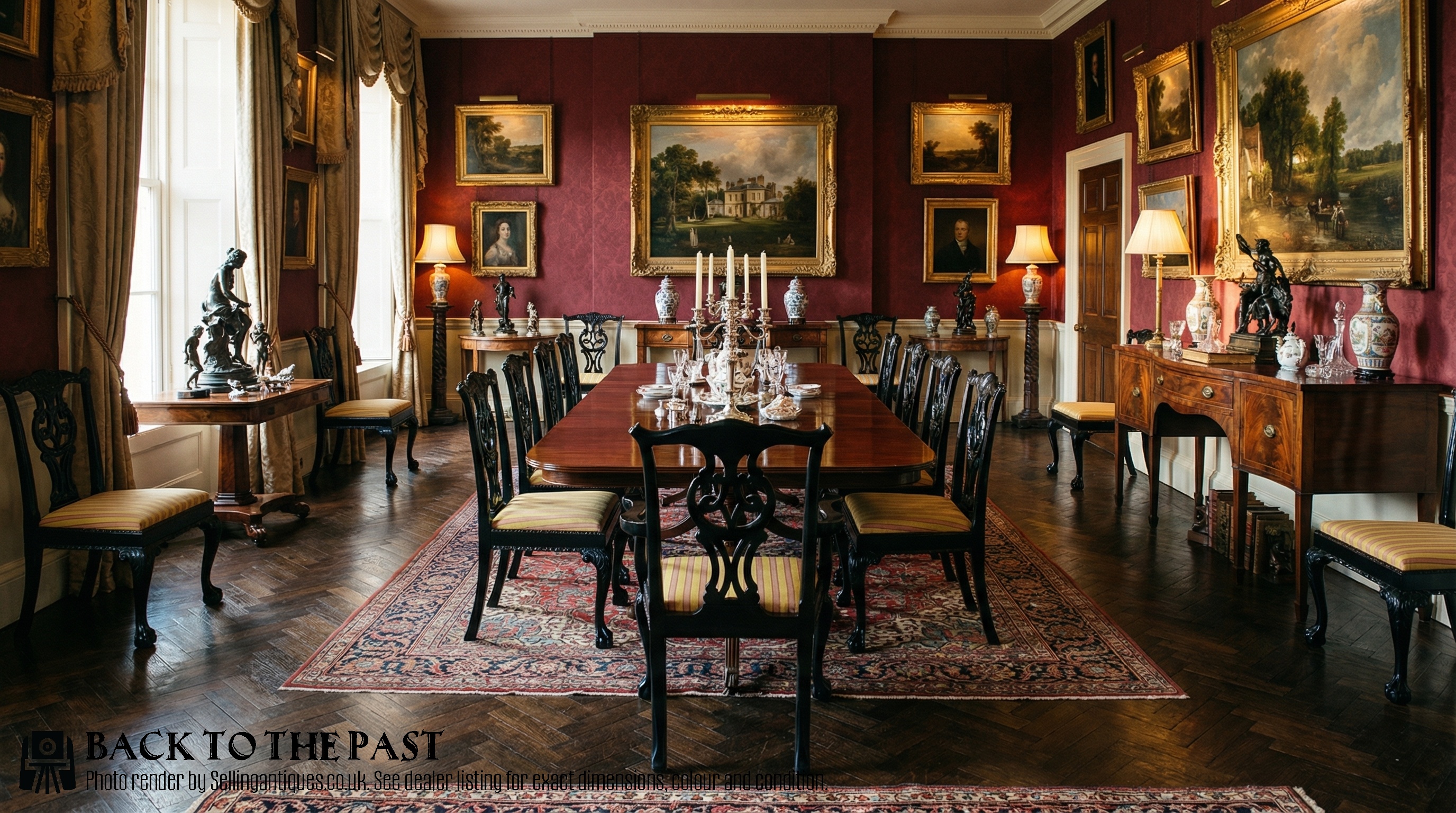
Black Carved Dining Chairs
When you search for black carved dining chairs, you encounter seating designed for formal rooms, constructed across several centuries including the seventeenth, eighteenth and nineteenth periods. The selection spans single side chairs, carvers, and larger dining sets alongside parlour suites.
The regional origins and design influences vary widely, encompassing Regency, Gothic Revival, Anglo-Indian, and Alpine Folk Art traditions. Ebonised finishes and dark timbers dominate the group, often paired with cane, leather, or velvet seating.
Side chairs and armchairs appear most frequently, drawing on Chippendale, Louis XV, and Victorian design vocabularies. Many examples utilise ebonised wood or solid ebony to achieve a stark, dramatic silhouette.
Materials and Construction
Cabinetmakers utilised dense timbers such as oak, walnut, mahogany, and ebony, frequently applying ebonised finishes to lighter woods to simulate expensive dark materials. Surface decoration relied on deep hand carving, marquetry inlay, and japanning.
Seating portions incorporate natural materials including woven cane, supple leather, and tactile velvet or brass detailing. Construction methods depend on traditional joinery appropriate to each period, from seventeenth-century backstools to nineteenth-century balloon back frames.
The listings feature ebonised wood, oak, walnut, mahogany, and ebony across periods from the seventeenth to the twentieth century.
Judging Quality
The calibre of a chair rests upon the crispness of the hand carving and the integrity of the timber frame. Pieces boasting deep, detailed relief work on the splats and arms demonstrate superior craftsmanship compared to softer, more mechanical moulding.
Original elements dictate value, such as intact cane work, period leather upholstery, and matched sets that retain their uniform colour and patination over decades of use.
Bruce J. Talbert
The Black Carved Dining Chairs Glossary
- Ebonised
- Wood finished with a black stain or paint to imitate ebony. This treatment was common in nineteenth-century revival styles.
- Cane
- Woven rattan material utilised for seat panels and backrests. It offers a light, flexible surface.
- Backstool
- An early form of seating without arms, precursor to the modern side chair. Seventeenth-century examples feature simple wooden backs.
- Japanning
- A European imitation of East Asian lacquer work. It involves layered varnishes on a dark ground.
- Marquetry
- Decorative patterns formed by fitting contrasting veneer pieces into a wooden surface. Walnut and other timbers provide tonal variation.
Black Carved Dining Chairs: Frequently Asked Questions
How do I date a black carved chair?
Dating relies on stylistic clues, construction joints, and the specific timber used in the frame. Seventeenth-century pieces reveal different joinery techniques compared to Victorian or Regency examples.
Examining the depth of the carving and the type of finish helps place the chair within its correct period, whether Gothic Revival or Anglo-Indian.
Are ebonised chairs made of solid ebony?
Most black chairs utilise woods like oak, walnut, or beech finished with an ebonised coating rather than solid ebony. Solid ebony pieces do exist, particularly within Anglo-Indian furniture.
Inspecting the underside or unexposed areas reveals the underlying timber beneath the black surface.
How should I care for cane seats?
Cane panels require humidity to prevent them from drying out and snapping under pressure. Regular light dusting keeps the woven strands clean.
Avoid placing these chairs near direct heat sources or in overly dry rooms to preserve the natural elasticity of the cane.
Can I mix these chairs with a modern table?
Dark carved seating introduces strong historic character and contrast when paired with contemporary dining tables. The varied silhouettes, from shield backs to balloon backs, create a striking focal point.
Scale and seat height remain the primary considerations when combining antique chairs with modern furniture.