


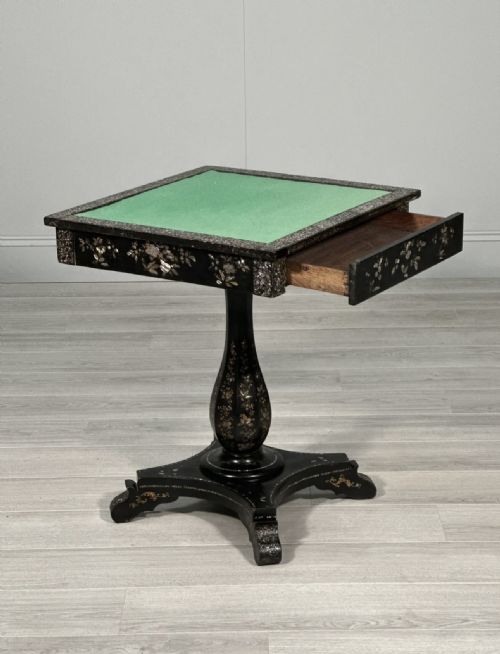

Black Card Table
These black card tables range from Regency penwork tripod pieces to Victorian ebonised designs, offering clever folding surfaces built for games.
Black Card Table
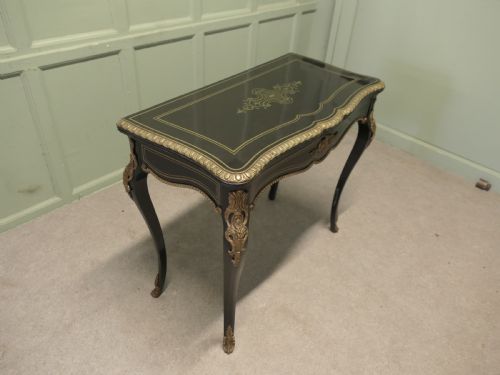
A black card table is a dedicated piece of furniture designed for gaming and social evenings, appearing across periods from the eighteenth century into the twentieth. You will frequently encounter Victorian and Edwardian examples finished in ebonised wood or black lacquer, often incorporating folding or rotating tops that reveal a baize-lined playing surface.
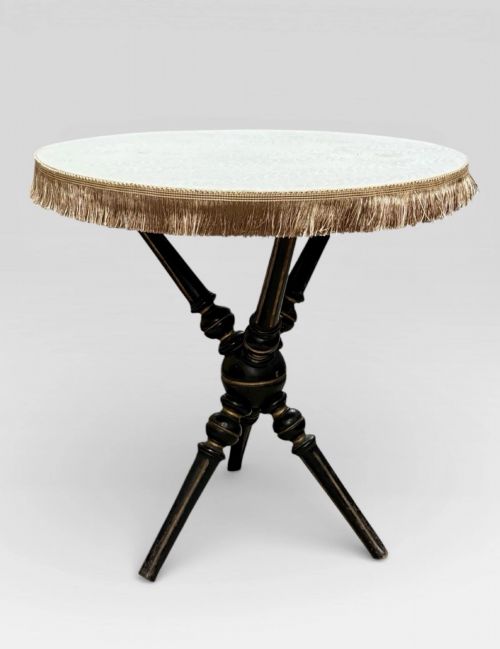
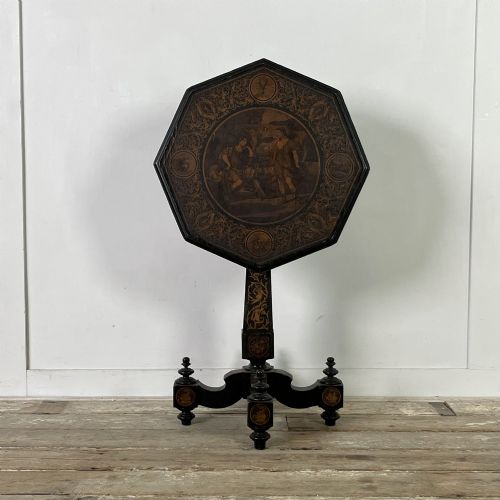
Makers adapted these forms to suit shifting tastes, producing everything from Regency penwork tripods and French Louis XV style brass-inlaid games tables to Aesthetic Movement and Chinoiserie occasional pieces. Alongside dedicated card and games tables, the category occasionally embraces related forms such as tea tables, tilt-top tables, and side tables sharing the same dark finish.
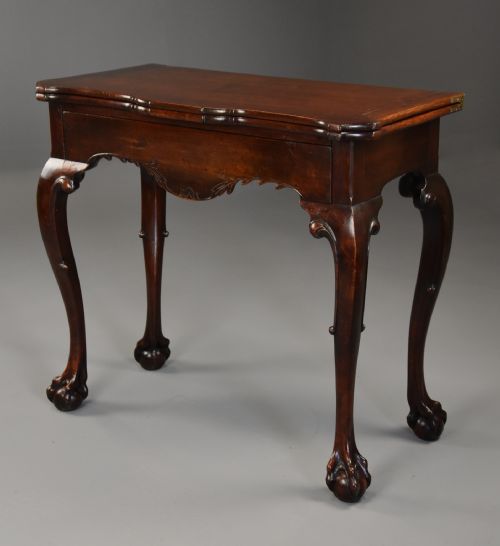
The materials span ebonised wood, walnut, and papier-mâché, sometimes enriched with mother-of-pearl, ink work, or gilt details. Whether you examine an early Georgian walnut tea table or a later envelope card table, each piece reflects the domestic pastimes and social rituals of its era.
Judging quality and craftsmanship
The distinction between standard production and top-tier pieces lies in the crispness of the surface decoration and the precision of the joinery. Superior examples display finely executed brass inlay, delicate penwork, or hand-painted Chinoiserie rather than simple stencilling, alongside robust hinges and stable pivoting mechanisms.
Material selection and maker attribution further separate the range, with workshop-marked furniture or tables utilising walnut, amboyna, and mother-of-pearl commanding greater interest. The preservation of the original baize lining and the depth of the lacquer or ebonised finish significantly influence the overall character of the piece.
Object types include envelope tables, tripod games tables, and tilt-top tables alongside decorative gaming boxes.
Lamb of Manchester·Howard & Sons
The Black Card Table Glossary
- Ebonised wood
- Timber treated to resemble ebony. This dark finish is characteristic of many Victorian and Aesthetic Movement pieces.
- Baize
- A coarse woolen material resembling felt. It is traditionally used to line the playing surface of a card table.
- Penwork
- A decorative technique using ink applied with a pen to create intricate patterns. It is often seen on Regency tripod tables.
- Chinoiserie
- European interpretations of Chinese and East Asian artistic motifs. This style appears on black lacquered tables.
- Envelope card table
- A table with a folding top composed of four triangular flaps that rotate open like an envelope. Edwardian makers produced notable versions of this form.
Black Card Table: Frequently Asked Questions
How do I care for ebonised furniture?
Keep ebonised and lacquered surfaces away from direct sunlight and excessive moisture to protect the dark finish. Dust gently with a soft, dry cloth without harsh chemical polishes.
Maintain stable room temperatures to prevent the wood from expanding or contracting, which can stress joints and inlays.
What is the difference between penwork and lacquer?
Penwork involves drawing fine ink designs directly onto a prepared wooden surface, often seen on Regency pieces. Lacquer uses layers of resin or varnish to build a smooth, glossy coating, frequently decorated with Asian-inspired motifs.
Both techniques create dark, decorative surfaces but rely on entirely different crafting methods.
Can these tables still be used for card games?
Most antique card tables retain their folding or rotating mechanisms and can support light card games. However, consideration should be given to the age of the hinges and the condition of the baize lining.
Many owners prefer to use them as display surfaces or occasional tables to preserve the historic finish.