


Black Cane Seat Chair
A black cane seat chair brings crisp dark lines and woven texture to a room, offering both lightness and strength.
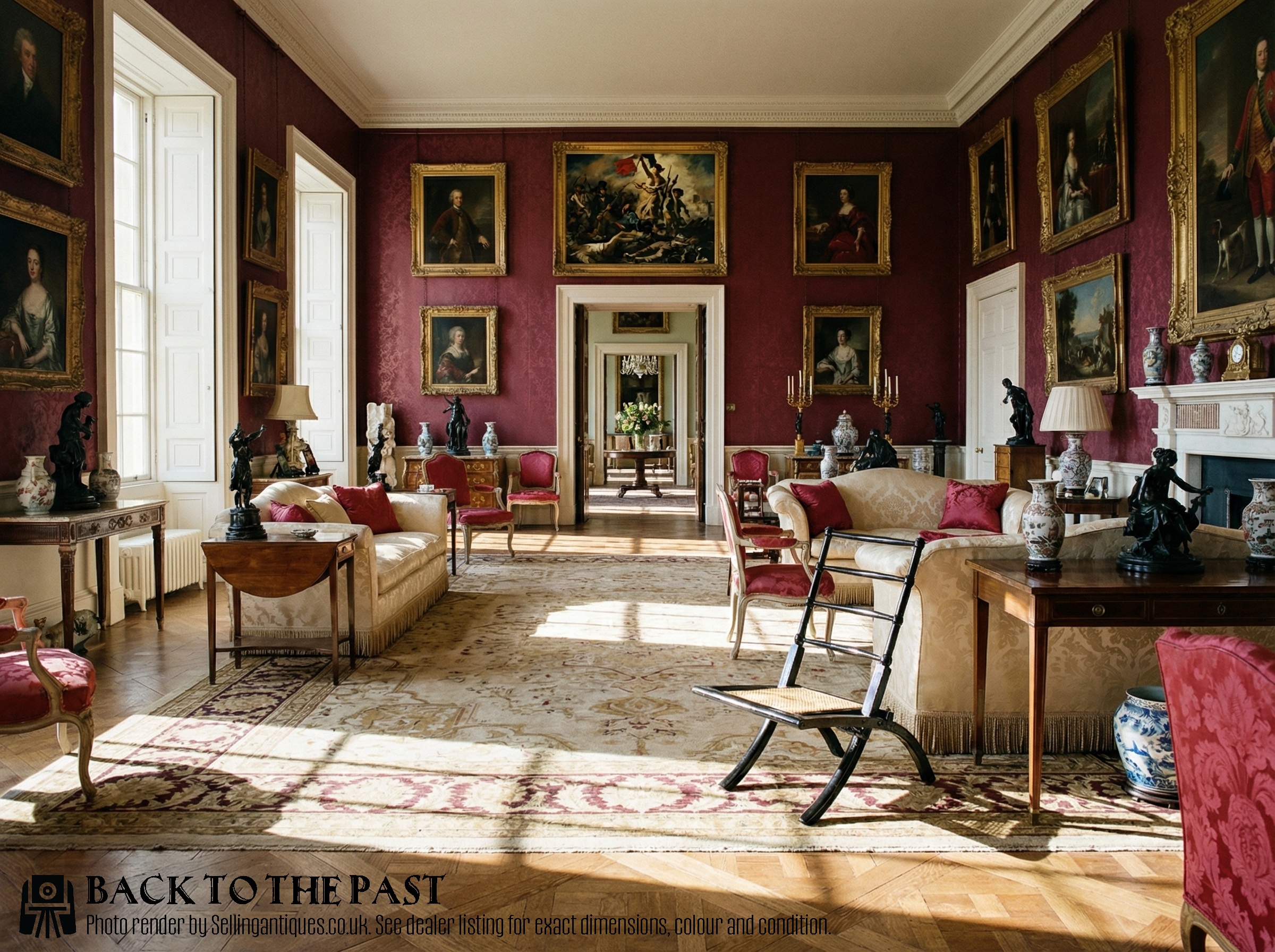
Black Cane Seat Chair
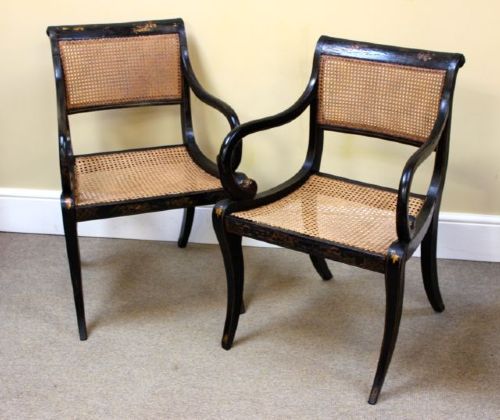
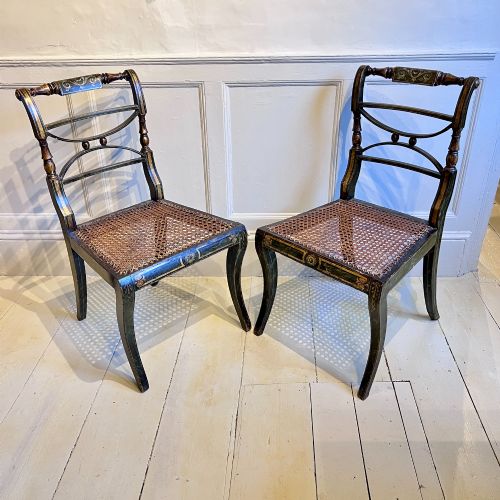
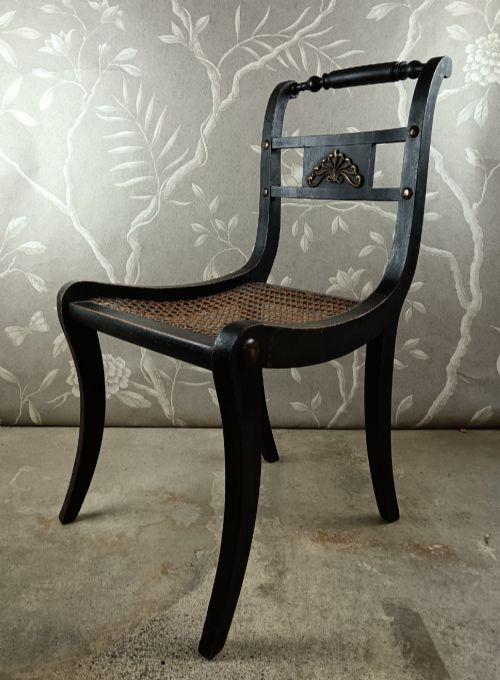
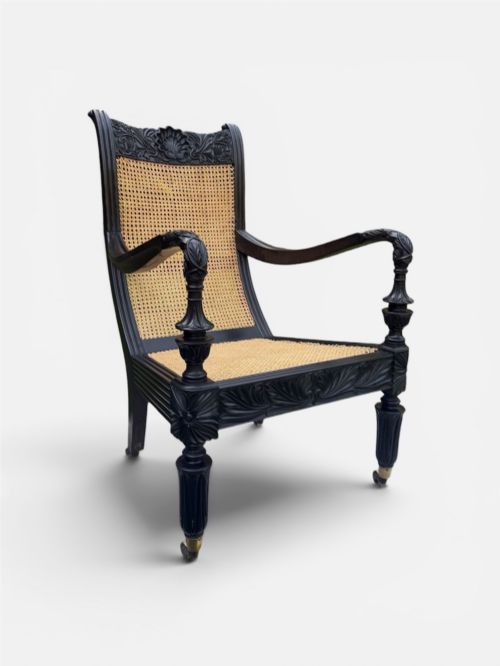
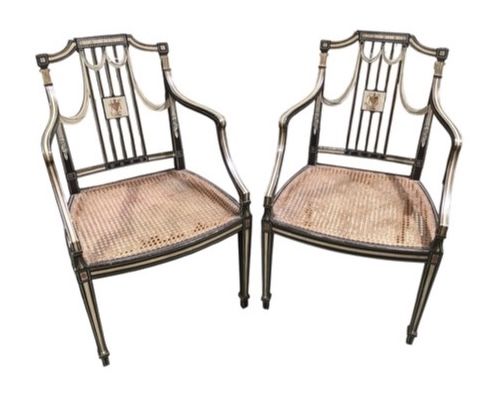
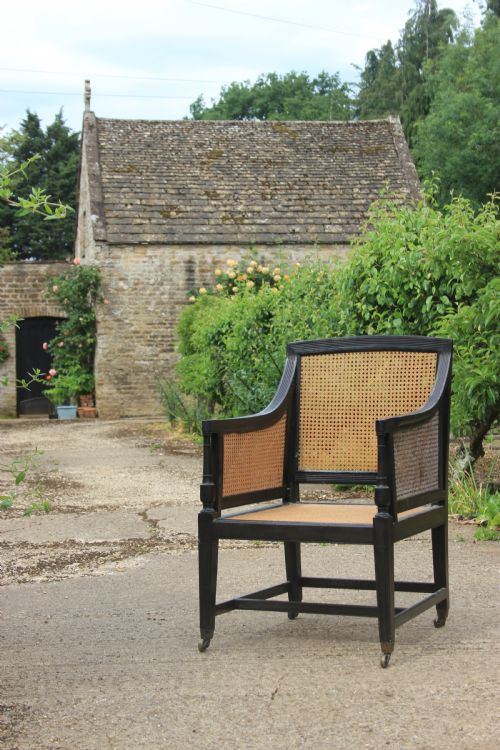
A black cane seat chair combines dark frames with woven natural seating, appearing across Regency, Victorian, and seventeenth-century eras. You are most likely to encounter Regency ebonised models featuring saber legs, alongside nineteenth-century Anglo-Indian ebony examples.
The selection ranges from side chairs and dining sets to armchairs, hall chairs, and children's rockers. Makers worked within Regency, Victorian, Louis XV style, and Anglo-Indian Colonial traditions.
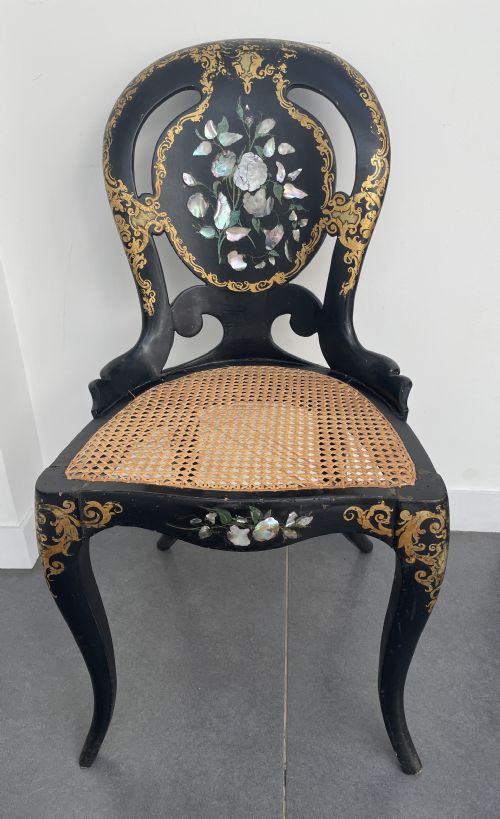
Forms include painted and parcel gilt surfaces, faux bamboo frames, and papier mache constructions. The seating relies on woven cane panels set within solid wooden rails.
Materials and construction
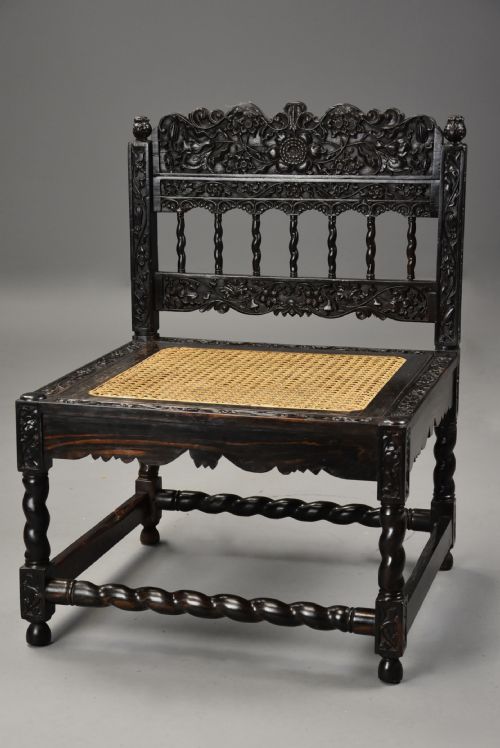
Woodwork relies on ebonised wood, solid ebony, painted finishes, walnut, and lacquer. Craftsmen shaped these materials into curved sabre legs, bobbin turnings, and carved low chairs.
Seating panels use natural cane woven through drilled holes in the wooden frames. Gilding, mother-of-pearl inlay, and brass details decorate the primary structures.
Miniature children's rockers and doll-sized chairs appear alongside full-sized dining sets, proving small Victorians also enjoyed proper seating.
Distinctions in craftsmanship
Quality rests upon the crispness of the carving, the integrity of the ebonised or painted finish, and the tightness of the cane weave. Solid ebony and finely carved Coromandel or Ceylonese pieces demonstrate superior material density compared to secondary timbers.
Proportion and the preservation of original surfaces separate standard examples from finer works. Matching sets and signed pieces show higher levels of period craftsmanship.
E W Godwin·Thonet
The Black Cane Seat Chair Glossary
- Ebonised wood
- Timber stained or painted to imitate ebony. This dark finish was popular during the Regency and Victorian periods to achieve a formal appearance.
- Cane
- Woven material made from the outer bark of rattan palms. It provides a resilient, breathable seat that flexes with use.
- Bergere
- An enclosed upholstered or caned armchair with wooden framing. These often appear in lacquered or solid wood variations.
- Japanned
- European work imitating Japanese and Chinese lacquerwork. The technique involves layered varnishes on a dark ground.
- Sabre leg
- A concave tapering furniture leg that curves outward like a cavalry sword. This form defines many Regency designs.
Black Cane Seat Chair: Frequently Asked Questions
How do I care for cane seats?
Keep cane seats away from direct heat sources to prevent the natural fibres from becoming brittle. Occasional light dusting and gentle damp wiping help maintain the tension of the weave.
Avoid pressing heavy sharp objects onto the woven surface. Proper humidity levels preserve the flexibility of the rattan material over time.
Are these chairs comfortable for daily use?
The woven cane yields slightly under weight, creating a flexible and supportive seat. Many designs include supportive armrests and raked backs for sitting.
Adding a loose squab cushion provides extra comfort for extended sitting periods. The lightweight construction also makes them easy to move around a room.
How do I identify a Regency period chair?
Regency chairs often feature distinct sabre legs, ebonised surfaces with gilt highlights, or classical painted motifs. Proportions tend to be clean and architectural, drawing inspiration from ancient Greek and Roman forms.
Look for structural joinery methods consistent with the early nineteenth century. Faux bamboo framing is another hallmark of this specific design era.
What is Anglo-Indian furniture?
Anglo-Indian furniture refers to pieces made in India during the British colonial period, often combining British room forms with local carving traditions. Artisans utilised dense local timbers such as solid ebony.
These pieces display intricate hand-carved floral and foliate motifs. They represent a distinct cultural exchange in woodworking techniques.