

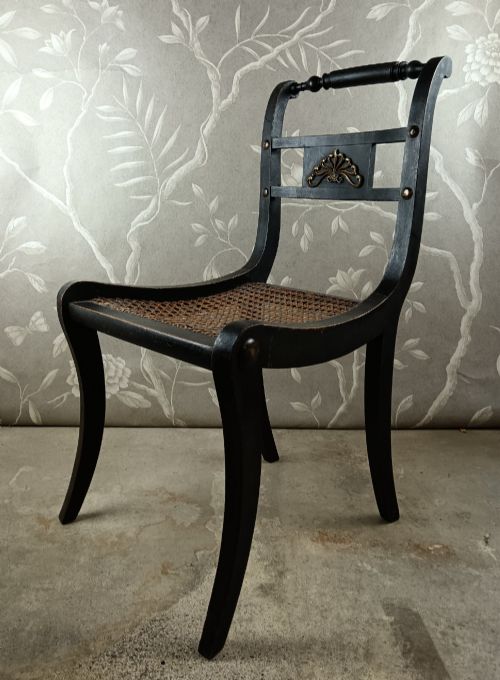


Georgian Ebonised Seating
Georgian ebonised seating delivers dramatic black-lacquered finishes and crisp neoclassical lines that elevate any room.
Georgian Ebonised Seating
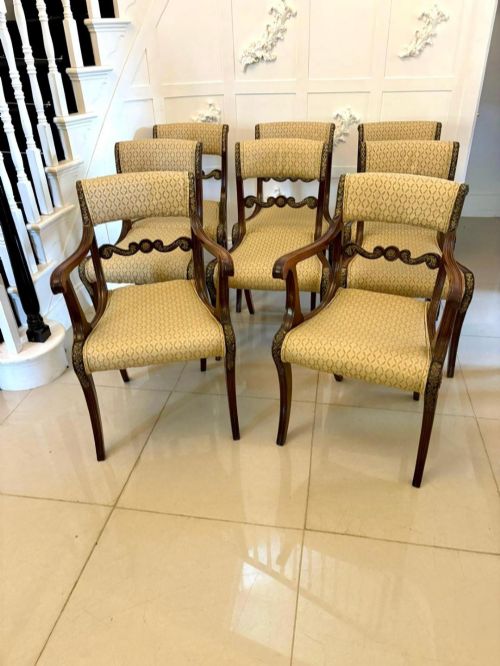
When buyers search for georgian ebonised seating, they encounter formal dining chairs, armchairs, benches, and window seats originating mainly from the Regency period and the wider nineteenth century. These forms reflect the period taste for dark, dramatic wood finishes that mimicked expensive exotic ebony.
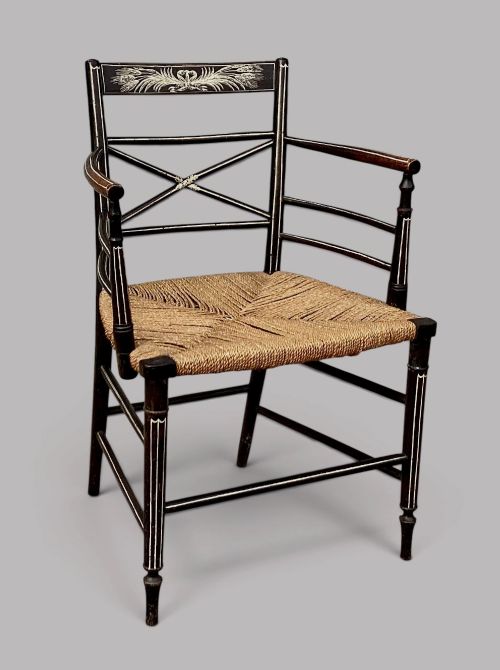
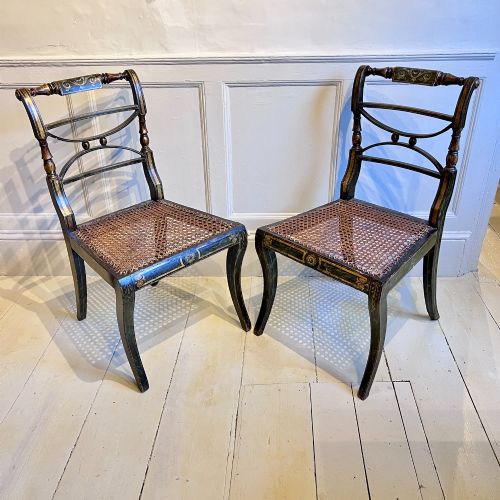
The pieces listed here showcase distinct regional and workshop interpretations, ranging from grand English country house examples to crisp metropolitan Regency designs. Caned seats and painted surfaces frequently accompany the ebonised finish, appearing alongside rope-back and faux bamboo details.
Materials and Construction
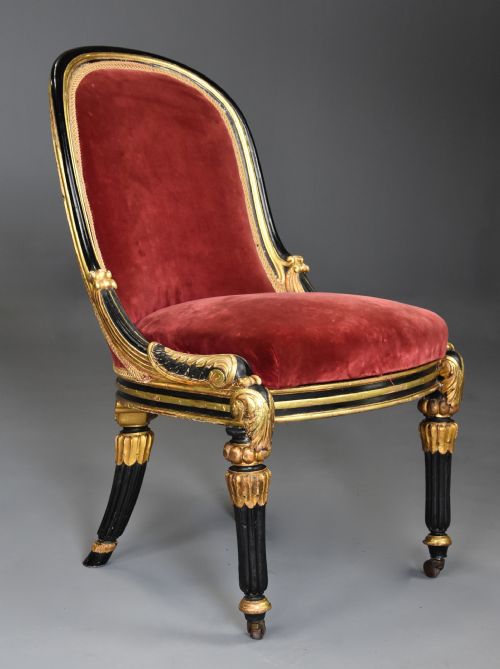
Cabinetmakers utilised native timbers such as mahogany and pine, applying specialist ebonising techniques and paint layers to darken the wood surfaces. Artisans frequently integrated parcel gilt highlights to accentuate carved mouldings, sabre legs, and faux bamboo turnings.
Seating construction relied heavily on natural materials like cane for flexible, breathable seats, whilst other examples incorporated upholstered fabric pads. Brass mounts and restrained structural details completed the execution of these nineteenth-century forms.
Georgian Ebonised Seating Retail Price Guide 2026
Typical asking prices for georgian ebonised seating among the pieces listed under this phrase on Sellingantiques today, from the lower quarter to the upper quarter. They describe what is for sale here now, not the wider market.
Early makers occasionally painted ordinary pine to look like exotic bamboo, proving that Regency decorators loved a clever trick just as much as we do.
Judging Quality and Execution
Quality in these pieces rests upon the crispness of the turning and the depth of the original ebonised surface finish. Superior examples maintain intact parcel gilding and original canework that display meticulous hand-craftsmanship rather than mechanical uniformity.
Structural integrity of the joints and the proportional harmony of the sabre legs or rope-backs separate standard utilitarian seating from exhibition quality items. The retention of early painted decoration and untouched surfaces marks the upper tier of surviving examples.
The Georgian Ebonised Seating Glossary
- Ebonised wood
- Timber treated with stain, paint, or chemical processes to imitate solid ebony. This dark finish became immensely popular during the Regency era for creating sharp visual contrast.
- Regency
- A stylistic period spanning the early nineteenth century defined by classical revival motifs and refined elegance. Pieces from this era often feature sabre legs and ancient Greek or Roman influences.
- Caned seat
- A seating surface woven from split rattan cane. This technique provides a lightweight, resilient grid that was widely utilised on light dining and armchairs.
- Parcel gilt
- The application of thin gold leaf to specific raised portions of a carved or painted surface. It highlights architectural details against a dark background.
Georgian Ebonised Seating: Frequently Asked Questions
What periods do these chairs date from?
The listings span the Regency period and the nineteenth century, with specific examples dated around eighteen fifteen to eighteen twenty. Makers of this era frequently drew upon classical design motifs.
Later nineteenth-century interpretations also appear, reflecting sustained interest in black-lacquered furniture styles through the decades.
How were ebonised chairs finished?
Craftsmen applied specialised dark stains, paints, or carbon-based coatings to ordinary hardwoods to simulate expensive exotic ebony. This achieved a dramatic, uniform dark surface.
Painters often added parcel gilt highlights or contrasting light details to emphasise the carved structural elements of the frame.
Are original cane seats common?
Several pieces retain their original woven cane seats, which offer a lightweight and flexible surface. This material was favoured for its durability and refined appearance.
When intact, early cane adds significant authenticity and historical value to a Regency dining or side chair.
What is faux bamboo seating?
Faux bamboo refers to turned wooden chair frames carved and painted to resemble natural bamboo stalks. Regency cabinetmakers embraced this exotic motif during periods of global trade expansion.
Chairs featuring this design often combine ebonised finishes with caned seats to complete the whimsical, fashionable aesthetic.