


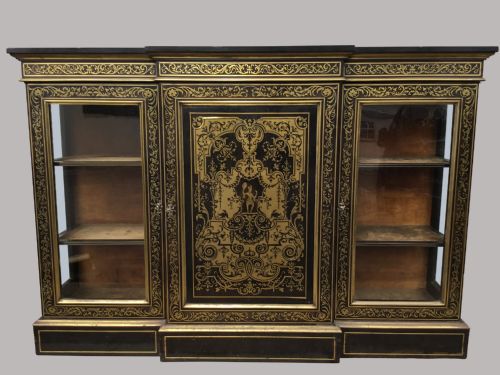


Black Brass Inlaid Cabinet
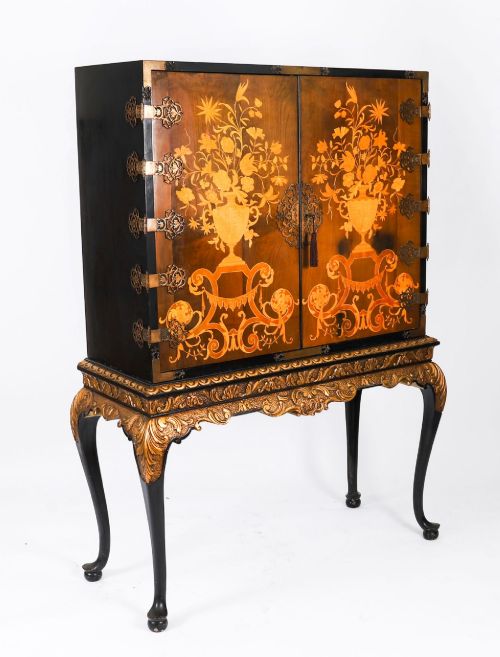
A black brass inlaid cabinet brings dark ebonised wood and bright metallic marquetry together for a striking statement in any formal room.
Black Brass Inlaid Cabinet
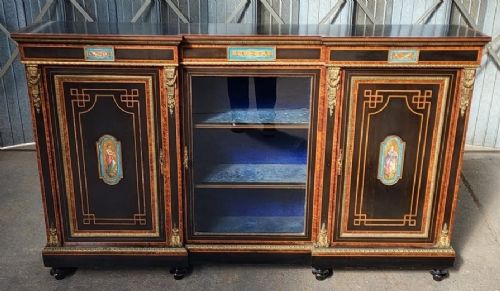
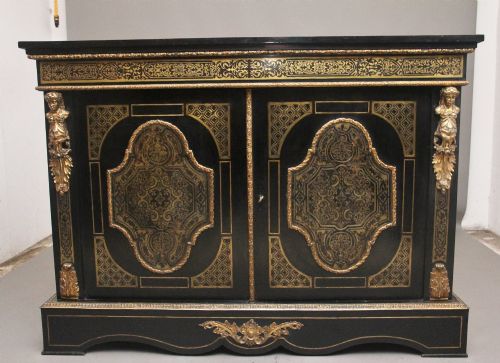
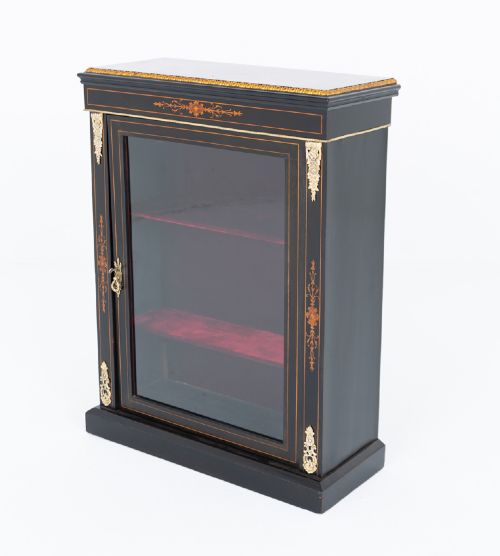
When you search for a black brass inlaid cabinet, you encounter a selection of dark-toned furniture primarily originating from the Victorian and Napoleon III periods. These pieces include side cabinets, credenzas, bookcases, and pier cabinets designed with distinct metallic detailing.
The most common formats on this page are ebonised wood side cabinets and credenzas featuring intricate brass work. Many of these items draw inspiration from French Boulle revival styles, bringing continental flair to English interiors.
Makers of these items utilised dark woods like ebony and ebonised timber to create high-contrast surfaces. The combination of black wood and polished brass remains the definitive characteristic across these historic items.
Distinguishing quality across the range
The fineness of the brass inlay work and the precision of the marquetry define the upper tier of these pieces. Elaborate ormolu mounts and sophisticated breakfront forms elevate certain examples above simpler open bookcases.
French Napoleon III and Boulle revival pieces often display greater complexity in their surface decoration compared to standard Victorian pier cabinets. The choice of secondary woods like amboyna or burr walnut also marks out superior examples.
Black Brass Inlaid Cabinet Retail Price Guide 2026
Typical asking prices for black brass inlaid cabinet among the pieces listed under this phrase on Sellingantiques today, from the lower quarter to the upper quarter. They describe what is for sale here now, not the wider market.
The listings on this page span the eighteenth, nineteenth, and Victorian periods, featuring materials such as tortoiseshell, porcelain, and ormolu.
The Black Brass Inlaid Cabinet Glossary
- Ebonised wood
- Timber treated to resemble ebony through staining or painting. This process creates the dense black finish characteristic of these cabinets.
- Boulle
- A form of marquetry using brass and tortoiseshell developed in France. It creates elaborate metallic patterns across the dark wooden surfaces.
- Ormolu
- Gilded bronze used for decorative mounts and feet. This material adds metallic highlights to the corners and panels of the furniture.
- Credenza
- A grand display piece often featuring multiple doors. These low cabinets serve to display ornaments while offering interior storage.
- Pier cabinet
- A narrow cabinet designed to stand against a wall between windows. These upright pieces typically feature single glass doors.
Black Brass Inlaid Cabinet: Frequently Asked Questions
What is a black brass inlaid cabinet?
A black brass inlaid cabinet is a piece of antique furniture built from dark ebonised wood and decorated with metallic brass patterns. These items date primarily from the nineteenth century and encompass various forms like credenzas and bookcases.
They serve both decorative and practical functions within a room. The dark finish and bright metalwork create a strong visual contrast suited to formal interiors.
Where were these cabinets made?
These cabinets originate mainly from English and French workshops during the Victorian and Napoleon III eras. Makers in both countries embraced continental revival styles.
French pieces frequently showcase intricate Boulle work, while English examples often feature robust breakfront designs. Both traditions rely on dark ebonised timber as a foundation.
How do I style a black brass inlaid cabinet?
You can place a credenza or side cabinet in a dining room or drawing room to anchor the space. The dark wood works well against neutral walls.
Keep surrounding decor balanced to let the brass and ormolu details stand out. These pieces function well as focal points without requiring heavy additional ornamentation.
How do I identify a Victorian piece?
Victorian examples often use ebonised timber paired with amboyna or burr walnut interiors. Look at the cabinet construction and the style of the brass mounts.
English Victorian pieces tend towards sturdy proportions, whereas French Napoleon III items lean into ornate Boulle revival marquetry. Examining the door configuration helps determine the specific type.