




Black and Gold Chair
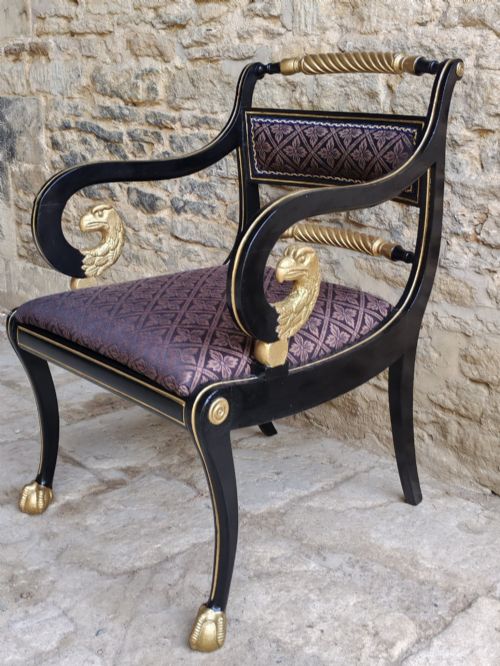
A black and gold chair brings dark elegance and metallic brightness into a room, combining rich ebonised timber with shimmering leaf.
Black and Gold Chair
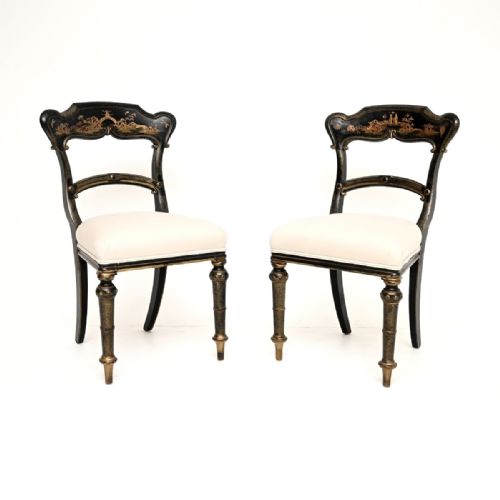
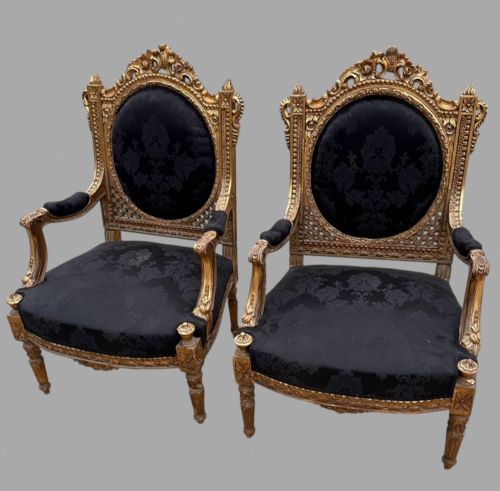
A black and gold chair brings together dark surfaces and metallic highlights across a range of historic forms. These seating pieces span from the eighteenth century through the Victorian era into the early twentieth century.
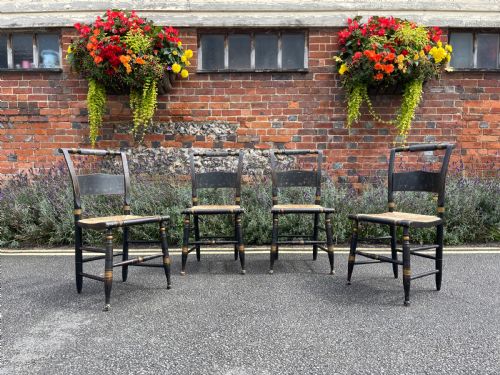
The selections on this page include armchairs, side chairs, dining chairs, nursing chairs, and prayer chairs. Many examples showcase specific design movements such as Regency, Victorian Chinoiserie, and Italian Rococo Revival.
A buyer examining this selection encounters pieces finished with ebonised wood, lacquered wood, and parcel gilt. The forms vary from American Provincial models to grand European seating.
How they were made
Makers achieved the characteristic dark finish through ebonising timber or applying dark lacquer to the wooden frame. Artisans then added contrast using gold leaf, paint, or parcel gilt highlights upon carved details.
Upholstery and decorative treatments completed the construction, using fabrics chosen to complement the dark and gilded frames. Frame construction relied on traditional joinery suited to each period style, from Regency elegance to Victorian revival work.
The listings span from the eighteenth century to the 1920s, employing ebonised wood, lacquer, and gold leaf across multiple seating forms.
What varies in quality
The distinction between standard examples and finer pieces rests upon the crispness of the carving and the preservation of the original gilt and ebonised surfaces. Skilled application of gold leaf and the depth of the lacquer finish elevate the visual impact of the chair.
Proportion and structural integrity also separate the categories, with well-balanced seating offering both visual harmony and enduring strength. The quality of the applied decoration and the fidelity to period design determine the standing of each piece.
The Black and Gold Chair Glossary
- Ebonised Wood
- Timber treated with stain or polish to resemble costly ebony. This dark finish provides the primary black ground for gilded highlights.
- Parcel Gilt
- Partial gilding applied to specific carved details or mouldings of a frame. This technique creates contrast against a painted or ebonised background.
- Prie Dieu
- A low devotional prayer chair designed with a padded upper rail for kneeling or resting arms. Victorian examples often feature ornate woodwork and upholstery.
- Chinoiserie
- European artistic style reflecting Chinese decorative motifs. Lacquered surfaces on these chairs frequently display traditional oriental scenes in gold.
- Regency
- Design period spanning the early nineteenth century characterised by classical restraint and revival influences. Chairs from this era often feature elegant curved lines and refined gilt accents.
Black and Gold Chair: Frequently Asked Questions
Where should I place a black and gold chair?
These striking pieces work effectively as accent seating in a drawing room, bedroom, or hallway where the dark finish and gilt details can catch the light. They function well beside plain walls or neutral furnishings that allow the decorative surfaces to stand out.
Because the selection includes various forms such as nursing chairs and side chairs, you can match the specific scale and function to the room layout. An armchair serves well as a standalone focal point, while dining chairs integrate around a central table.
How do I care for ebonised and gilded surfaces?
Maintenance requires gentle dusting with a soft, dry cloth to protect the delicate metallic leaf and dark lacquer from abrasion. Avoid commercial polishes or damp cloths that might damage the historic finishes.
Keeping the chair away from direct sunlight and fluctuating heat sources prevents the timber from moving and protects the integrity of the gold leaf over time.
How do I identify the period of a chair?
Dating relies on examining the structural form, the character of the wood, and the style of the decoration against known historic periods. Regency pieces often show classical restraint, while Victorian examples embrace ornate revival motifs.
Construction methods and material use also offer clues, as eighteenth-century Dutch lacquer work differs distinctly from nineteenth-century ebonising techniques.
Are these chairs comfortable for daily use?
Comfort varies depending on the specific form and age of the seating. Dining chairs and armchairs offer upright support designed for formal sitting, while nursing chairs provide lower seating.
Many period chairs retain historic padding or have been reupholstered to suit modern seating preferences while preserving the underlying frame.