


Black Lacquered Side Chairs
Black lacquered side chairs bring striking dark surfaces and disciplined form to a room, offering both seating and decorative presence across multiple centuries.
Black Lacquered Side Chairs
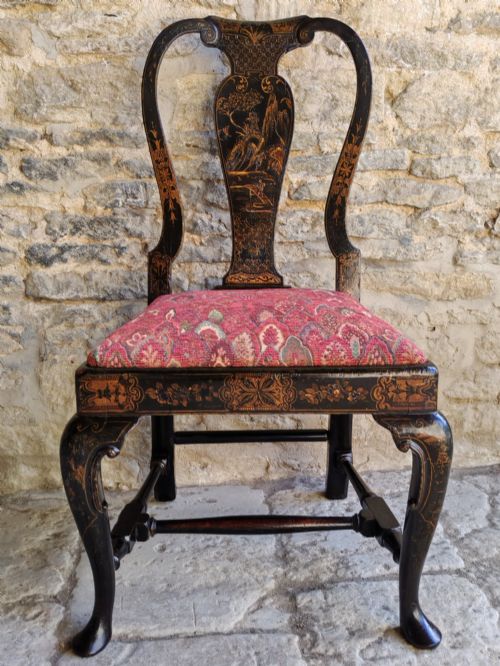
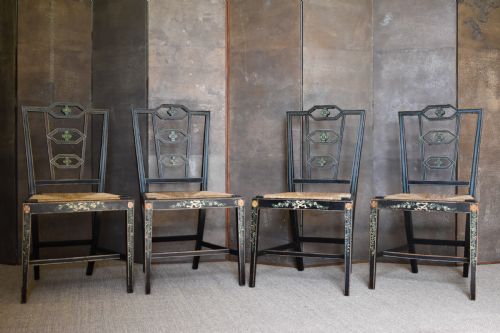
When you search for black lacquered side chairs, you encounter seating shaped by traditions running from the early eighteenth century through the Victorian era and into the twentieth. The examples here span formal dining chairs, library seating, bedroom chairs, and smaller children's pieces.
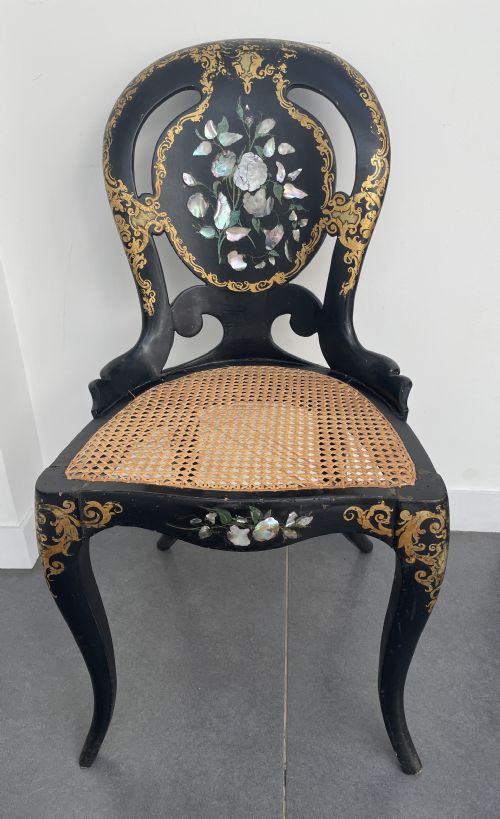
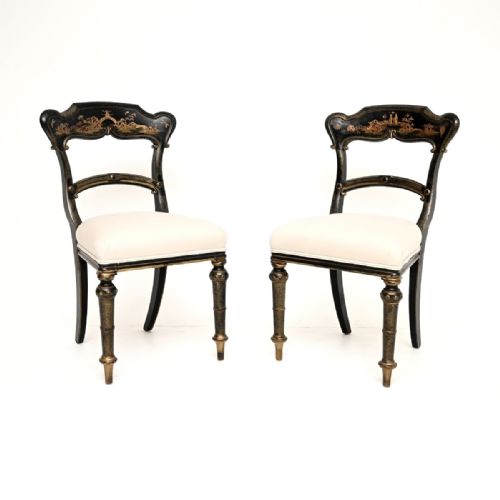
The most common versions on this page date from the Victorian period, frequently utilising papier-mâché or ebonised wood alongside earlier interpretations employing traditional lacquer and japanning. These chairs cross several distinct design vocabularies, including Queen Anne proportions, George III painted surfaces, and Victorian Chinoiserie.
Makers and workshops adapted the fundamental side chair form for diverse domestic spaces, producing sets alongside pairs and single seating. The survival of these pieces demonstrates the enduring appeal of dark lacquered finishes within historic British and continental interiors.
How they were made
The construction of these chairs relies on timber, papier-mâché, and cane frameworks built to support upright seating. Craftsmen applied successive layers of lacquer or japanning to achieve deep dark grounds before introducing ornamental details.
Decoration often involved gilt highlights and painted chinoiserie motifs, alongside inlaid mother of pearl set directly into papier-mâché surfaces. Workshops utilised traditional joinery for wooden frames while moulding compressed paper pulp under heavy pressure for lighter Victorian chair bodies.
Even children received their own diminutive papier-mâché chairs, proving that Victorian parlour etiquette started early.
What varies in quality
Quality in these chairs rests upon the preservation of the original dark finish and the crispness of the gilt or painted decoration. Pieces with intact japanning and minimal disturbance to the surface retain their intended visual depth.
The structural integrity of the frame and the retention of original materials, such as cane seats or mother of pearl inlay, dictate the standing of an individual piece. Finer examples display meticulous attention to hand-painted detail and harmonious proportions across the legs and back.
The Black Lacquered Side Chairs Glossary
- Japanning
- European imitation of East Asian lacquerwork produced by applying successive coats of varnish and heating the surface. This technique created the dark glossy finishes seen on seventeenth and eighteenth-century seating.
- Papier-mâché
- A composite material made from paper pulp or layers of paper mixed with glue and resin, pressed in moulds. It provided a strong, lightweight foundation for Victorian bedroom and parlour chairs.
- Chinoiserie
- European artistic style reflecting Chinese motifs and landscapes, frequently rendered in gold on black lacquer grounds. This aesthetic appears on early eighteenth-century and Victorian pieces alike.
- Ebonised
- Timber treated with stain or chemical agents to imitate the dense black appearance of ebony. It served as a popular alternative to traditional lacquer during the nineteenth century.
- Side chair
- An upright chair without arms designed primarily for dining or occasional use around a room. These form the majority of the seating listed on this page.
Black Lacquered Side Chairs: Frequently Asked Questions
What are black lacquered side chairs?
These are upright seats finished in dark lacquer, japanning, or ebonised wood, designed for dining rooms, libraries, and parlours across various historical periods.
They combine functional seating with decorative surfaces, often featuring gilt ornamentation, painted scenes, or inlaid mother of pearl.
How were papier-mâché chairs used?
Victorian papier-mâché chairs typically served in bedrooms and private parlours as light, decorative seating rather than heavy dining furniture.
Their smooth dark surfaces and inlaid details suited intimate domestic spaces where visual refinement mattered more than heavy daily service.
How do I date a lacquered chair?
Dating relies on examining the underlying materials, structural proportions, and decorative style, such as distinguishing early eighteenth-century japanning from Victorian papier-mâché.
Changes in chair shape, from Queen Anne curves to Victorian forms, provide reliable indicators of a piece's period of manufacture.
What is the difference between lacquer and japanning?
True lacquer traditionally involves sap from Asian trees, whereas European japanning uses western varnishes and resins to simulate the same dark glossy finish.
Both methods produce hard, reflective surfaces that accept gold paint and decorative motifs effectively.
How do I live with antique lacquered seating?
Placing these chairs away from direct sunlight and maintaining stable indoor humidity helps protect delicate painted surfaces and prevents the lacquer from drying.
Using them as occasional seating rather than primary dining chairs reduces wear on historic frames and decorative details.