


Chinoiserie Lacquered Chairs
Chinoiserie lacquered chairs bring painted Oriental scenes into European rooms, and on this page you will find pieces ranging from early walnut frames to later Edwardian suites.
Chinoiserie Lacquered Chairs
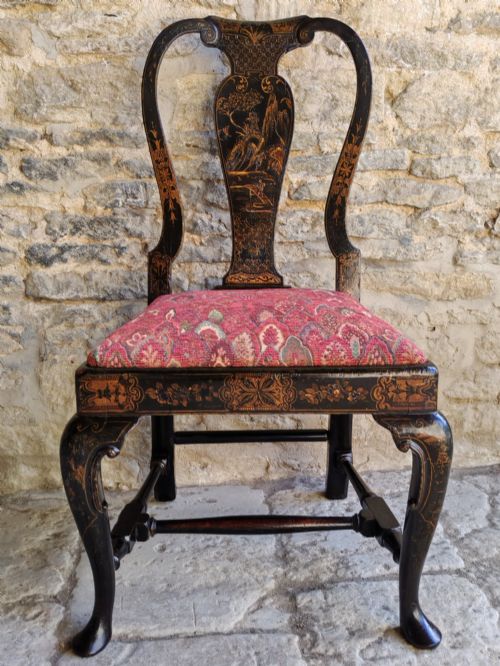
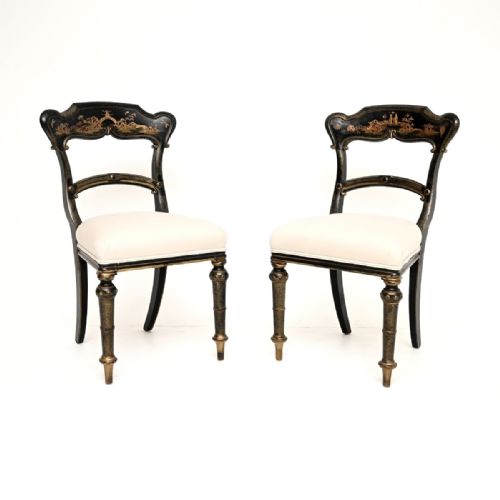
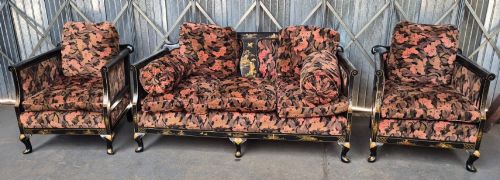
When you search for chinoiserie lacquered chairs, you look at seating finished with painted decorative motifs drawn from East Asian traditions. These works appear across several periods, including early eighteenth century examples, nineteenth century interpretations, and Edwardian revivals.
The forms vary widely to suit different rooms and uses throughout the house. You meet side chairs, armchairs, elbow seats, hall chairs, and even larger suites alongside related bedroom pieces.
The domestic versions draw heavily on European interpretations of Chinese and Oriental design. The selection includes specific regional variations, such as Dutch lacquered frames and English pieces finished in black or red lacquer.
How they were made
The makers built these frames from woods such as hardwood, walnut, satinwood, and ebonised timber. Some variations incorporate bamboo elements or faux bamboo turnings to echo eastern aesthetics.
Surface decoration relies on built-up layers of lacquer finished with gilt details and painted figural scenes. Seating surfaces often utilise cane work, bergere weave, or upholstered textile pads.
Listings feature periods from the eighteenth century to the 1930s, using lacquer, cane, gilt, and fabric materials.
What varies in quality
The sophistication of the painted surface work dictates the visual success of the piece. Crisp gilt decoration and well-preserved lacquered finishes separate the finer examples from simpler work.
The structural integrity of the timber frame and the preservation of original cane or upholstery materials also influence the character of each piece.
The Chinoiserie Lacquered Chairs Glossary
- Chinoiserie
- European decorative style reflecting Chinese artistic influences. It appears frequently in painted furniture finishes.
- Japanned
- European method of finishing wood with varnish layers to imitate Asian lacquer work. This technique creates a glossy dark surface.
- Cane
- Woven material made from stripped rattan palms. It forms lightweight seating panels in many period chairs.
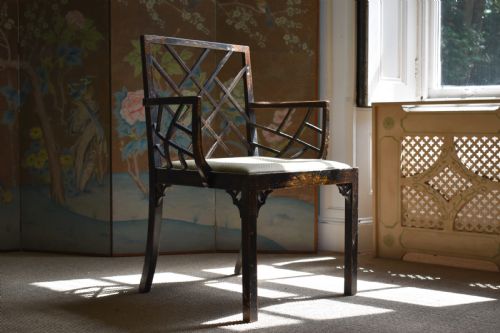
- Cockpen
- Chinese Chippendale chair design featuring an open lattice fretwork back. It takes its name from a Scottish estate.
Chinoiserie Lacquered Chairs: Frequently Asked Questions
What periods do these chairs come from?
The pieces span from the early eighteenth century through the nineteenth century and into the Edwardian era. Later twentieth century interpretations also appear.
Earlier examples often feature walnut or Dutch framing, while later pieces include Edwardian suites and twentieth century satinwood armchairs.
How do I care for lacquered surfaces?
Keep the lacquered wood away from direct sunlight and excessive heat sources. Dust gently with a soft dry cloth.
Avoid chemical polishes or water on antique lacquer finishes, as moisture can damage the delicate gilt decoration.
Are these chairs comfortable for daily use?
Seating comfort depends on the specific form, whether it is an upright hall chair, an elbow seat, or an upholstered armchair. Many feature cane or padded seats.
Consider adding appropriate textile cushions if you plan to use them regularly in a living space.
What is the difference between black and red lacquer?
Colour choice in lacquer work shifted according to period taste and regional workshops. Black lacquer provides a traditional dark ground for gilt scenes.
Red lacquer finishes appear on specific nineteenth and early twentieth century pieces, offering a brighter visual presence in a room.