



Vase Back Side Chair
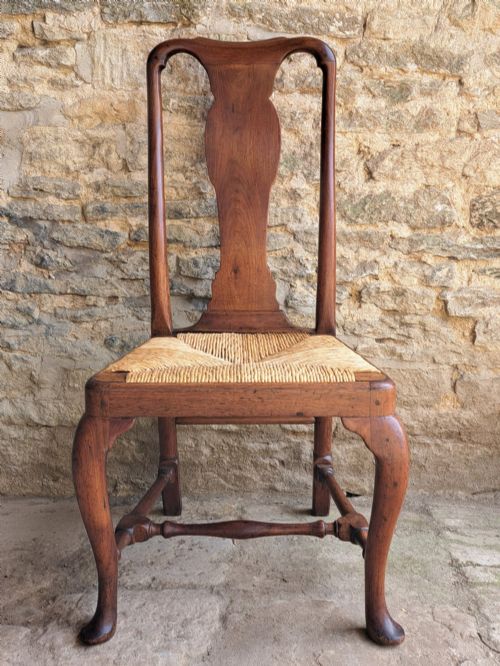
A vase back side chair brings distinct period form to a room, offering upright seating shaped by characteristic splats.
Vase Back Side Chair
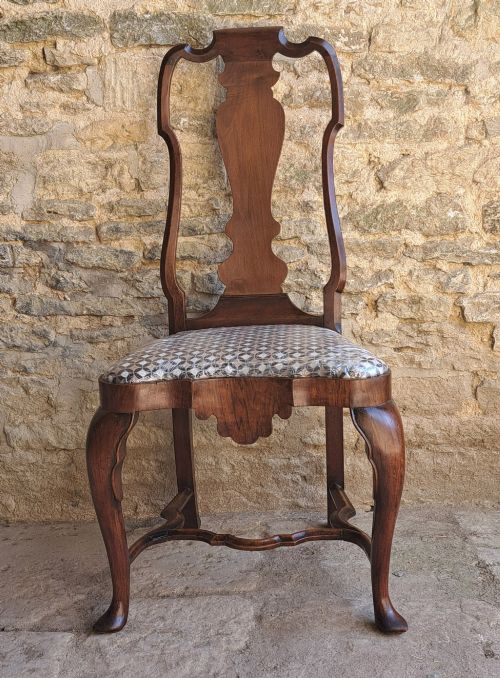
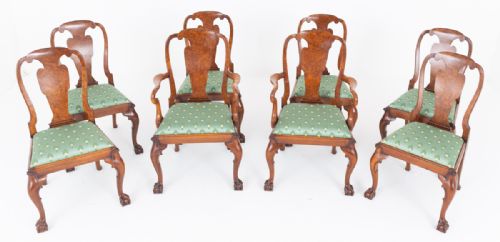
A vase back side chair takes its name from the distinctive silhouette of the central splat, which broadens in the middle and tapers towards the crest rail. Buyers searching for a vase back side chair encounter examples spanning the eighteenth century alongside revival pieces from the Victorian era and the early twentieth century.
The form appears predominantly within sets of dining chairs or as matched pairs, though individual pieces also surface. Construction ranges from early oak and walnut iterations to later mahogany and burr walnut interpretations.
Makers working within the Queen Anne, George I, and George II traditions established the foundational proportions of these chairs. Later revivals from the nineteenth and twentieth centuries faithfully replicated these early eighteenth-century outlines.
Materials and construction methods
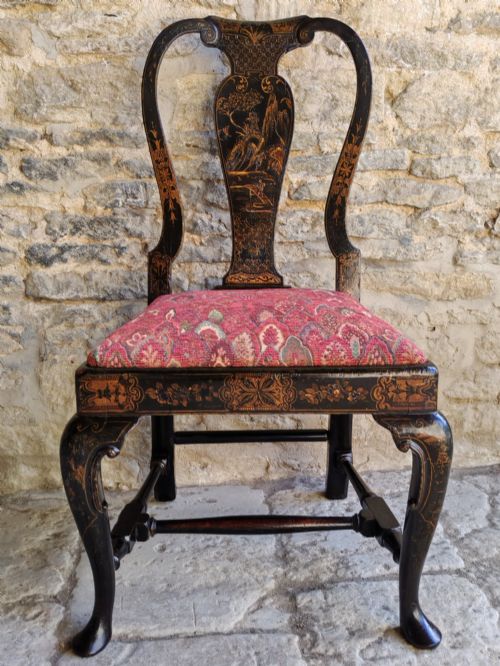
Cabinetmakers constructed these chairs using dense hardwoods including walnut, mahogany, oak, and cherry, occasionally employing burr walnut veneers or japanned and lacquered finishes. Workshops shaped the defining vase splats and cabriole legs to balance structural rigidity with refined elegance.
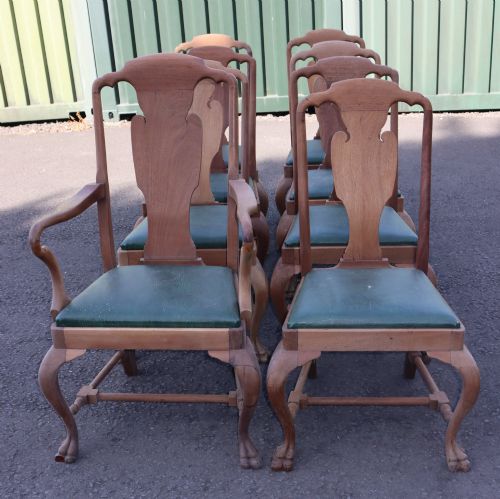
Seating provisions typically involved drop-in pads upholstered in fabric, leather, or textile, allowing for straightforward reupholstery while maintaining the integrity of the wooden frame.
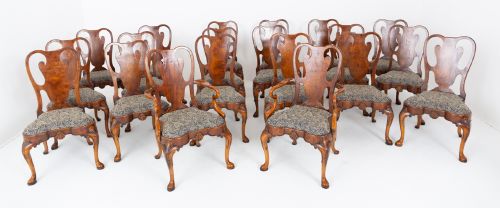
Some nineteenth-century makers evidently enjoyed the challenge of matching sets so thoroughly that they produced twenty chairs at once.
Distinctions in craftsmanship
The caliber of a vase back side chair rests upon the crispness of the carving on the splat and the fluid curve of the cabriole legs. Superior examples display harmonious grain selection in walnut or mahogany veneers and tight joinery at the stress points of the seat rail.
Revival pieces from later periods vary according to the fidelity of their proportions and the depth of the timber used, with heavier construction often marking less refined workshop output.
Charles Tozer
The Vase Back Side Chair Glossary
- Vase splat
- The central vertical piece of wood in the backrest, shaped like a vase or wine bottle. This element defines the visual character of the chair.
- Cabriole leg
- A furniture leg that curves outward at the knee and tapers inward toward the foot. It frequently terminates in a pad or hoof.
- Drop-in seat
- A removable frame upholstered separately and dropped into a recess in the seat rails. This form facilitates easy textile replacement.
- Crest rail
- The top horizontal member of the chair back. It often bears shaping or carving that complements the splat below.
- Japanned wood
- European wood finished with resinous varnishes to imitate East Asian lacquerwork. Craftsmen often enriched these surfaces with gilt decoration.
Vase Back Side Chair: Frequently Asked Questions
What is a vase back side chair?
A vase back side chair is a formal seating item characterised by a central back splat shaped in the contour of a vase. These chairs function primarily around a dining table or as occasional seating in reception rooms.
Originating in the early eighteenth century, the form saw revivals through the Victorian era and into the twentieth century, resulting in both period originals and later interpretations.
How do I date a vase back chair?
Dating relies on timber selection, construction techniques, and stylistic markers such as leg profiles and stretcher arrangements. Eighteenth-century examples typically utilise solid walnut, oak, or mahogany with hand-cut joinery.
Later revival pieces from the nineteenth and twentieth centuries often feature machine tooling or secondary woods hidden beneath veneers. Comparing the patination and wear patterns also aids in establishing age.
Are these chairs suitable for daily dining?
These chairs function well for daily dining provided the frame joinery remains sound and stable. Many examples feature robust hardwood construction designed to withstand regular use.
Buyers should inspect the seat rails and leg joints for movement before committing a set to everyday service.
How should I care for antique wood?
Maintaining antique wood involves keeping pieces away from direct heat sources and fluctuating humidity levels. Regular dusting with a soft, dry cloth preserves the finish without abrasive buildup.
Occasional application of appropriate wax feeds the timber and protects the historic surface patination.