


Bird Study Watercolour Framed
A bird study watercolour framed captures the precise observation of natural history in pigment on paper, preserved behind glass within timber and gilt moulding.
Bird Study Watercolour Framed
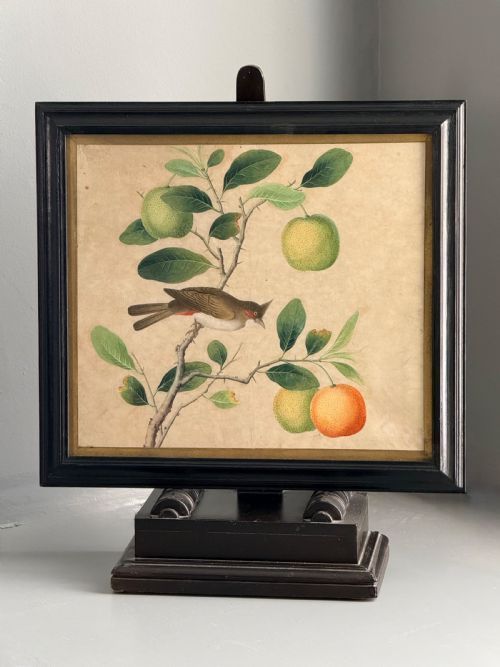
A bird study watercolour framed brings together botanical and ornithological observation executed in watercolour, gouache, and pith paper, mounted in protective wooden and gilt frames under glass. These works span periods from the eighteenth century through the Victorian era and into the mid-twentieth century.
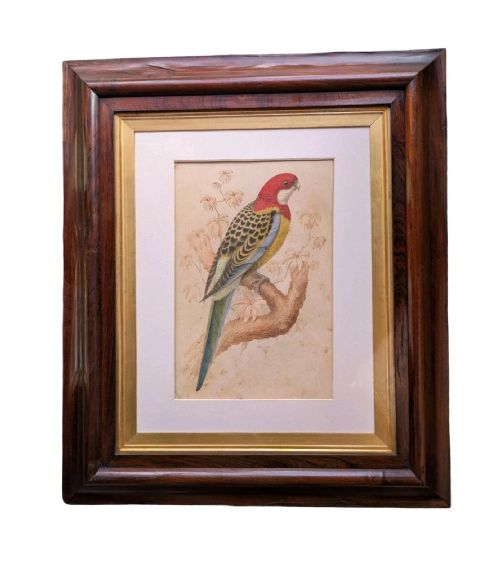
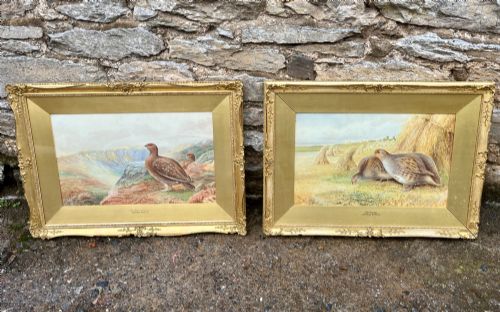
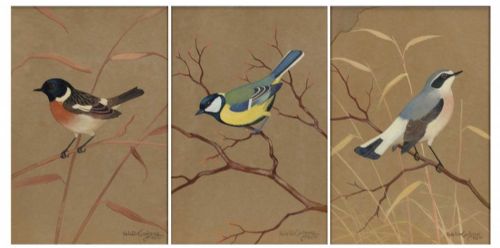
The selections encountered here range from large eighteenth-century gouache paintings on pith paper to Victorian and Edwardian portrayals of parrots, finches, and game birds. Mid-century British examples also appear, reflecting a continuity of natural history illustration across successive centuries.
Buyers seeking these works encounter framed paintings, wall art, and specific watercolours produced by named artists and regional English schools. The primary forms combine delicate brushwork on paper with framing materials that secure the delicate pigments.
Materials and techniques
Artists executed these works primarily using watercolour paint and gouache applied to paper or pith paper. The physical support often includes delicate fibrous plant material, particularly in eighteenth-century Chinese export pieces.
Enclosing frames utilise wood, ebonised timber, and gilt mounts to protect the fragile works on paper. Glass sits forward of the painting to shield the water-soluble pigments from atmospheric moisture and handling.
Listings feature works spanning the eighteenth century, the Victorian period, and the mid-twentieth century, executed on paper and pith paper.
Markers of quality
Quality depends upon the precision of the ornithological rendering and the handling of pigment, distinguishing careful natural history observation from decorative production. Works by documented painters demonstrate superior command of feather texture, anatomical proportion, and colour gradation.
The integrity of the original framing, including period ebonised wood and deep giltwood mounts, contributes to the overall standard of a piece. Preservation of the paper support without excessive fading or foxing separates finer examples from more degraded specimens.
R Hurst·George Rankin·Ralston Gudgeon·Dame Elisabeth Frink·M Simpson·William Andrews Nesfield·Harry Bright·Arthur Wardle·Paul-Louis Barruel·Donald Watson
The Bird Study Watercolour Framed Glossary
- Gouache
- An opaque watercolour paint mixed with a white pigment binder to create a heavier, denser finish. This medium allows for saturated areas of flat colour and sharp highlights on paper.
- Pith paper
- A delicate material formed from the pith of the Tetrapanax papyrifer plant, common in export works. It absorbs watercolour and gouache with a distinctive velvety texture.
- Ebonised frame
- Timber treated with a dark finish to resemble ebony, frequently utilised in Victorian framing. It provides a high-contrast dark border around the gilt mount and painting.
- Giltwood mount
- A decorative framing component coated in gold leaf or gilt, used to reflect light and separate the artwork from the outer frame. These mounts add depth to works under glass.
Bird Study Watercolour Framed: Frequently Asked Questions
How should I hang a framed bird watercolour?
Position these works away from direct sunlight to prevent the watercolour pigments and paper supports from fading over time. Maintain stable indoor humidity levels to protect the paper and the wooden frame.
Secure the frame using appropriate wall fixings suited to the weight of the glass and timber moulding. Professional framing tape on the reverse helps seal the assembly against dust.
What periods do these bird studies represent?
The available selection spans from the eighteenth century through the Victorian and Edwardian eras up to mid-century British art. Each period employs distinct framing styles and paper supports reflecting the prevailing tastes of the time.
Earlier examples often utilise pith paper, while Victorian and later works typically employ standard watercolour paper within ebonised or gilt frames.
Are these watercolours original paintings?
Each piece listed represents an original hand-painted work on paper or pith paper, rather than a modern reproduction or print. Artists applied pigment directly using brushes to capture anatomical details of parrots, finches, and game birds.
Signatures or attribution to specific creators such as George Rankin or Arthur Wardle appear on several examples.
How do I care for antique paper under glass?
Keep the glass clean using a microfibre cloth slightly dampened with water, avoiding chemical sprays that might seep beneath the rebate. Inspect the backing boards periodically for signs of moisture or insect activity.
Professional conservators can address any developing foxing spots or degradation of the paper support without disturbing the historical frame.