
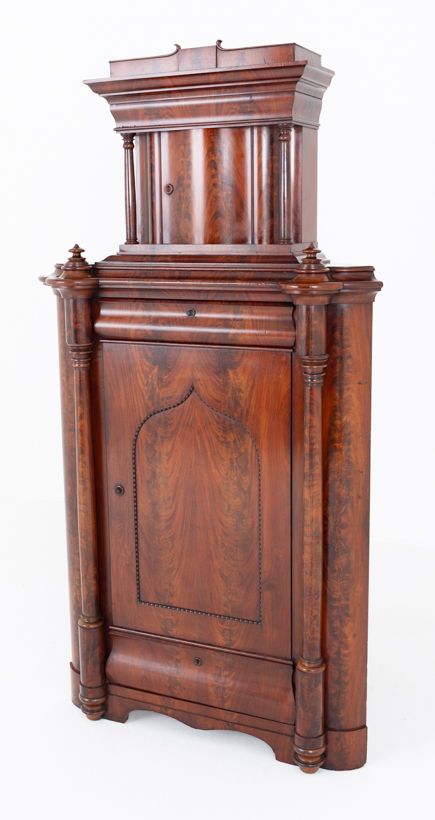


Biedermeier Mahogany Cabinet
A biedermeier mahogany cabinet brings architectural clarity and rich timber figures into a room.
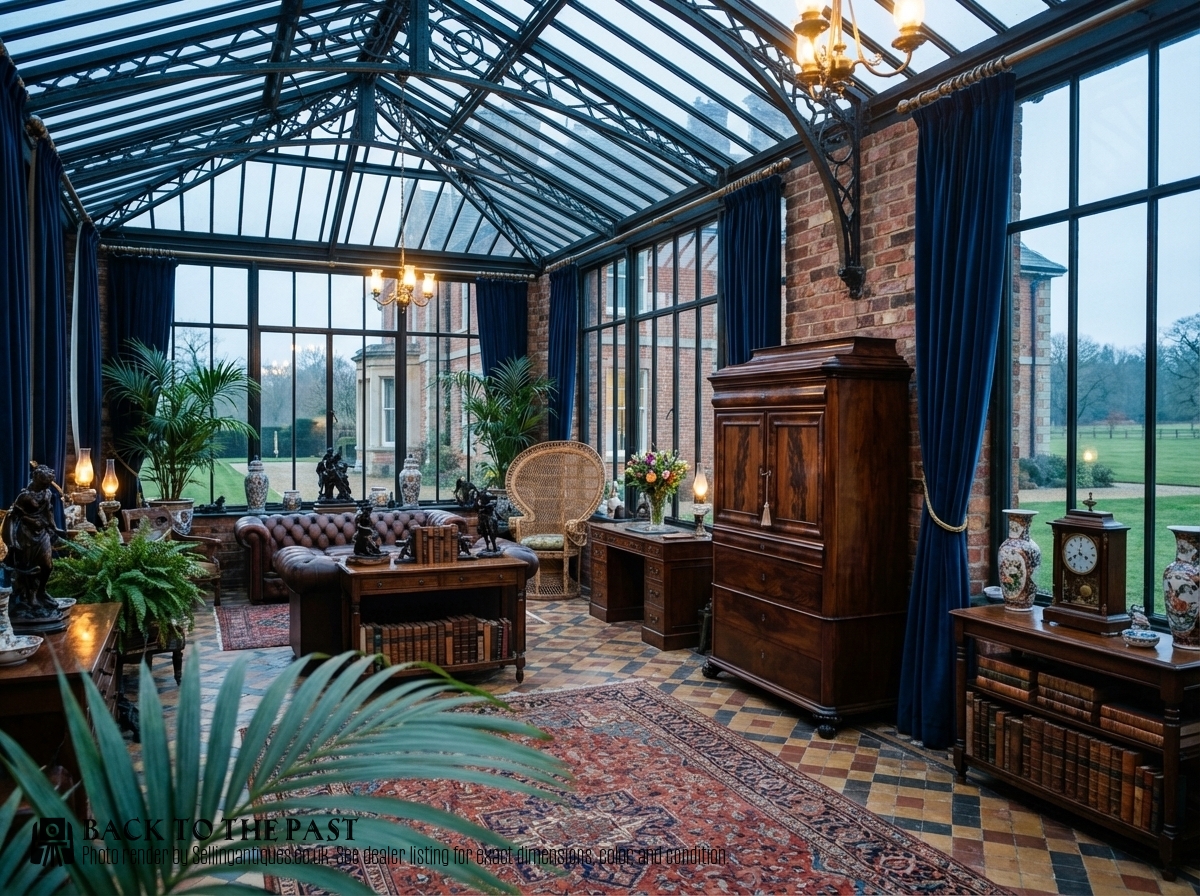
Biedermeier Mahogany Cabinet
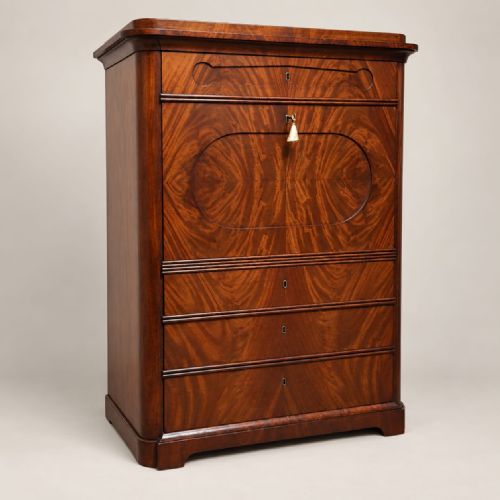
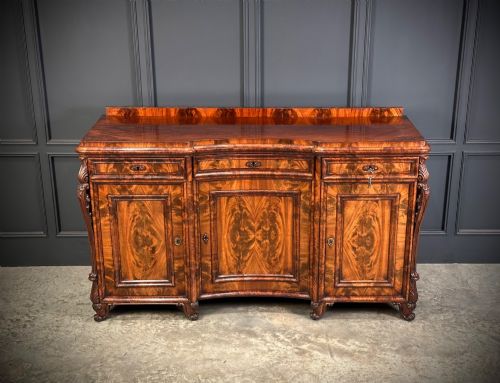
A biedermeier mahogany cabinet encompasses a variety of practical furniture forms ranging from secretaire chests and tall abattants to corner cupboards, sideboards, and oval pedestal cabinets. These pieces emerged across the nineteenth century, drawing on continental European traditions including Danish Biedermeier, Scandinavian design, and neoclassical influences.
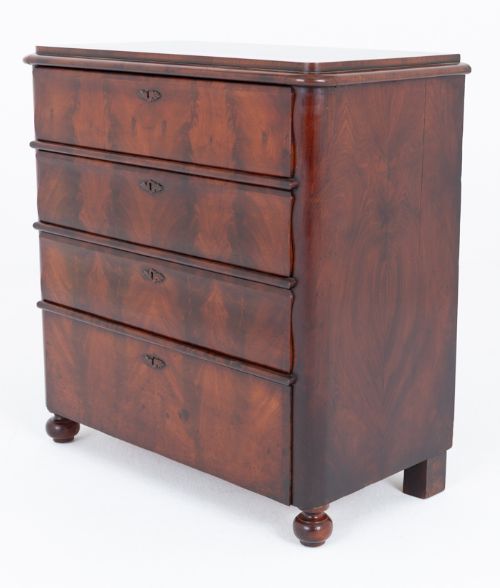
The most common versions met on this page include secretaire abattants with drop-front writing desks, upright chests of drawers, and glazed corner cabinets. Many examples originate from Scandinavian workshops, displaying restrained geometry and balanced proportions that suit modern interiors just as well as traditional rooms.
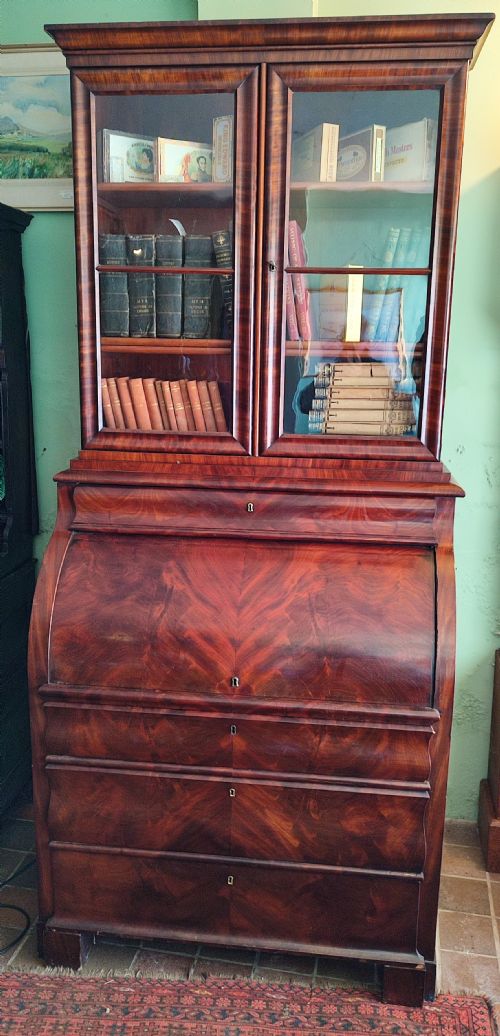
Makers focused on clean sightlines, allowing the natural grain of the timber to provide the primary decoration rather than heavy carving or applied ornamentation. Whether configured as a gentleman's wardrobe, a cylinder bureau bookcase, or a compact pedestal cabinet, each piece serves a distinct storage purpose.
Materials and Construction
Makers utilised solid wood frames overlaid with flame mahogany veneer or standard mahogany veneer to achieve striking visual patterns across the main surfaces of each biedermeier mahogany cabinet. The grain was carefully matched and laid symmetrically to create bold geometric displays on drawer fronts and door panels.
Secondary structural elements incorporated walnut and other solid woods to provide stability and internal framing for drawers and shelving. Brass fittings and glass panels appear frequently on glazed cabinets, desks, and consoles with mirrors.
Object forms span corner cabinets, secretaire commodes, cylinder bureau bookcases, oval pedestal cabinets, and gentleman's robes.
Evaluating Quality and Craftsmanship
Quality rests upon the selection and preservation of the veneer work, where book-matched flame mahogany demonstrates superior craftsmanship compared to plain timber surfaces. The alignment of the grain across drawers and doors shows the care taken by the cabinetmaker during construction.
Structural integrity also separates examples, particularly in how well the joints, drop-front mechanisms, and internal drawers operate over time. Pieces that retain their original brass hardware, glass panels, and consistent polish reflect a higher degree of preservation.
The Biedermeier Mahogany Cabinet Glossary
- Biedermeier
- A style of Central European furniture design dating from the nineteenth century, characterised by utilitarian comfort, clean lines, and minimal ornamentation. It prioritised warm wood grains and architectural restraint over historical revivalism.
- Flame mahogany
- A decorative veneer cut from wood where the branch meets the trunk, producing a rippled, flame-like pattern. Makers prized this material for its dramatic visual movement on cabinet doors and drawer fronts.
- Secretaire abattant
- A tall upright cabinet featuring a hinged drop-front writing surface that conceals a group of small interior drawers and pigeonholes. When closed, it presents the tidy appearance of a standard chest or cupboard.
- Pedestal cabinet
- A freestanding, often oval or cylindrical storage piece designed to stand independently against a wall or in a corner. These compact units provided enclosed shelving without taking up excessive floor space.
- Neoclassical
- An artistic movement drawing inspiration from the classical art and culture of ancient Greece and Rome. This influence appears in the balanced symmetry and restrained columns found on continental furniture.
Biedermeier Mahogany Cabinet: Frequently Asked Questions
What is a biedermeier mahogany cabinet?
A biedermeier mahogany cabinet is a piece of nineteenth-century continental furniture built with clean geometric lines and veneered in rich mahogany. These cabinets served functional domestic purposes, functioning as writing desks, sideboards, or storage cupboards.
Craftsmen focused on the natural figure of the timber rather than ornate carving, producing understated pieces that suit contemporary and traditional interiors alike.
How do I use an abattant desk?
An abattant desk contains a hinged writing flap that pulls down to reveal a fitted interior with small drawers and compartments. This drop-front mechanism allows the piece to function as a compact workspace during the day.
When closed, the flap conceals writing materials and paperwork, restoring a tidy architectural facade to the room.
Where were these cabinets made?
These cabinets originated across continental Europe during the nineteenth century, with many examples hailing from Denmark, Sweden, and other Scandinavian regions. Workshops in these areas developed distinct regional interpretations of the broader Biedermeier and Empire styles.
Scandinavian makers often favoured bright, warm mahogany veneers and pared-back structural forms that emphasised light and proportion.
How do I tell different periods apart?
Differentiating periods relies on observing stylistic shifts from early nineteenth-century neoclassical severity towards softer proportions and richer veneers later in the century. Pieces marked by Danish Empire influences often display bolder architectural cornices and columns.
Later nineteenth-century iterations tend toward streamlined utility, while transitional examples incorporate walnut accents and varied drawer configurations.