




Bevelled Overmantle Mirror
A bevelled overmantle mirror brings historic presence to a fireplace wall, combining broad proportions with the angled edges of period glass.
Bevelled Overmantle Mirror
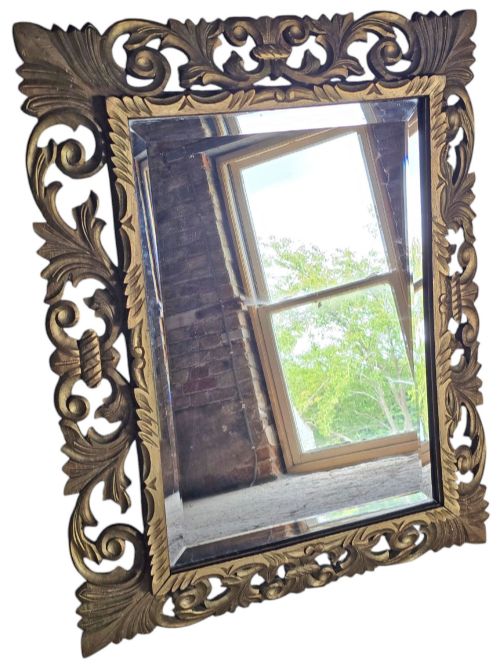
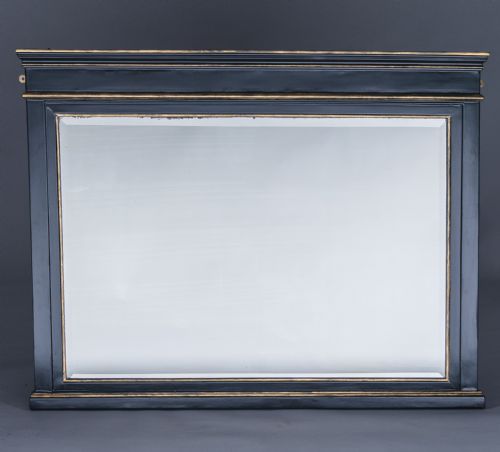
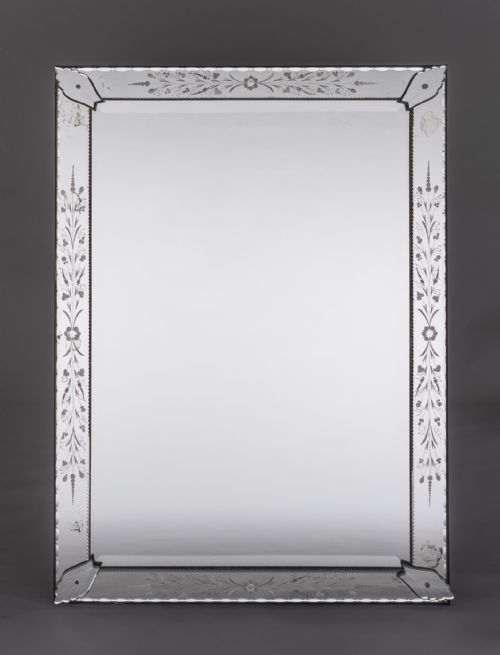
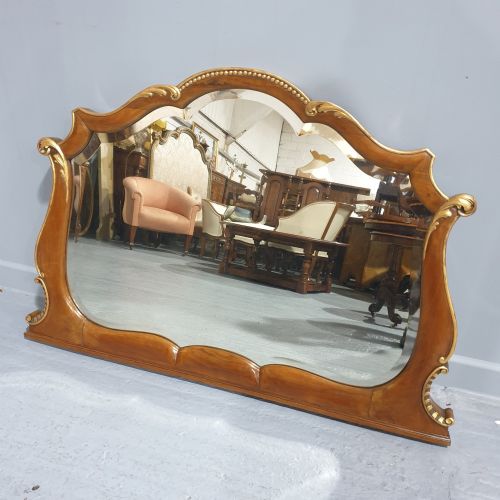
When you search for a bevelled overmantle mirror, you are looking at large wall-hanging or mantel-standing glasses designed specifically to sit above a fireplace. The pieces on this page span the nineteenth century, the Victorian era, the Edwardian period, and the early twentieth century. They arrive in various forms, including French chateau, Florentine, Venetian, and Georgian style designs.
The most common versions you will meet on this page are large Victorian and nineteenth century giltwood and gilt pieces, alongside walnut and ebonised wood examples. Many incorporate decorative elements such as ribbons, flowers, or ornate frames. They function equally well mounted on the wall or standing upon a mantelpiece.
Materials and construction
Makers constructed these frames using timber foundations like mahogany, walnut, oak, and ebonised wood, frequently applying gesso to build up intricate surface ornamentation. Gilding with gold leaf or paint provided the characteristic metallic finish seen on many frames. Glass plates were cut and manually bevelled at the edges to catch the light.
Framing techniques ranged from simple moulded wooden surrounds to elaborate carved giltwood and parcel gilt designs. Artisans integrated silvered or smoked glass plates into the wooden and gesso structures, ensuring the substantial weight of the mirror was supported for wall mounting.
The archive and current listings show regional styles including French chateau, Florentine, Venetian, and Edwardian designs.
What separates the finest examples
Quality in these mirrors rests upon the crispness of the carving within the giltwood, gesso, or wood frame and the depth of the bevel upon the glass plate. Superior pieces retain their original gilding and silvered glass, showing minimal degradation across the reflective surface. The integration of decorative details like floral and ribbon carvings distinguishes finer workshops from standard production.
Substantial scale combined with structural integrity marks the upper tier of surviving examples. The handling of secondary woods, the retention of original backboards, and the clarity of the bevelled glass plate all contribute to the distinction between ordinary utility and high quality craftsmanship.
The Bevelled Overmantle Mirror Glossary
- Overmantle mirror
- A large mirror designed to be placed specifically on the mantelpiece or wall directly above a fireplace. These pieces often feature wide horizontal or vertical proportions to suit chimney breasts.
- Bevel
- The angled edge ground along the perimeter of a glass plate. This technique creates a prismatic border that catches and refracts light.
- Giltwood
- Timber, commonly carved, that has been coated with gold leaf or a gold-coloured finish. It appears frequently on nineteenth century frames.
- Gesso
- A plaster-like mixture applied to wood frames as a base for gilding and intricate moulded decoration. It allows for sharp relief work.
- Parcel gilt
- A finish where only specific portions of a wooden or painted object are highlighted with gilding. This technique creates contrast against walnut or ebonised wood.
Bevelled Overmantle Mirror: Frequently Asked Questions
How do I hang a heavy overmantle mirror safely?
These large mirrors require secure wall fixings distributed evenly to support their substantial weight and wooden frame construction. Professional installation into masonry or heavy studwork is recommended.
Many examples were originally built to stand on the mantelpiece itself, anchored by a wall tether for safety. Check the existing framing and backboards before choosing a mounting method.
Were these mirrors made for walls or mantelpieces?
Makers designed overmantle mirrors to occupy the specific architectural space above a fireplace, though their proportions allowed for versatile placement. Some large nineteenth century examples functioned as floor standing or wall mounted pieces.
Their width relative to height typically matches the scale of a chimney breast. This makes them suitable for commanding large wall spaces in reception rooms.
How do I identify a Victorian overmantle mirror?
Victorian examples often feature heavy giltwood, ebonised wood, or mahogany frames with deep moulding and ornate decorative elements. They frequently incorporate large bevelled glass plates and substantial wooden backboards.
Stylistic cues draw from nineteenth century design trends, ranging from restrained walnut constructions to elaborate gilt compositions. Comparing the timber and frame construction helps confirm the era.
What is the difference between giltwood and gilt gesso?
Giltwood consists of solid timber covered in gold leaf, whereas gilt gesso involves a plaster mixture applied over a wooden base before gilding. Gesso allows for intricate moulded details and relief ornamentation that would be difficult to carve directly into hardwood.
Both materials produce a bright metallic finish, but gesso frames often display sharper, more sculptural decorative motifs.