
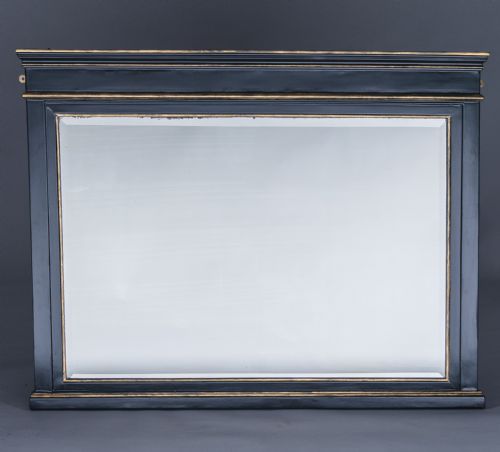


Ebonised Chimney Mirror
An ebonised chimney mirror brings dramatic dark timber and reflection to a room, grounding high mantels with traditional nineteenth-century presence.
Ebonised Chimney Mirror
An ebonised chimney mirror is a substantial wall glass designed to hang above a fireplace, frequently recorded as overmantel or overmantle forms. These pieces belong to periods such as the nineteenth century, Regency, and eras around eighteen-eighty, eighteen-ninety, and nineteen-hundred.
The objects take the shape of wall mirrors and triptych mirrors, often featuring ornate frames or neat-sized proportions. They connect directly to historical interior schemes, pairing dark surfaces with reflective glass to enhance light.
Visitors browsing this page encounter examples from Victorian and Aesthetic Movement styles alongside grand Regency pieces. Each item utilises painted, gilt, or parcel-silvered elements to accentuate the dark wooden structure.
How these mirrors were constructed
Makers built the foundational frames using pine and wood, applying ebonisation treatments to simulate expensive ebony timber. Gesso and composition layers were then added to build up relief details, such as acanthus decorated columns.
Gilding and paint completed the surface ornamentation, contrasting the dark ebonised wood with bright gold or cream accents. Silvering techniques were applied to the glass plates to create the reflective panels seen across the listings.
Current listings feature pieces spanning the nineteenth century, Regency, and Edwardian periods, constructed from materials including ebonised wood, giltwood, and gesso.
What defines quality in these mirrors
The distinction between standard and superior pieces lies in the crispness of the frame's moulding and the depth of the applied ornament. Finer examples display carefully carved or moulded details like acanthus decoration rather than flat, repetitive composition pressings.
Harmonious proportions separate better mirrors from heavier or clumsier designs, particularly in triptych formats where the division of the glass plates must balance the architectural weight of the surrounding frame.
The Ebonised Chimney Mirror Glossary
- Ebonised wood
- Timber treated with stain or paint to resemble heavy, black ebony. This dark finish became popular during the nineteenth century for its striking contrast.
- Giltwood
- Wood carved and coated with gold leaf or metallic powder. It provides a bright contrast against ebonised surfaces.
- Gesso
- A plaster-like mixture applied to wooden frames as a base for gilding or painting. It allows intricate relief ornaments to be moulded onto the structure.
- Triptych mirror
- A glass divided into three distinct vertical sections within a single frame. This layout widens the visual field above a mantelpiece.
- Overmantel
- A large mirror specifically proportioned to hang on the wall directly above a fireplace. These pieces often incorporate architectural elements suited to period rooms.
Ebonised Chimney Mirror: Frequently Asked Questions
How do I hang an ebonised chimney mirror?
These frames carry considerable weight due to their timber construction and large glass plates. Secure fixings into structural wall studs or appropriate masonry anchors are essential for safety.
Position the frame at a height that reflects the room rather than the ceiling, usually leaving a modest gap above the mantelpiece shelf.
What is the difference between Regency and Victorian styles here?
Regency pieces often display classical architectural details, including gilded surfaces and column supports. They tend to emphasise symmetry and restrained neoclassical elegance.
Victorian and Aesthetic Movement examples frequently utilise ebonised wood alongside painted or parcel-silvered highlights. These later designs lean towards bolder decorative contrasts and ornate framing.
How should I clean the frame and glass?
Dust the ebonised wood and gesso ornamentation gently with a dry, soft cloth to prevent moisture damage. Avoid harsh chemical polishes that can degrade the dark surface finish.
Apply glass cleaner sparingly to a cloth rather than directly onto the mirror plate. This stops liquid from seeping behind the glass and damaging the antique silvering.
Are these mirrors suitable for modern rooms?
The dark timber and reflective surface anchor contemporary interior schemes with historical contrast. Their strong vertical forms suit both traditional chimney breasts and minimalist living spaces.
Placed opposite a window, they successfully amplify natural light within a room while adding a defined focal point to plain walls.