
Bentwood Umbrella Tree
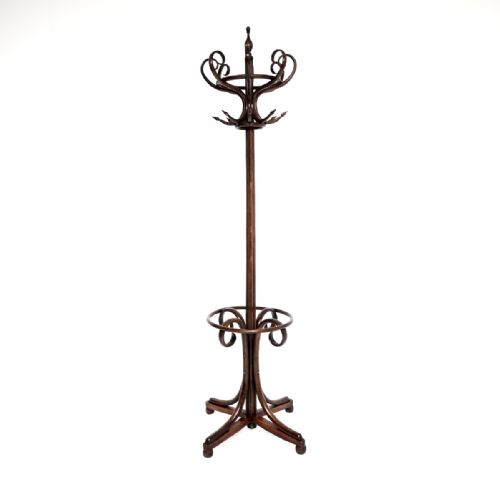
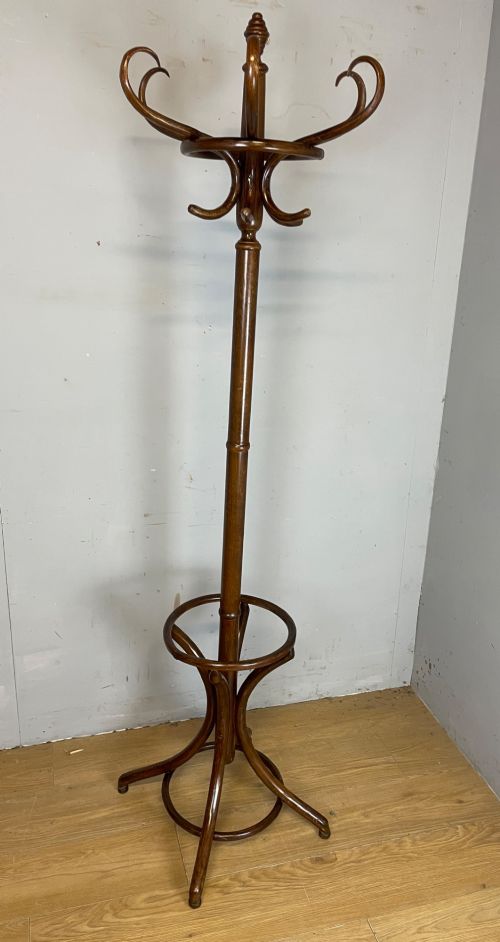
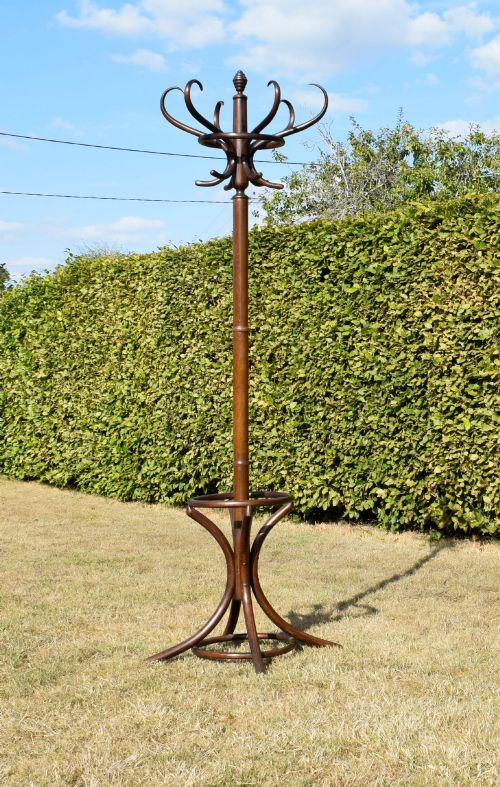
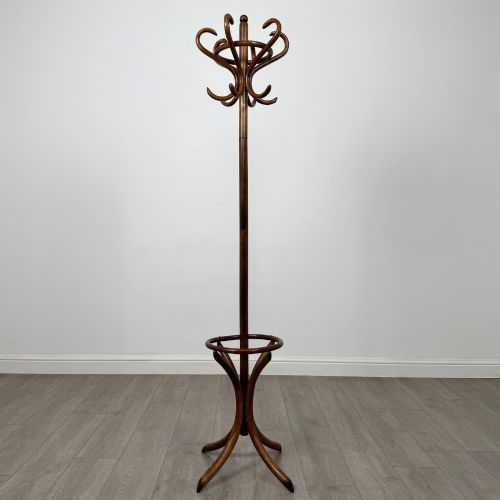
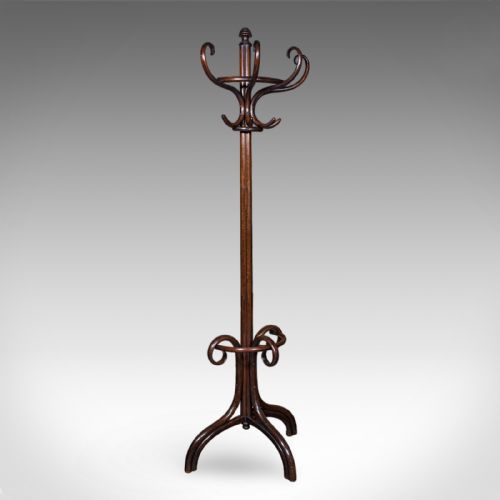
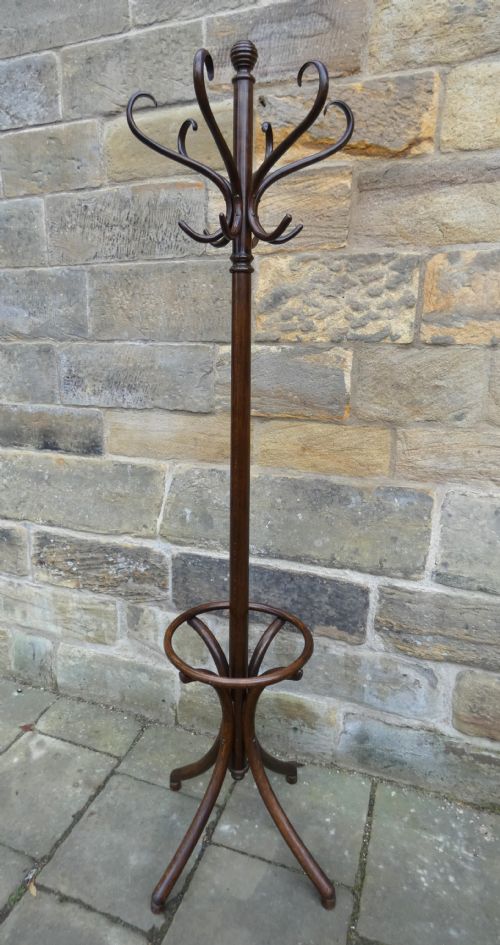
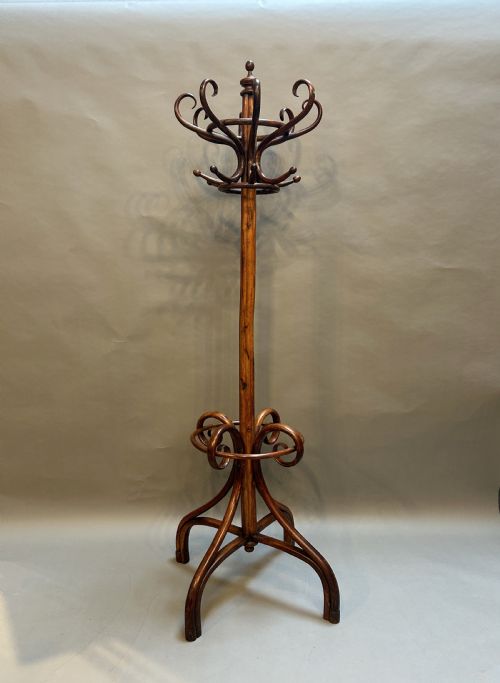
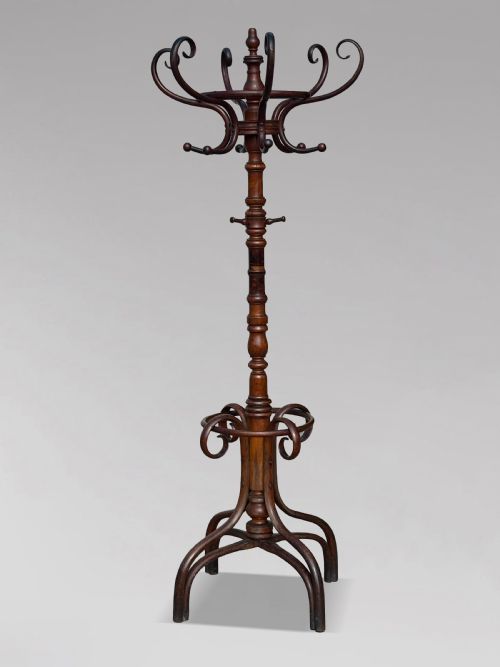
A bentwood umbrella tree brings structural elegance to a hallway, offering purposeful vertical storage for hats, coats, and sticks.
Bentwood Umbrella Tree
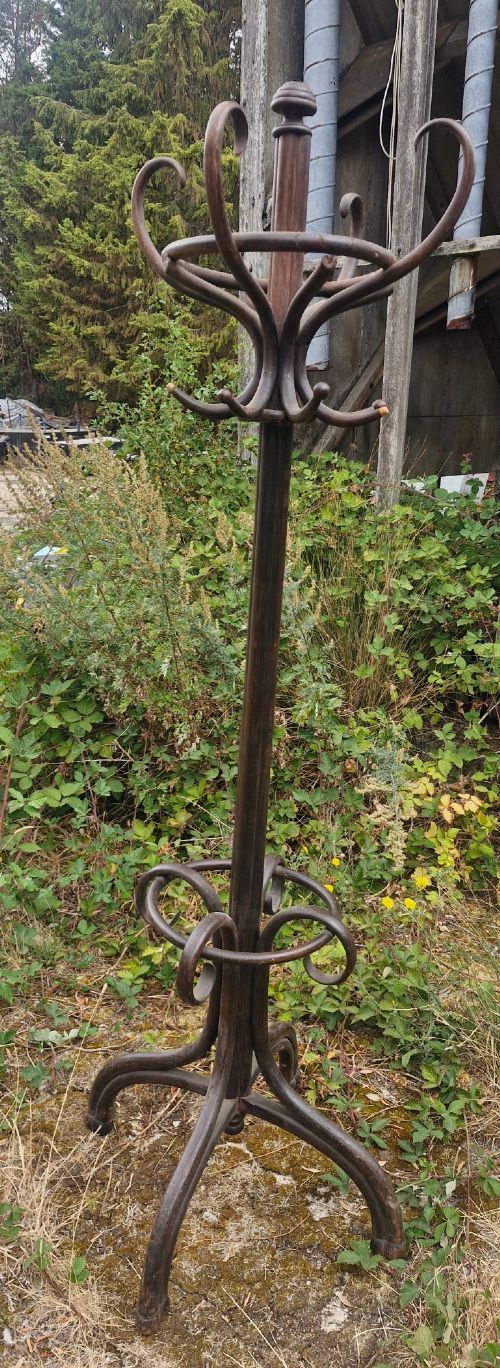
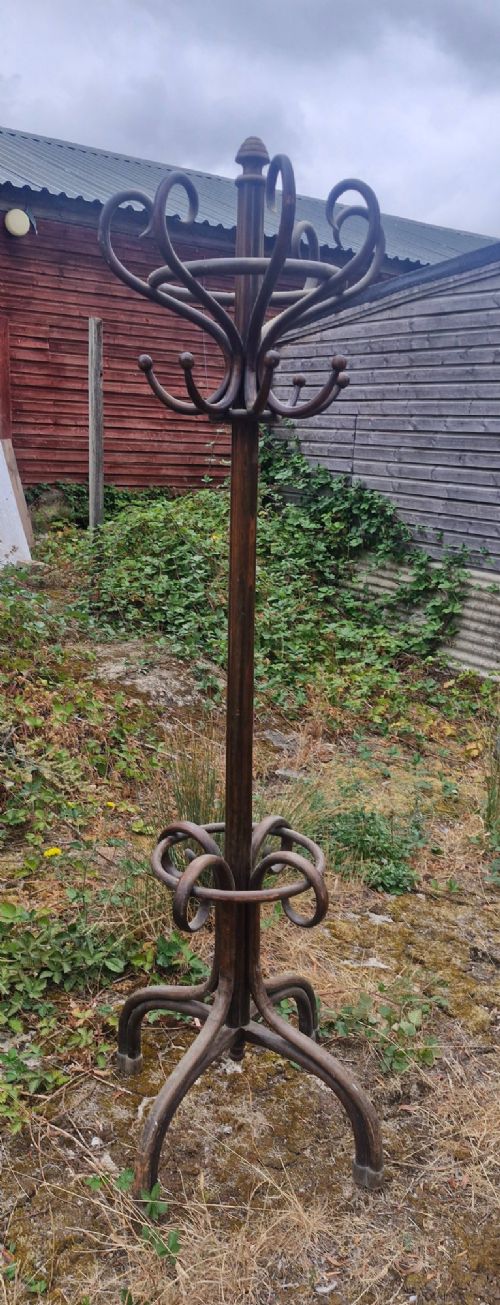
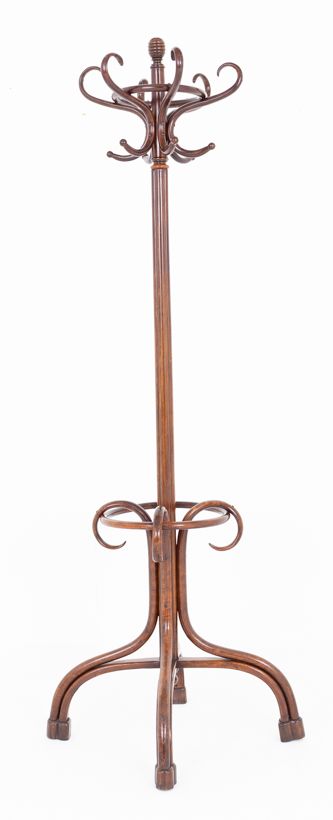
A bentwood umbrella tree stands as a vertical hall fixture designed to hold outerwear and walking accessories, appearing predominantly in forms from the nineteenth and early twentieth centuries. These pieces date from the Victorian and Edwardian eras, spanning through the 1920s and 1930s.
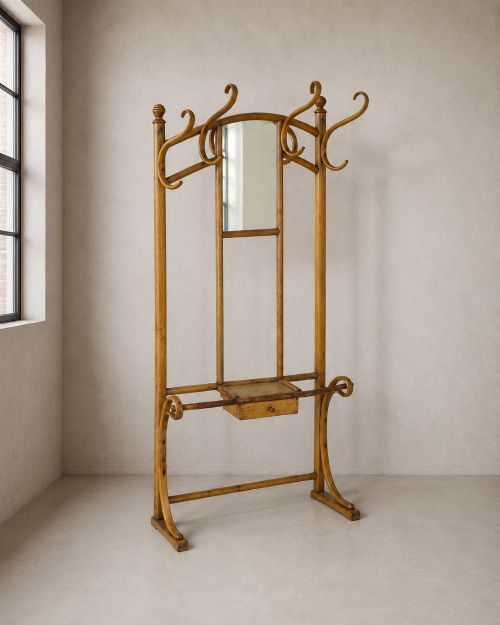
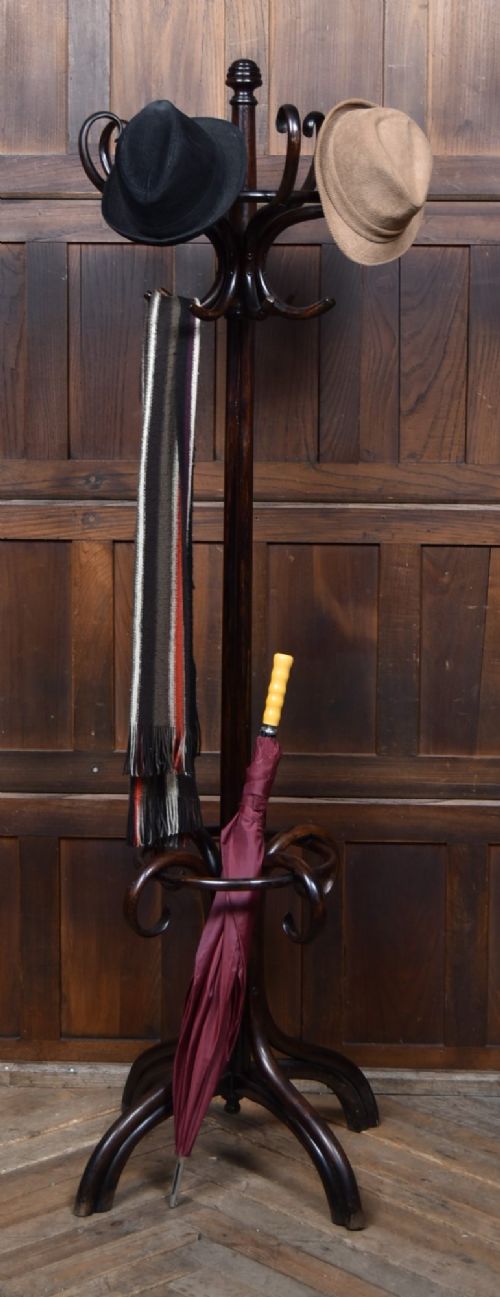
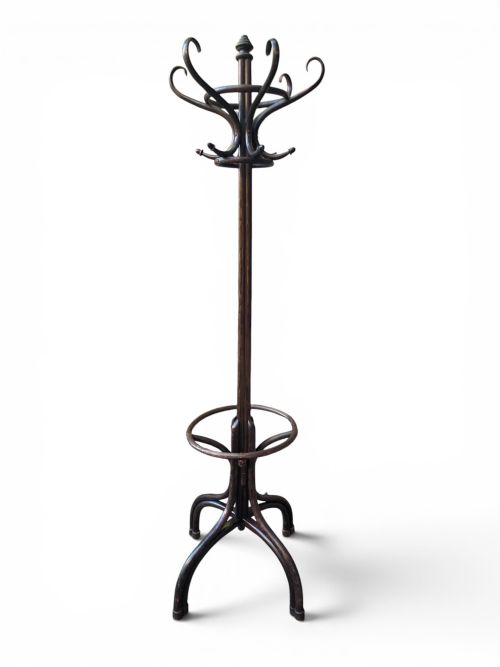
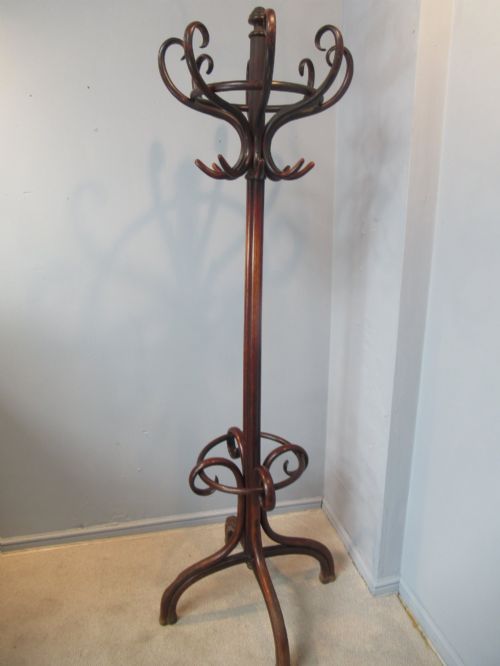
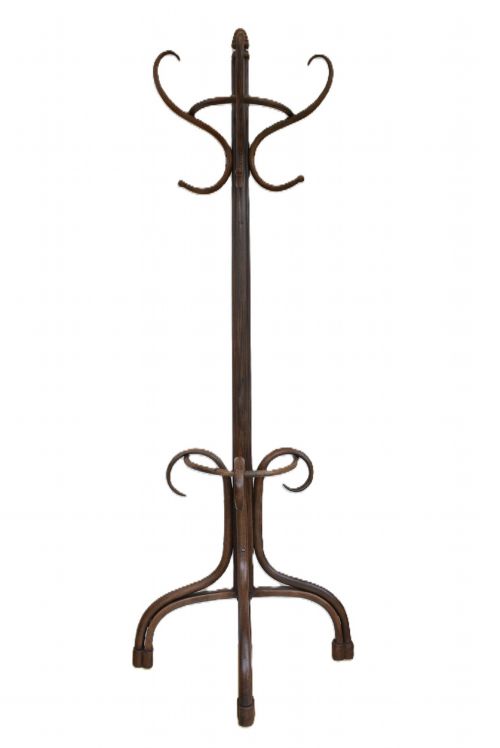
The objects take the shape of tall coat stands, hall stands, and coat racks that integrate curved framing to support multiple hanging hooks and umbrella rings. Certain examples feature revolving upper sections or half-round configurations intended for placement against hallway walls.
Materials and Technique
Makers utilised beech, beechwood, and steamed beechwood, subjecting the timber to moisture and heat until it became pliable enough to bend into graceful curves. This technique defined the characteristic structural arches and loops seen across Austrian bentwood production.
Surfaces were finished with wood stain, sometimes yielding a honey-coloured tone, while selected pieces incorporated glass elements to complete the functional design of the hall stand.
Listings for this phrase span from the Victorian period through the Edwardian era into the 1930s.
Design Complexity
Finely constructed pieces display greater complexity in their scrollwork, double tops, and revolving mechanisms, separating standard utility items from elaborate workshop production. Maker attribution, such as labels from established manufacturers, distinguishes exemplary examples.
The integrity of the steamed timber curves and the robustness of the central column dictate the overall refinement of the standing structure, reflecting the capability of the maker.
Thonet·Fischel
The Bentwood Umbrella Tree Glossary
- Bentwood
- Wood that has been shaped by heating and bending. This technique creates continuous curved frames without traditional joined corners.
- Hall Stand
- A piece of furniture placed in an entrance hall. It typically combines coat hooks, hat racks, and umbrella storage.
- Thonet Style
- Furniture design following the pioneering methods of Michael Thonet. It relies on steam-bent solid beech components.
- Revolving
- Describing a top section that turns independently on its base. This allows easier access to hanging garments in tight spaces.
Bentwood Umbrella Tree: Frequently Asked Questions
What is a bentwood umbrella tree?
A tall hall fixture made from steam-bent timber, designed to hold hats, coats, and walking sticks in an entryway.
These pieces combine vertical columns with curved wooden hooks and ring bases for umbrellas.
How do I date a bentwood hall stand?
Dating relies on stylistic markers, construction methods, and occasionally maker labels from periods like the Victorian era or the 1920s.
Earlier examples from the nineteenth century often display denser bentwood scrollwork and specific manufacturer stamps.
Where should I place a coat tree?
These items suit entrance halls, corridors, and vestibules where outerwear storage is practical.
Wall-standing and half-round designs fit neatly against flat surfaces, while revolving versions require floor clearance around them.
What woods were used for bentwood stands?
Beech and steamed beechwood form the primary material for these items due to the wood's response to heat treatment.
Stains are applied to the timber to achieve finishes ranging from light honey tones to deeper brown hues.