

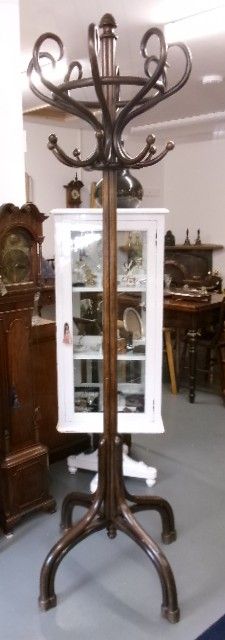
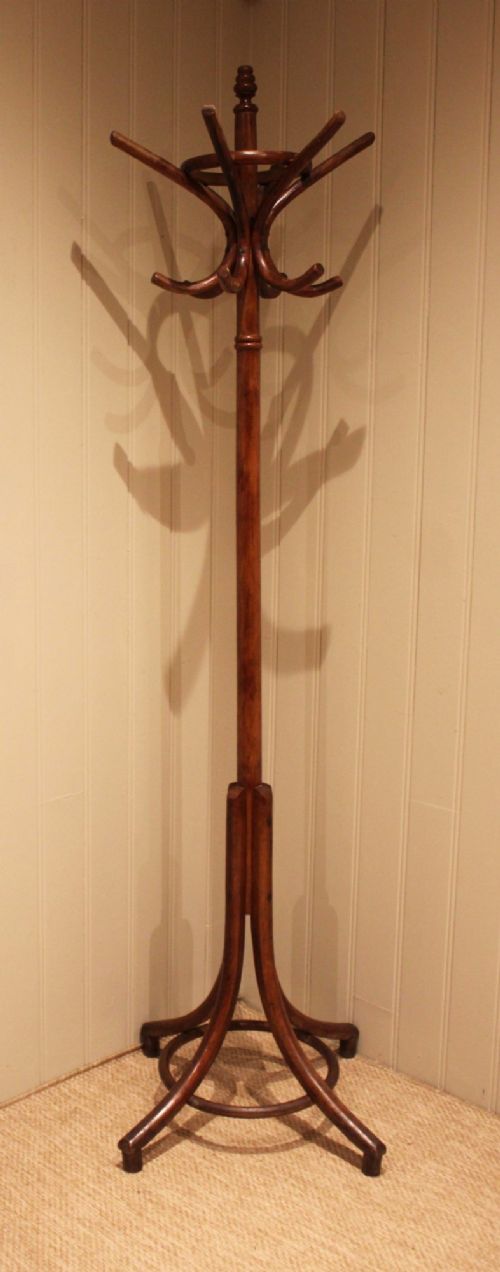
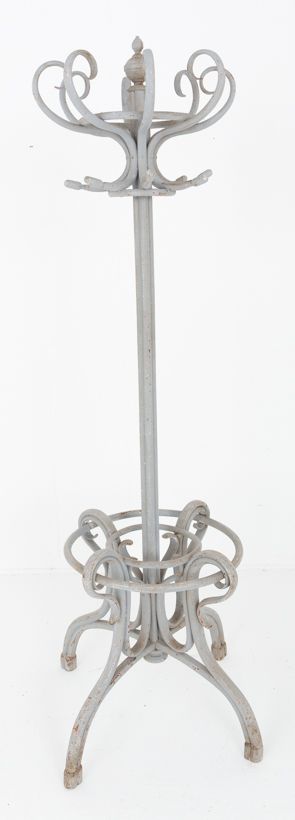
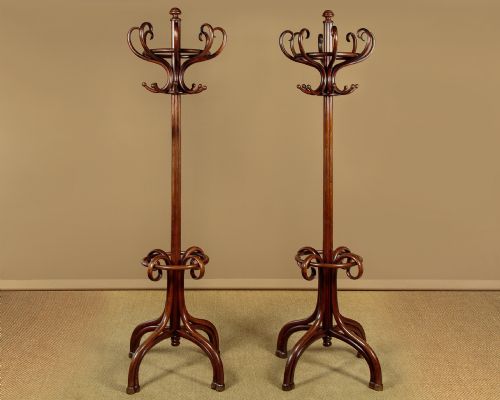
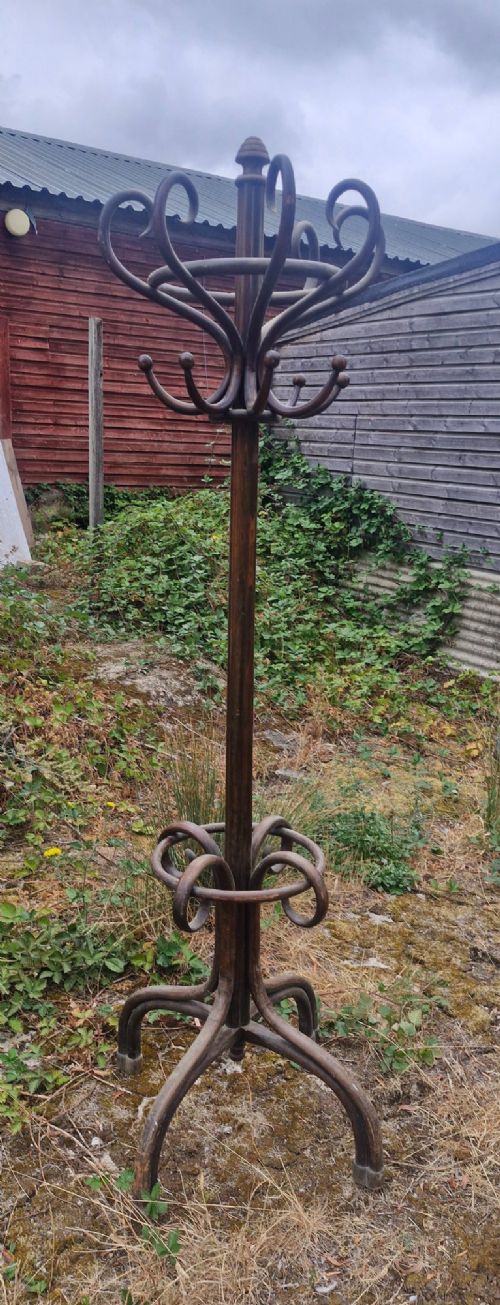
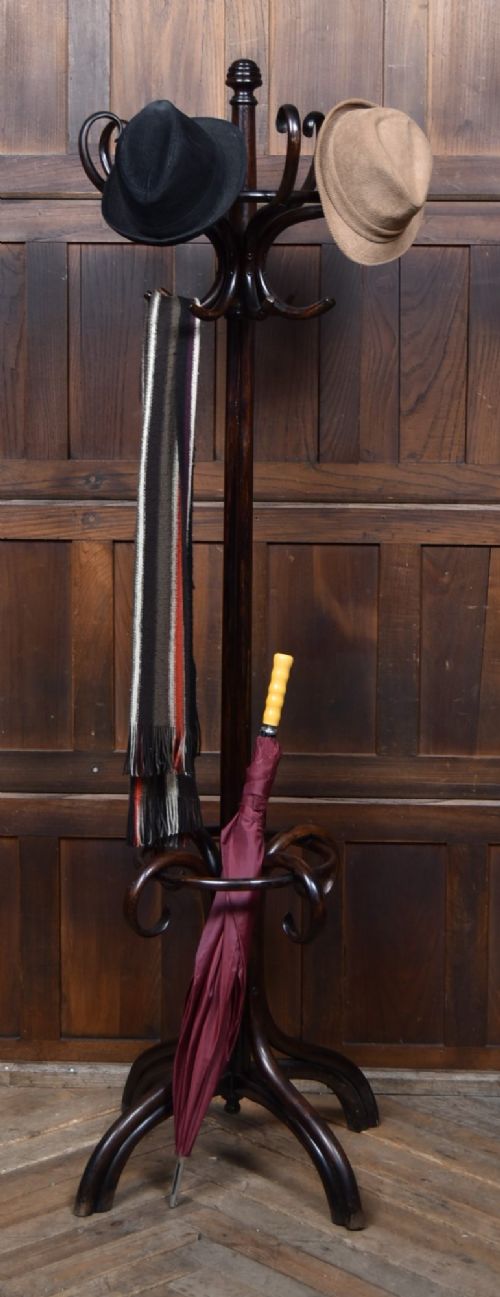
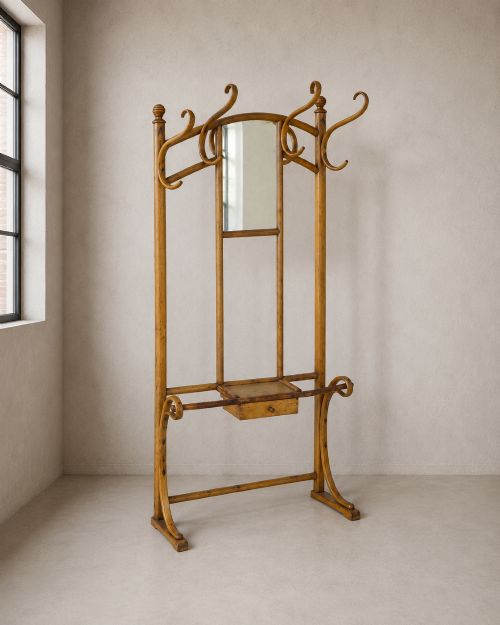
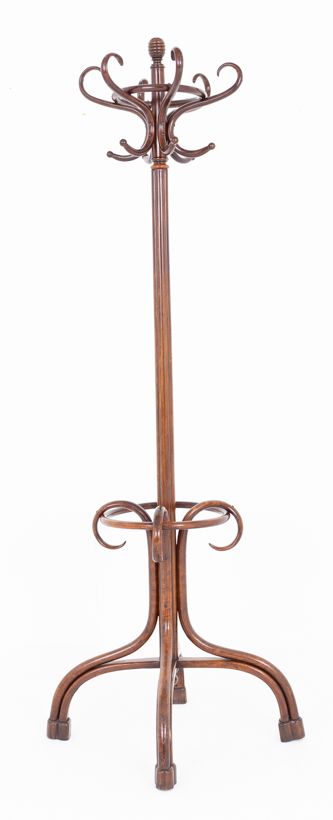
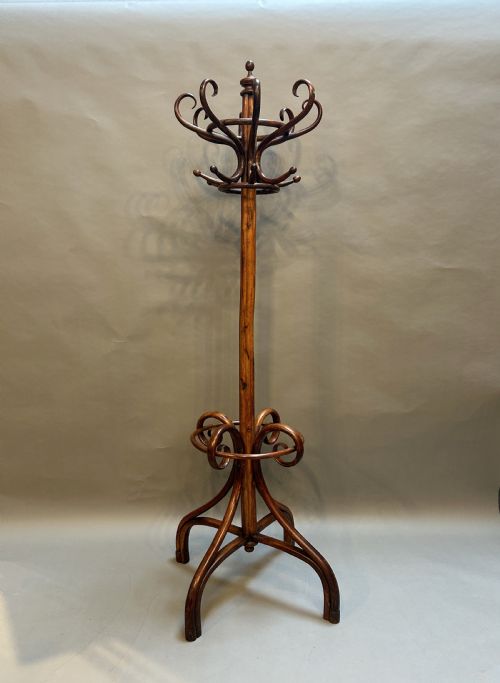


Bentwood Beech Hat Rack
These bentwood beech hat rack designs bring organic curves and reliable utility to an entrance hall.
Bentwood Beech Hat Rack
A bentwood beech hat rack takes the form of a wall-standing coat and hat stand, often featuring integrated stick and umbrella holders. These entrance pieces organise outerwear efficiently while occupying minimal floor space.
The selection here spans the Victorian era, the Edwardian period, and the early twentieth century, including French and Austrian examples. Thonet designs and Thonet style pieces dominate the selection, showing the enduring popularity of steam-bent timber.
Most examples date from around nineteen hundred to nineteen thirty, representing the height of commercial bentwood production. Buyers will encounter honey-coloured timber finishes, painted surfaces, and occasionally glass elements within these halls stands.
How they were made
Makers utilised solid beech and beechwood timber, steaming the wood to achieve pliable states for shaping fluid curves. Once softened in steam chests, artisans bent the material around metal or wooden forms to create the characteristic loops and scrolls.
Assembly relied on robust mechanical fixings and screws to secure the curved components together into a rigid load-bearing structure. Stained wood finishes or paint were then applied to protect the grain and achieve a uniform appearance.
Bentwood Beech Hat Rack Retail Price Guide 2026
Typical asking prices for bentwood beech hat rack among the pieces listed under this phrase on Sellingantiques today, from the lower quarter to the upper quarter. They describe what is for sale here now, not the wider market.
Every morning, these wooden scrolls greet visitors with the enduring resilience of Victorian steam.
What varies in quality
Superior examples display precise, unbroken steam curves without stress fractures or excessive distortion in the timber. The weight and balance of the wall-standing design also indicate the care taken during manufacture.
Finer pieces feature branded maker marks, numbered models such as the Thonet Number 10905, and double top configurations. Consistent honey-coloured staining and intact original hooks separate standard production items from distinguished specimens.
Thonet
The Bentwood Beech Hat Rack Glossary
- Bentwood
- Timber shaped by applying heat and moisture through steam, allowing wood to be bent into graceful curves without breaking. This technique defined the output of major nineteenth-century workshops.
- Beech
- A hard, fine-grained wood favoured for steam-bending due to its uniform cellular structure and strength. It forms the primary material for the majority of these hall stands.
- Thonet
- The pioneering firm associated with mass-produced steam-bent furniture, founded by Michael Thonet. Their numbered models set the global standard for bentwood coat stands.
- Hallstand
- A piece of furniture designed for entrance halls, combining hooks for hats and coats with umbrella or stick storage. Many incorporate wall-standing frames to maximise stability.
Bentwood Beech Hat Rack: Frequently Asked Questions
How do I secure a wall-standing rack?
Most wall-standing bentwood stands rely on their wide footprint and balanced vertical design to remain stable under the weight of heavy winter coats.
For additional security, particularly in busy hallways, positioning the base squarely against a flat wall prevents tipping when garments are loaded unevenly.
How should I clean bentwood furniture?
Dust the curved surfaces regularly with a dry cloth and occasionally treat the timber with a suitable furniture polish to maintain the finish. Avoid excessive moisture, as damp conditions can affect the nineteenth-century stained wood and painted surfaces.
Keeping the timber away from direct heat sources also prevents the steam-bent joints from drying out over time.
Are these stands suitable for small hallways?
The vertical orientation and slim profile of bentwood coat stands make them ideal for narrow corridors and compact entrance spaces.
Because the design keeps coats elevated and contained within a circular footprint, it prevents clutter from spreading across the floor.