


Beige Wingback Chair
A beige wingback chair brings centuries of upholstered comfort and draught-excluding design to a room.
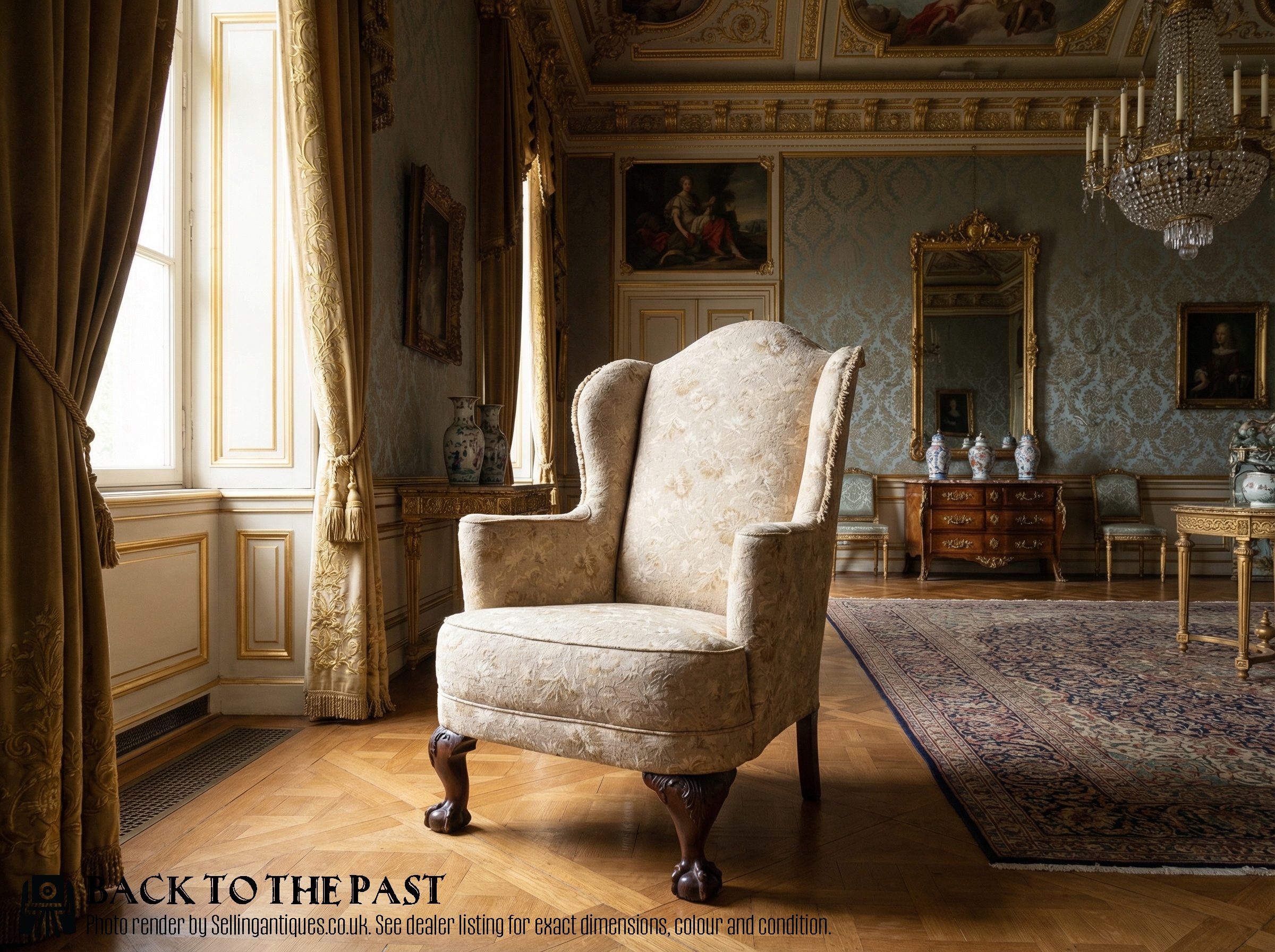
Beige Wingback Chair
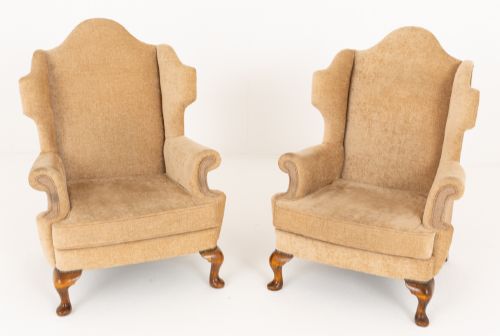
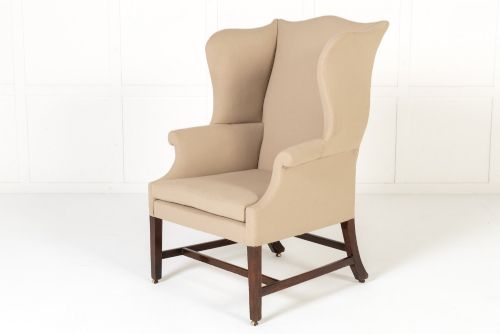
A beige wingback chair provides deep seating framed by protective side panels designed to trap heat and block drafts. The examples found here span from the 18th century through the Edwardian period and into the early 20th century, capturing classic forms.
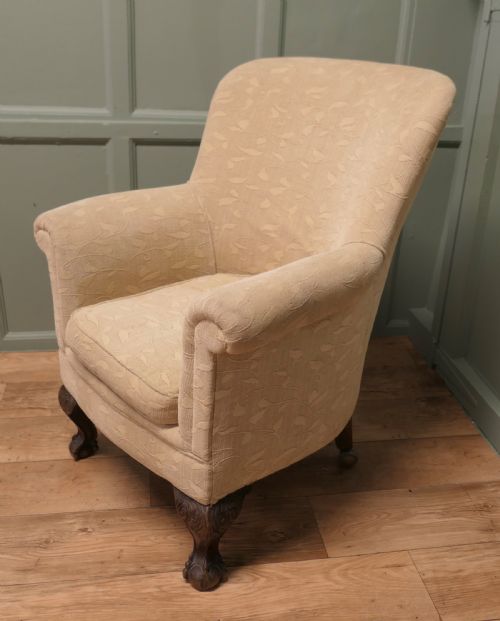
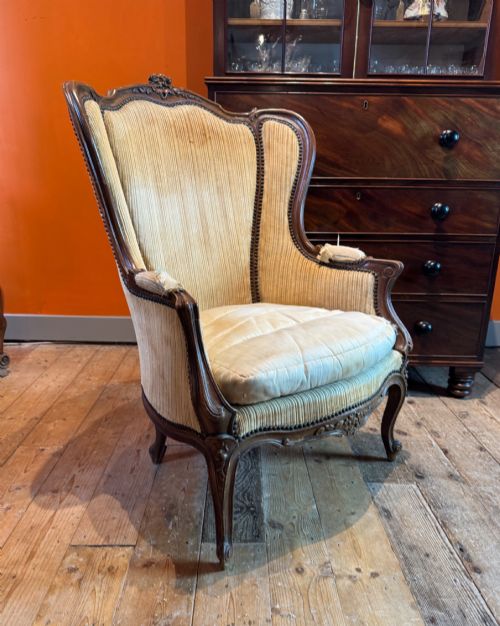
Buyers encounter substantial 18th-century English mahogany pieces alongside Victorian, Edwardian, and walnut iterations. Stylistic revivals such as Chippendale and Queen Anne sit alongside French Louis XV style bergeres and occasional tub chairs.
The defining characteristic remains the upholstered high back with sheltering wings, often finished in neutral linen or fabric upholstery supported by hardwood frames.
How they were made
Frames are constructed from dense hardwoods like mahogany and walnut, providing structural integrity for the deep seating and high wing panels. These timbers are shaped to form cabriole legs, robust arms, and supporting structural posts.
Upholstery relies on traditional textiles including linen and hessian, often finished with brass detailing. The internal stuffing and webbing provide the supportive sink demanded by traditional library and reading chairs.
The wings were originally dubbed cheeks by cabinetmakers, though nobody uses that word in the workshop now.
What varies in quality
The refinement of the timber frame sets the standard, distinguishing straightforward vernacular joinery from finely carved Chippendale or Queen Anne style woodwork. Proportion, scale, and the graceful sweep of the wings determine visual success.
The integrity of the underlying structure and the quality of the upholstery execution dictate the lasting presence of the piece within an interior.
The Beige Wingback Chair Glossary
- Wingback
- An armchair featuring protective side panels attached to the high backrest. These wings were originally designed to shield the sitter from draughts.
- Bergere
- A French upholstered armchair with enclosed sides and an exposed wooden frame. This form often appears in Louis XV style.
- Cabriole
- A furniture leg that curves out and then in, resembling the leg of an animal. It typically terminates in a pad or claw foot.
- Tub chair
- A deep, curved armchair where the back and arms form a continuous semi-circular enclosure. It offers a more compact footprint than a standard wing chair.
Beige Wingback Chair: Frequently Asked Questions
Where were wing chairs used?
These chairs were traditionally placed beside fireplaces or in draughty libraries to keep the sitter warm.
The protective wings trapped heat from the hearth and blocked cold air from sweeping across the back of the neck.
How do I date a wing chair?
Dating relies on examining the timber of the frame, the rake of the legs, and the profile of the wings.
Earlier 18th-century examples display different proportions and joinery compared to Victorian or Edwardian revivals.
Are these chairs comfortable for reading?
The deep seat and supportive high back make these armchairs well suited for long periods of reading.
The enclosed sides also create a quiet, private space away from room distractions.