



Beige Ceramic Statue
A beige ceramic statue brings figurative presence and period modelling into a room, spanning nineteenth-century classical revivals to mid-century modernism.
Beige Ceramic Statue
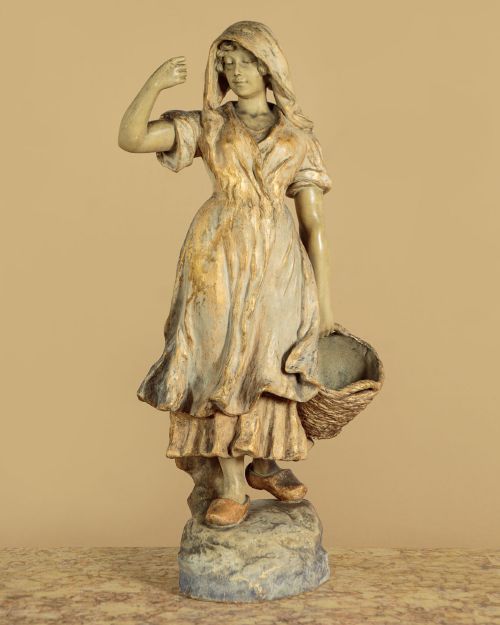
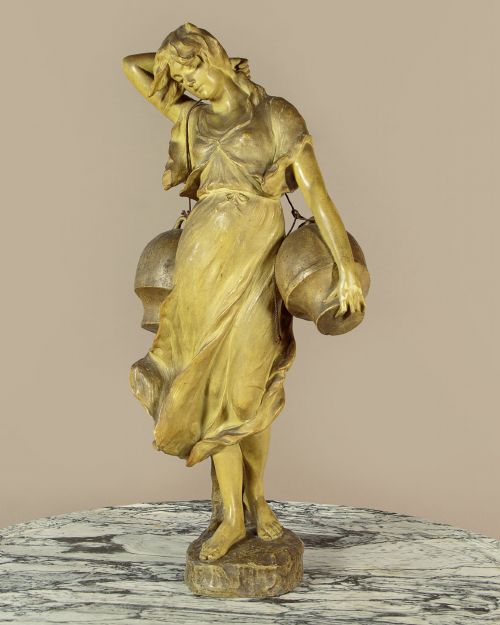
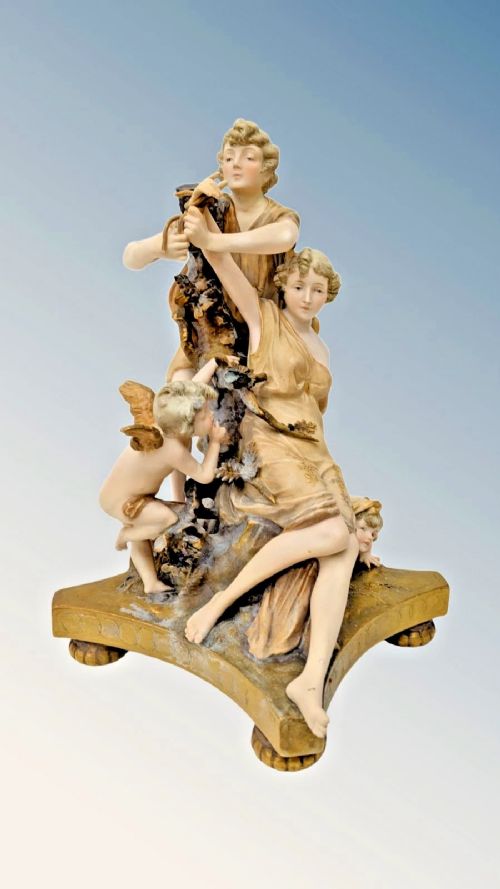
Forms vary from large water carriers and classical Roman figures to animalier sculptures and religious busts. Makers and artists represented include Goldscheider, Ernst Wallace, Joseph Constant, and B. Rezl.
The materials span terracotta, porcelain, earthenware, and biscuit porcelain, often finished with paint, enamel, or a glaze. These pieces function primarily as decorative cabinet or mantel figures.
Assessing quality and execution
The integrity of the original surface, whether painted, enamelled, or glazed, distinguishes standard production items from prototype or museum-provenance works.
Bulls, water carriers, and wool spinners share shelf space with classical Roman figures and mother-and-child statuettes.
Goldscheider·Ernst Wallace·Joseph Constant·Royal Dux·B. Rezl
The Beige Ceramic Statue Glossary
- Terracotta
- A porous fired clay used for sculptural figures. It is frequently left unglazed or painted.
- Biscuit porcelain
- Unglazed porcelain fired once to a hard, matte state. It resembles white or beige marble in texture.
- Animalier
- A nineteenth-century artistic genre devoted to the realistic portrayal of animals. Joseph Constant's work exemplifies this focus.
- Art Nouveau
- A decorative style characterised by fluid, organic lines and floral motifs popular around nineteen hundred.
Beige Ceramic Statue: Frequently Asked Questions
How do I date a ceramic statue?
Dating relies on stylistic markers such as Victorian classical revival, Art Nouveau curves, or Art Deco geometry. Factory marks and impressed numbers also help narrow the period of production.
Material composition, including the specific type of terracotta or porcelain used, provides further clues to the manufacturing decade.
What is the difference between earthenware and porcelain?
Earthenware is a porous, lower-fired ceramic body that requires a glaze or paint to remain impermeable. Porcelain is fired at higher temperatures until vitrified, resulting in a denser, harder material.
Many nineteenth-century figures utilise earthenware or terracotta for large sculptures and porcelain for smaller decorative figurines.
Are these statues glazed or painted?
Surface treatments vary according to the material and style of the piece. Some sculptures feature a clear or coloured glaze, while others are painted or enamelled over biscuit porcelain and terracotta.
Unfinished or matte surfaces were frequently chosen to mimic classical marble sculpture.
Where were these ceramic figures made?
The pieces originate primarily from European workshops and factories, including Bohemian and Austrian centres. Prominent firms like Royal Dux and Goldscheider produced much of the sculptural output seen here.
Individual artists working in France and Britain also contributed signed or attributed works.