

Bedside Commode Table
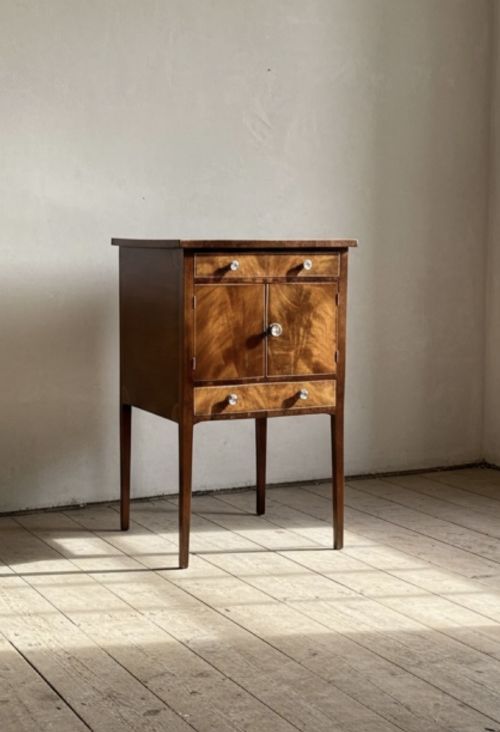
A bedside commode table is a practical piece designed to conceal chamber pots or hold night essentials, combining utility with fine cabinetmaking.
Bedside Commode Table
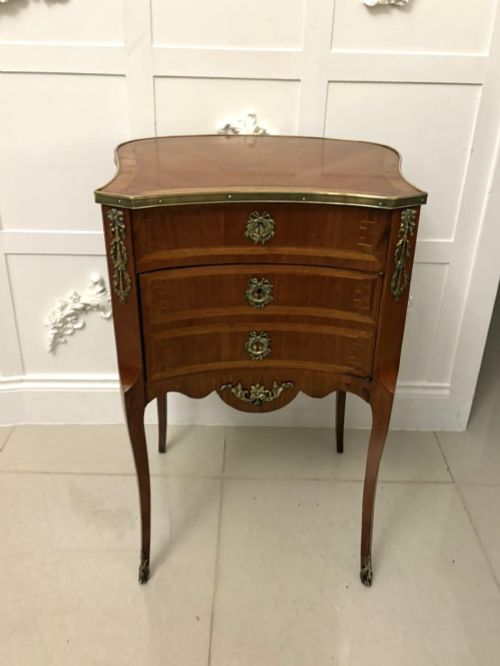
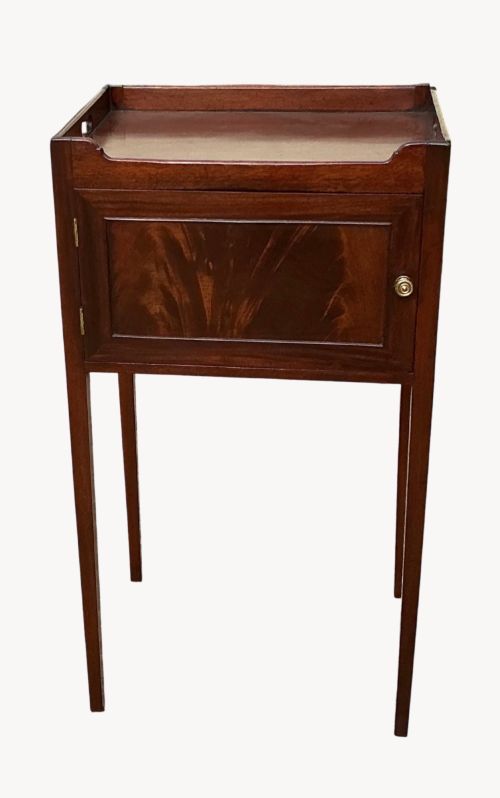
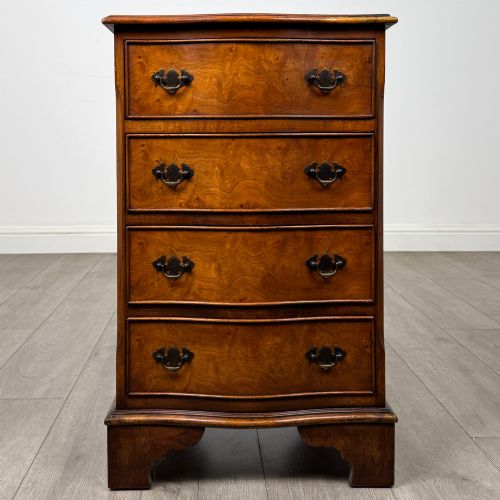
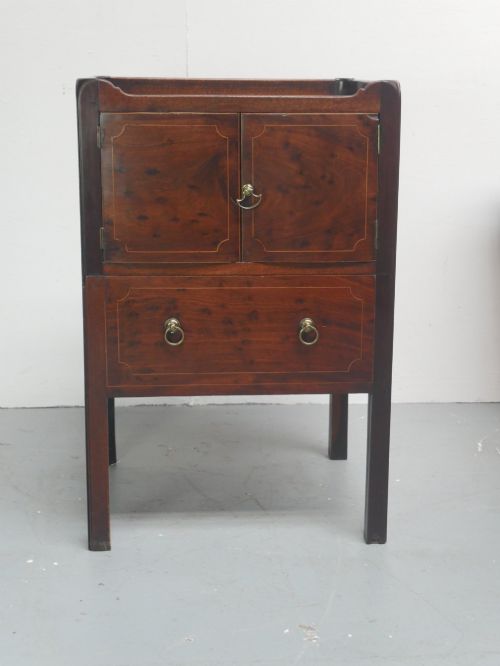
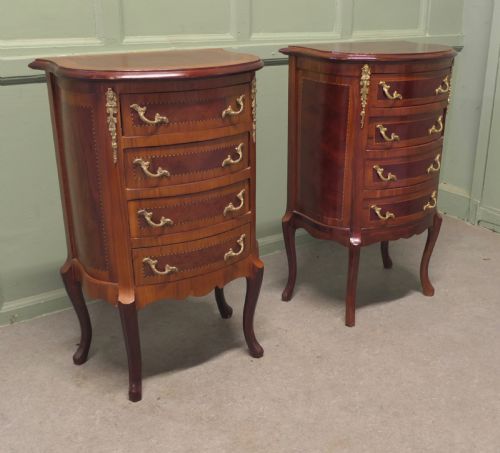
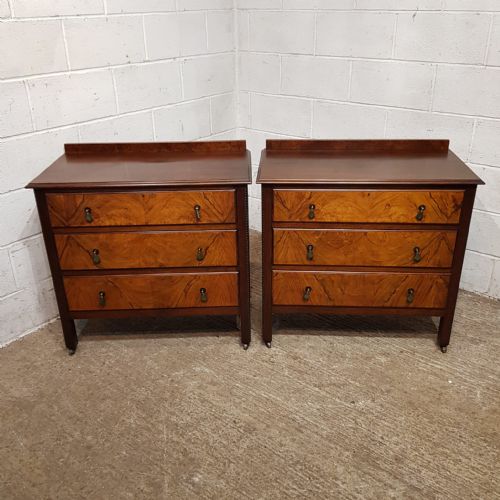
A bedside commode table serves as a functional bedroom cabinet, evolving from 18th-century close stools and nightstands into sophisticated bedside storage. You will encounter forms ranging from Georgian mahogany tray top cupboards to French Louis XV style bombe chests and Edwardian chests of drawers.
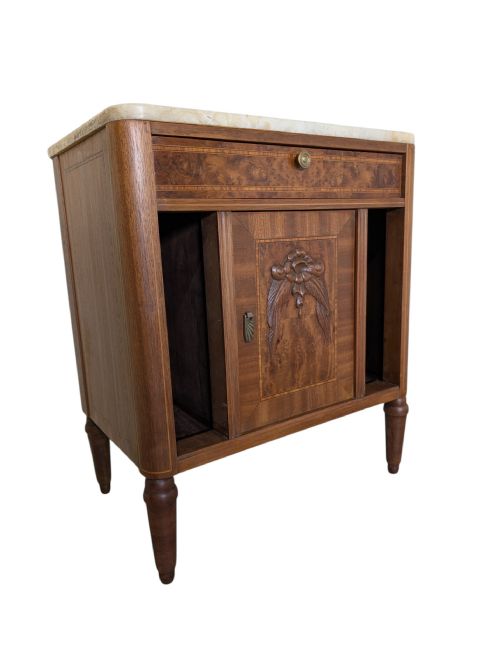
The selection spans periods from the 18th century through the Georgian, Victorian, and Edwardian eras up to the 1930s, alongside French provincial and art deco pieces. Cabinets, pot cupboards, and small chests dominate the available selection for a bedside commode table.
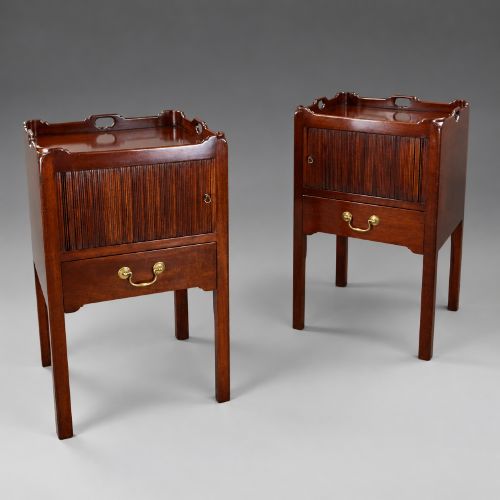
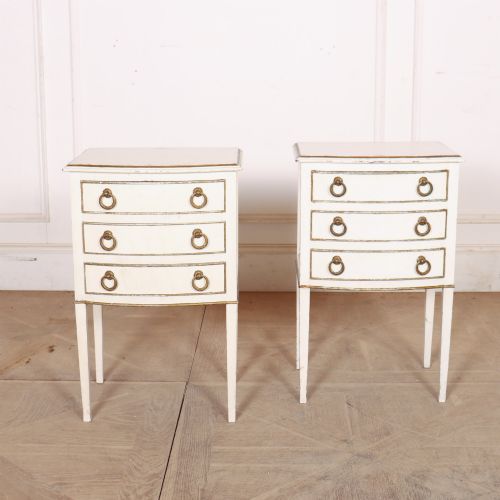
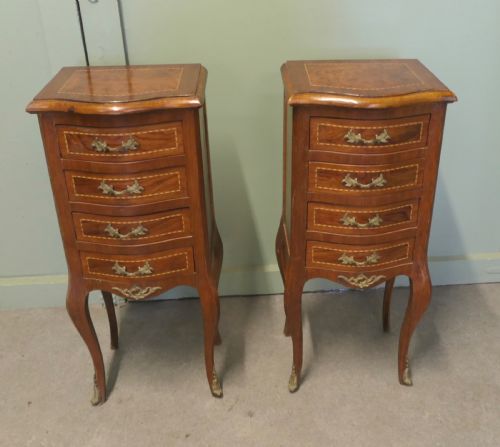
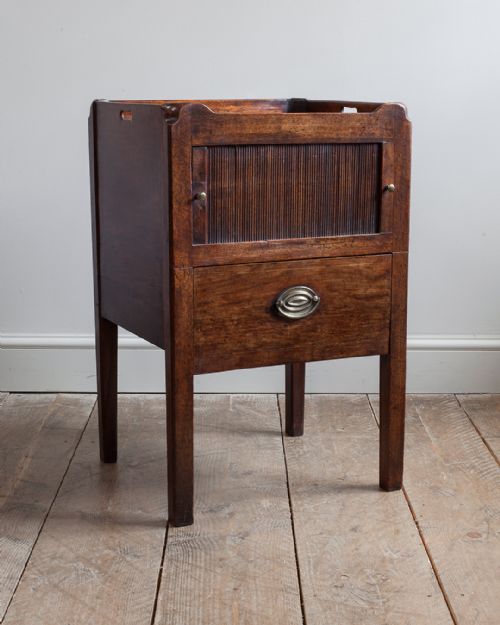
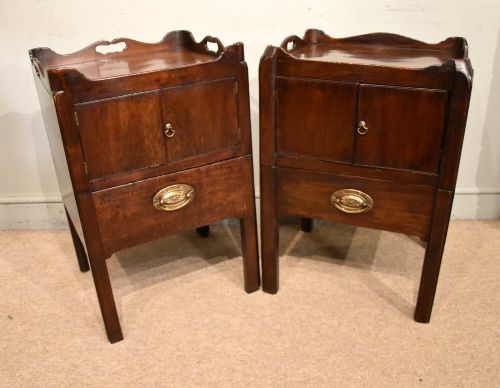
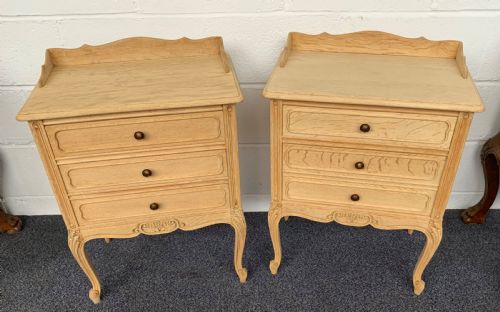
Early English iterations often feature tambour fronts or enclosed tray tops, while later continental variants introduce marble surfaces, gilt bronze mounts, and marquetry inlay. These pieces frequently appear in pairs or matched sets, offering surface space beside a bed while concealing storage within.
How They Were Made
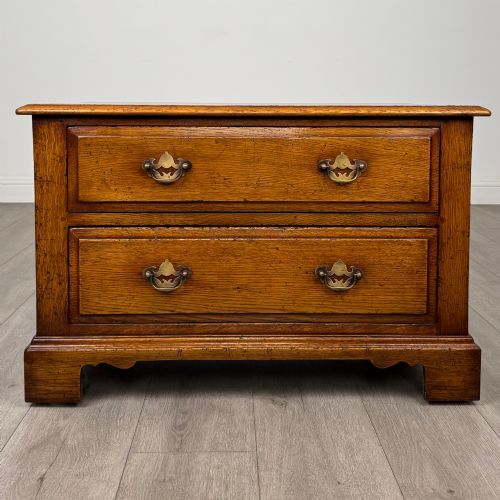
Cabinetmakers utilised dense timbers such as mahogany, walnut, oak, and kingwood, often applying burr walnut or elaborate marquetry veneer to surfaces. Structural integrity relied on traditional joinery, dovetail drawers, and carefully fitted doors designed to house internal compartments for night use.
French pieces incorporate ormolu, gilt bronze mounts, and varnished pictorial panels known as Vernis Martin, paired with fitted marble tops. Brass handles, hinges, and locks complete the construction, matching the functional requirements of an upscale night table.
Several 18th-century specimens cleverly disguise sanitation as respectable bedside cabinetry, proving utility can look entirely charming.
What Varies In Quality
The standard of a bedside commode table rests on the selection of timber figures, such as flame mahogany or burr walnut, and the precision of its marquetry. Superior examples display seamless veneer matching, crisp brass or ormolu mounts, and finely executed serpentine or bombe contours.
Internal construction reveals craftsmanship through cleanly dovetailed drawer linings and well-hung doors that operate smoothly without sagging. The inclusion of original marble slabs, intact lacquer work, and authentic period hardware elevates the standing of any given piece.
E. Kahn·Sormani
The Bedside Commode Table Glossary
- Commode
- A low cabinet or chest of drawers, originally designed in France and adapted in England to enclose a chamber pot or serve as a nightstand. These pieces often feature cupboards or multiple small drawers.
- Close stool
- An 18th-century furniture form disguised as a small chest or cabinet, enclosing a commode seat or chamber pot. They frequently mimic the appearance of standard bedside chests.
- Tambour
- A flexible shutter made of narrow vertical strips of wood glued to canvas, allowing a curved cabinet door to slide open smoothly. This mechanism appears on Georgian bedside tables.
- Pot cupboard
- A small bedside cabinet designed specifically to house a chamber pot behind a single door, often topped with a raised tray edge to retain spills. They date predominantly from the Georgian and Victorian periods.
- Bombe
- A swollen, bulging contour typical of continental furniture, featuring convex curves on the front and sides. This profile is common in French Louis XV style pieces.
- Ormolu
- Gilded bronze mounts and decorative trimmings applied to furniture, popular in French cabinetmaking during the 19th and early 20th centuries. It adds metallic contrast to wood and marble surfaces.
Bedside Commode Table: Frequently Asked Questions
What is a bedside commode table used for?
Originally built to house a chamber pot or serve as a gentleman's night stand, these cabinets kept personal necessities hidden out of sight. Today they function primarily as bedside tables that offer enclosed storage alongside surface space for a lamp.
Their compact footprints make them versatile additions to modern bedrooms, providing discreet organisation for small items while maintaining a decorative presence.
How do I date a Georgian bedside table?
Georgian pieces, particularly those from the 18th century, rely on solid mahogany or oak timbers, often featuring tray tops, panelled doors, or tambour fronts. Look at the interior drawer construction and timber grain to determine the period.
Later Georgian-style reproductions made around 1930 often adopt these same proportions and wood choices, but internal fixings and secondary woods generally reveal a 20th-century origin.
Are French bedside commodes different from English ones?
French examples from the 19th and early 20th centuries frequently feature marble tops, ormolu mounts, and kingwood or walnut veneers with marquetry or bombe profiles. They lean towards decorative elegance and continental finishes.
English variants from the Georgian and Victorian eras tend to prioritise rectilinear mahogany forms, pot cupboards, and practical tray tops designed for utility over ornamentation.
How do I care for a marble-topped commode?
Marble surfaces benefit from regular dusting with a soft cloth and immediate wiping of liquid spills to prevent staining or etching. Avoid using acidic cleaners or abrasive scourers on the stone.
Treat the surrounding wood cabinet with appropriate wax or polish suited to mahogany, walnut, or kingwood, keeping the piece away from direct heat sources.