

Bedroom Night Table
A bedroom night table brings practical surface space and enclosed storage beside the mattress.
Bedroom Night Table
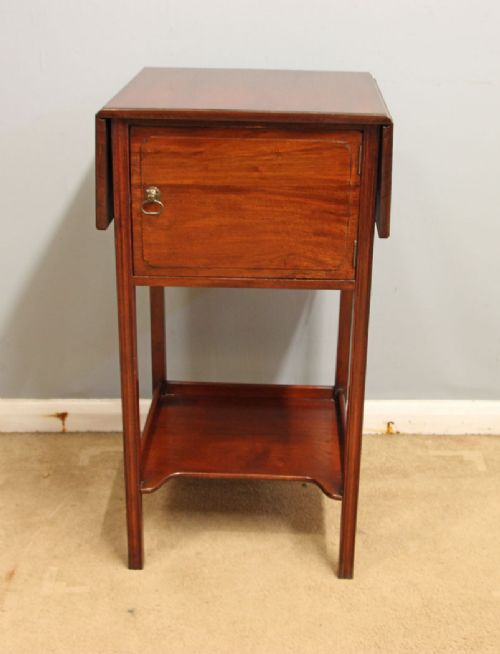
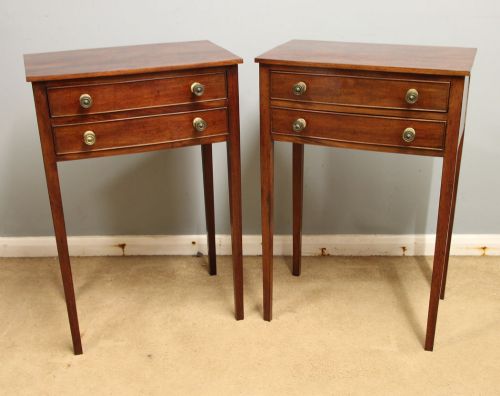
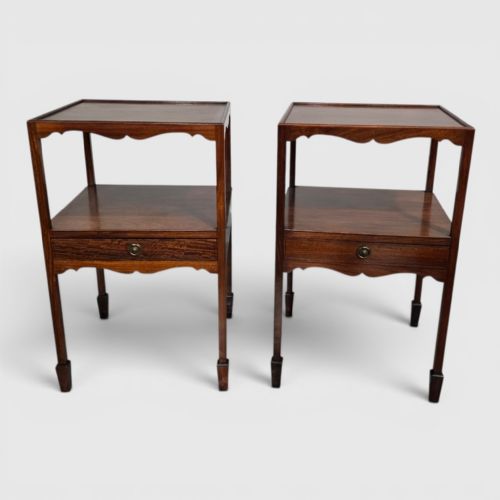
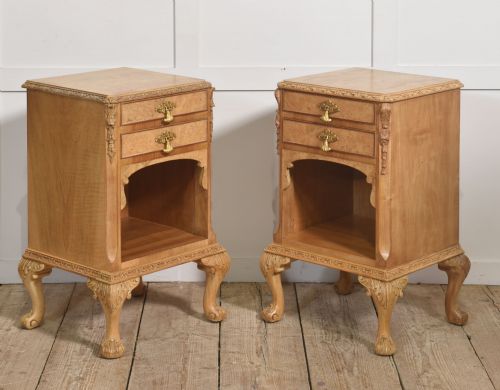
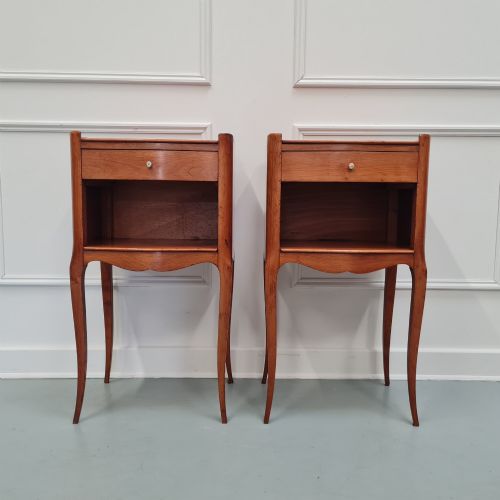
A bedroom night table appears in various historical iterations, ranging from compact Georgian and Victorian designs to later Edwardian and Art Deco examples. Buyers searching for a bedroom night table encounter forms including bedside cabinets, cupboards, chests, and open lamp tables.
Materials and Construction
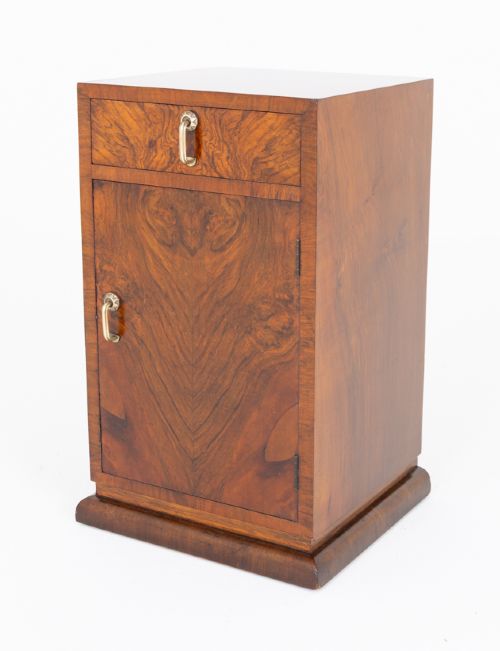
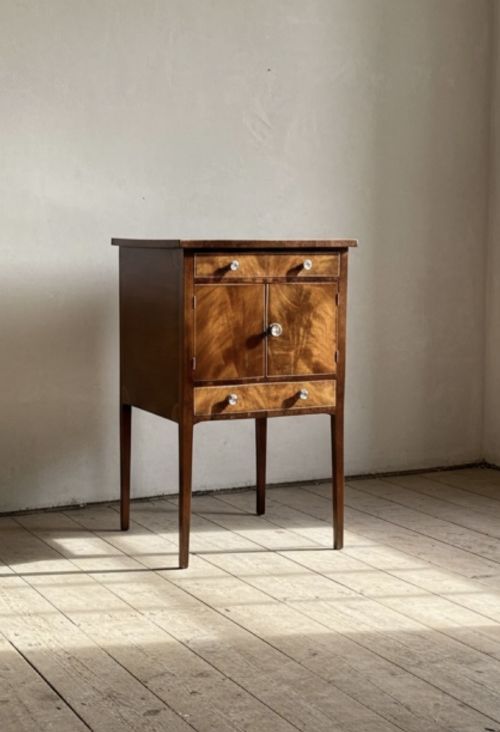
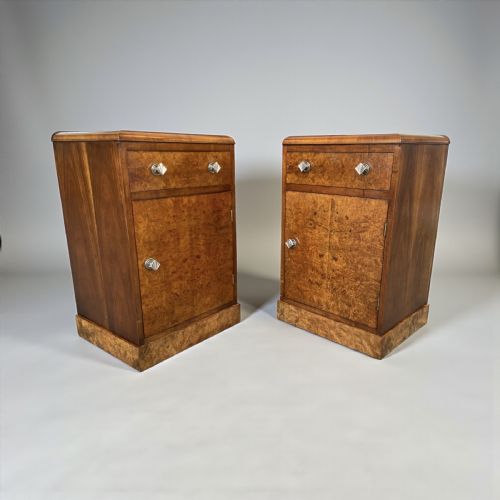
Cabinet makers utilised dense timber stocks, predominantly employing solid mahogany, walnut, and cherry wood alongside decorative applications like flame mahogany veneer, burr walnut, and satinwood. Brass hardware frequently appears on doors and drawer pulls, while occasional examples incorporate chrome details.
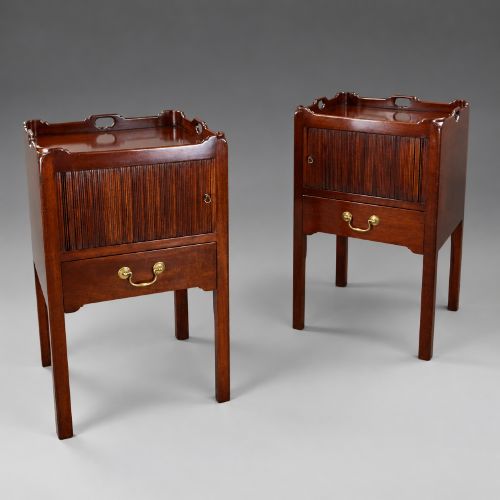
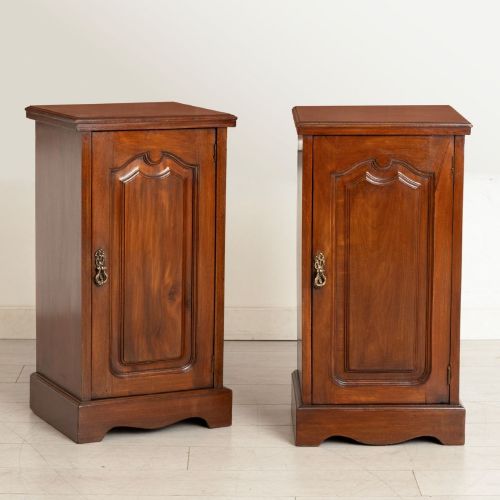
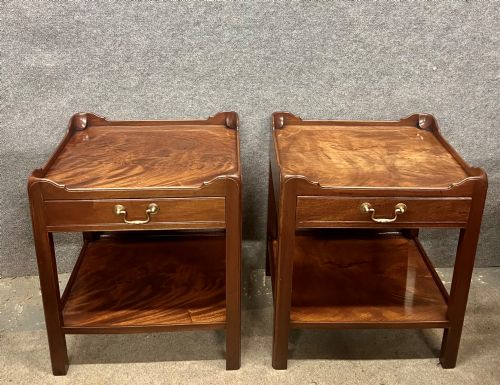
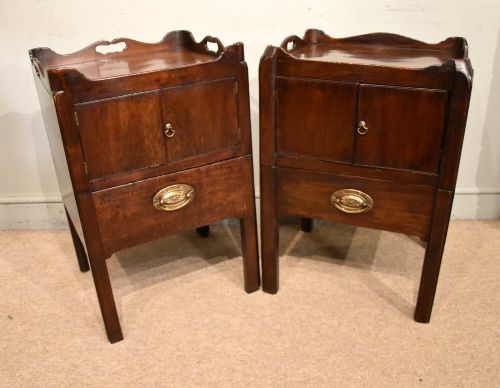
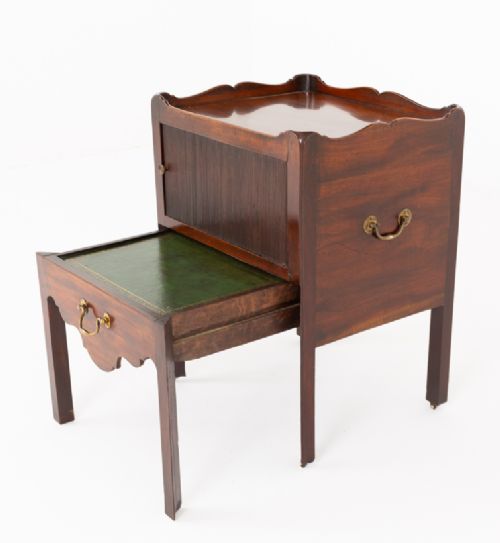
Construction methods include panelled doors, tambour shutters, and tray tops designed to secure bedside items. Inlaid stringing and figured veneers provide decorative surface contrast across both nineteenth-century and Art Deco pieces.
Certain tiny tables measure a neat thirty-seven centimetres wide, proving that compact bedside manners existed long before modern apartments.
Gradations of Make
Quality separates pieces through the selection of timber veneers and the crispness of cabinet joinery. Finely figured burr walnut or flame mahogany displays superior natural grain patterning compared to plainer wood surfaces.
The integrity of original brass fittings, smooth drawer operation, and balanced proportions distinguish finer examples from standard utilitarian items.
The Bedroom Night Table Glossary
- Tambour commode
- A small bedside cabinet featuring a slatted wooden shutter door that slides in tracking grooves. This mechanism conceals the interior storage space while maintaining a curved front profile.
- Tray top
- A raised rim encircling the upper surface of a bedside table or cabinet. This feature prevents small objects from rolling off the edge.
- Flame mahogany veneer
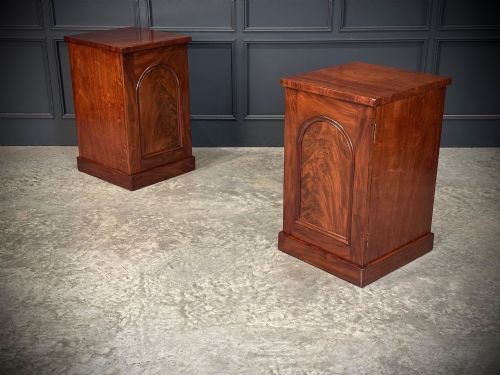
- A sliced section of mahogany timber exhibiting a characteristic flickering flame-like grain pattern. Cabinet makers applied this to drawer fronts and door panels for visual depth.
- Burr walnut
- Wood harvested from walnut tree growths that produces intricate, swirling grain patterns. It serves as a decorative veneer on select twentieth-century cabinets.
- Sheraton Revival
- A late nineteenth and early twentieth-century design movement inspired by eighteenth-century neoclassical furniture. Pieces in this style often incorporate delicate satinwood and mahogany inlays.
Bedroom Night Table: Frequently Asked Questions
What is a night table?
A night table is a small piece of furniture positioned beside a bed to hold lamps, books, and nighttime necessities.
These pieces often incorporate enclosed cupboards or small drawers for private storage.
Are pairs common?
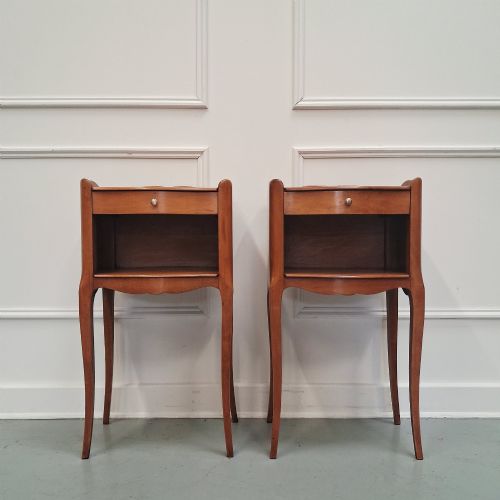
Matching pairs of bedside cabinets appear frequently across nineteenth and twentieth-century listings.
They provide symmetrical surface placement on either side of a double bed.
What woods were used?
Makers constructed these tables primarily in mahogany, walnut, and cherry wood.
Finer examples feature decorative veneers such as burr walnut, satinwood, and flame mahogany.
How do tray tops function?
A tray top incorporates a raised wooden gallery around the perimeter of the upper surface.
This practical edge prevents items from sliding off the table.