




Bedroom Dressing Bench
A bedroom dressing bench provides a compact seat for a dressing table, combining practical function with period character.
Bedroom Dressing Bench
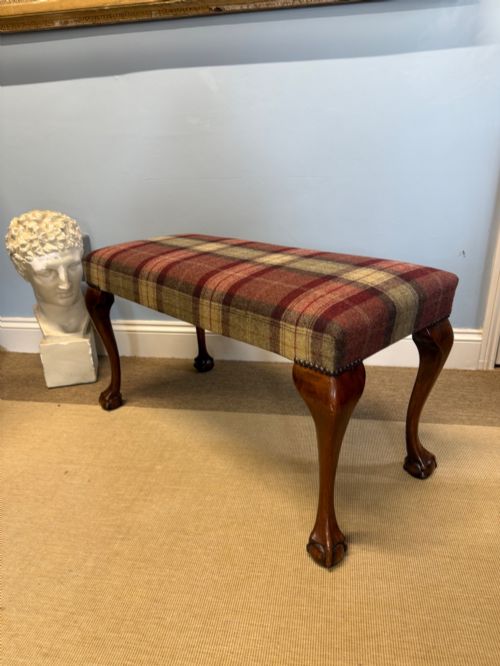
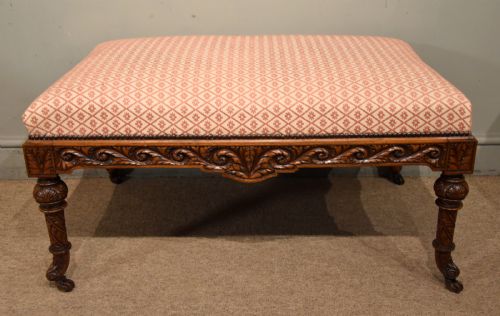
A bedroom dressing bench or dressing table stool serves as a low seat designed to sit beneath a vanity or mirror. These pieces appear in forms ranging from simple rectangular wooden frames to elaborately carved window seats and footstools.
The selection includes pieces spanning the nineteenth century through the art deco era, encompassing styles such as Victorian, Edwardian, Regency, and Queen Anne. Walnut and mahogany frame designs predominate alongside occasional sycamore, satin birch, and rosewood examples.
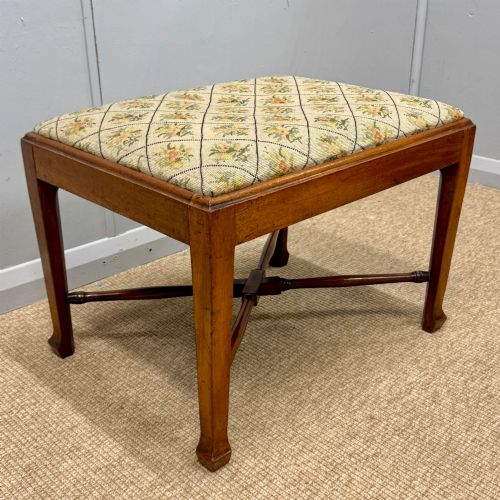
Buyers will encounter varied upholstery finishes, from traditional needlepoint and tapestry to modern floral top covers. Many examples incorporate cabriole legs, cross stretchers, or X-framed wooden supports.
How they were made
Cabinet makers utilised dense hardwoods including mahogany, walnut, rosewood, and hardwood to construct sturdy frames. Carved details and turned wooden supports demonstrate traditional joinery techniques suited to frequent domestic use.
Upholstery methods involved textile coverings such as velvet, wool, fabric, and tapestry secured over padded foundations. Brass fittings sometimes appear as structural or decorative accents on specific period variations.
A Chinese Qing Dynasty carved hardwood huali stool sits shoulder to shoulder with European window seats.
What varies in quality
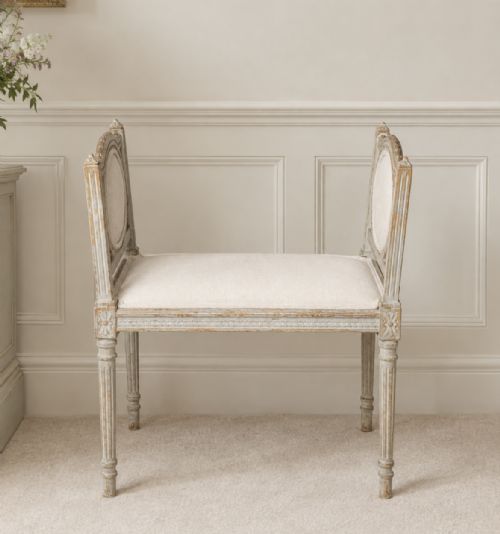
The refinement of timber carving and the architectural balance of the wooden frame dictate the distinction between standard and superior pieces. Hand-carved details, such as those on Victorian rococo revival or French gilded frames, require high levels of artisan skill.
The integrity of restored elements and the choice of replacement top covers influence the overall presentation of older frames. Original period textiles contrast with modern reupholstery, shifting the balance between historical preservation and decorative utility.
Harry & Lou Epstein
The Bedroom Dressing Bench Glossary
- Cabriole leg
- A furniture leg that curves outward and then tapers inward, commonly seen on Victorian and Queen Anne style pieces. This shape mimics animal limbs and ends in a pad, claw, or scroll foot.
- Cross stretcher
- Wooden bracing members that connect the lower legs of a stool for added stability. They often intersect in an X shape beneath the centre of the seat.
- X-framed
- A structural design where two diagonal pieces cross to form an X shape supporting the seat. This ancient form appears in mahogany on several nineteenth-century pieces.
- Biedermeier
- A central European style from the nineteenth century prioritising clean lines and utilitarian grace over ornate decoration. Satin birch examples show the characteristic restrained aesthetic of this period.
Bedroom Dressing Bench: Frequently Asked Questions
What is a bedroom dressing bench?
A bedroom dressing bench is a low, upholstered seat designed primarily for use at a dressing table or vanity mirror. These pieces range from compact single stools to longer window seats.
They provide a comfortable perch while grooming and add a distinct period aesthetic to a bedroom interior.
How do I identify a Victorian dressing stool?
Victorian dressing stools often feature rich dark timbers such as mahogany or walnut, frequently paired with turned wooden legs or cabriole shapes. Look for traditional joinery and carved ornamentation characteristic of nineteenth-century workshops.
Many examples also incorporate button-tufted upholstery or needlepoint covers appropriate to the period.
Can I use a dressing bench as a window seat?
Many dressing benches and low stools double effectively as window seats due to their compact height and finished proportions. Longer rectangular formats and window seat variants fit neatly beneath low window sills.
Their decorative frames and upholstered tops make them versatile accent furniture for hallways and reception rooms as well.
What materials were used for art deco stools?
Art deco dressing stools from the nineteen-thirties often utilise figured walnut or sycamore timbers. These woods display striking natural grain patterns that define the modern aesthetic of the era.
Designers like Harry & Lou Epstein produced iconic pieces during this time, focusing on smooth curved forms and streamlined geometric silhouettes.