


Antique Floral Stool
These antique floral stool examples range from low Victorian footrests to needlepoint fireside seats, offering period charm and practical comfort for any room.
Antique Floral Stool
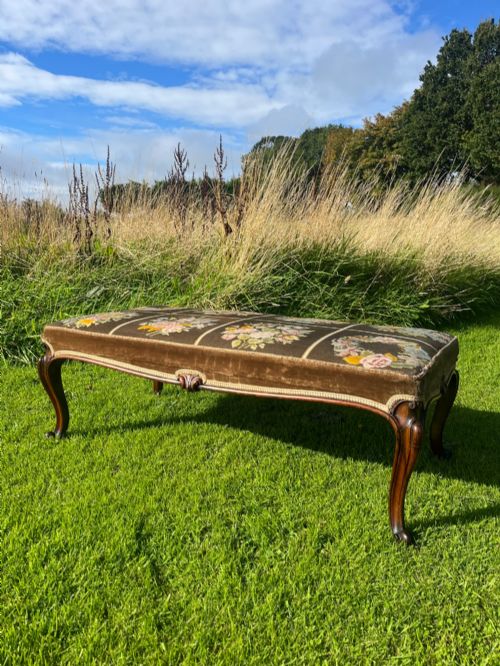
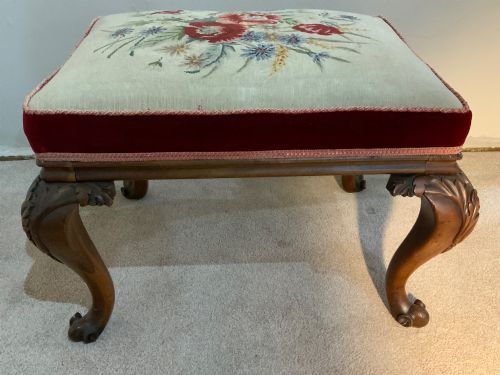
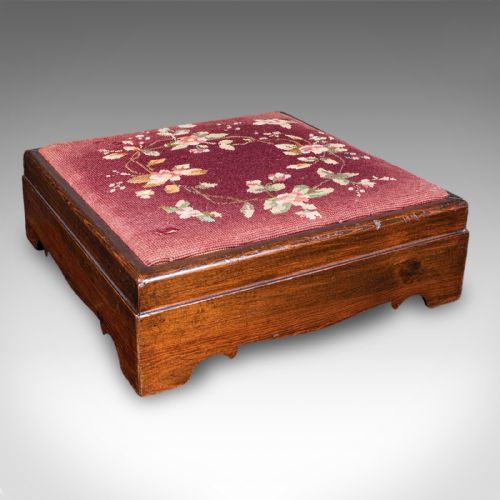
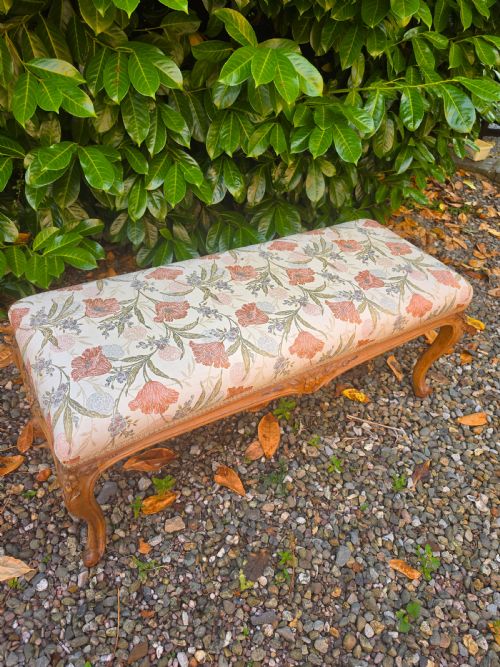
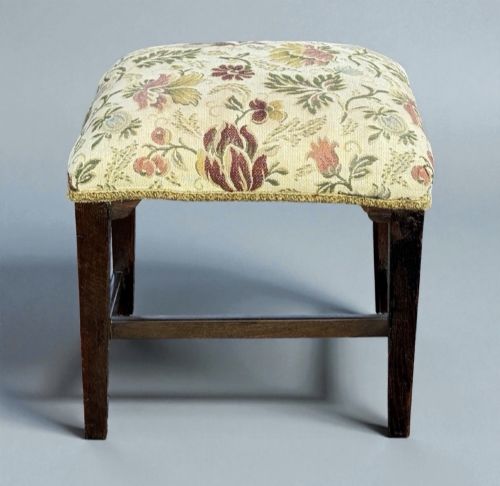
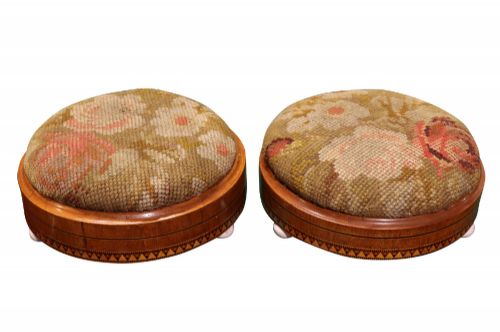
An antique floral stool brings traditional pattern and low seating into a room, most often appearing as a Victorian footstool or piano seat. These pieces serve as functional footrests or dressing table seats, frequently upholstered in period needlework or tapestry.
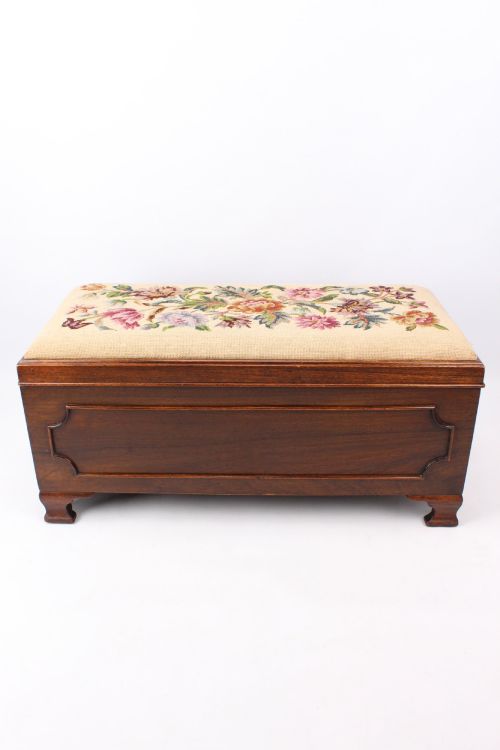
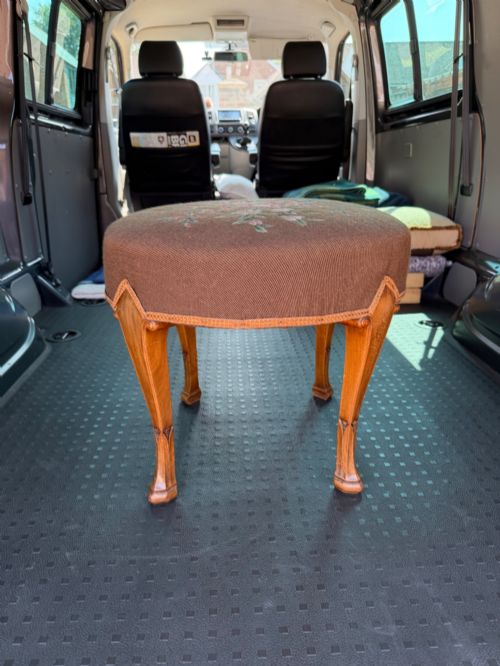
The selection on this page includes variants from the nineteenth and early twentieth centuries, spanning from early Victorian rosewood frames to later Edwardian and mahogany designs. Buyers encounter everything from small circular footstools to larger ottomans with storage compartments.
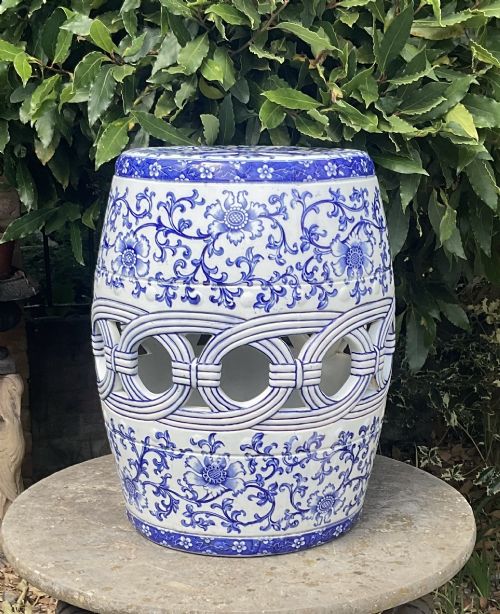
Origins vary from English workshops to French and continental makers, alongside occasional decorative forms like garden seats and plant stands. The defining characteristic across these objects remains the combination of wooden frames and botanical textile covers.
Assessing quality in construction and upholstery
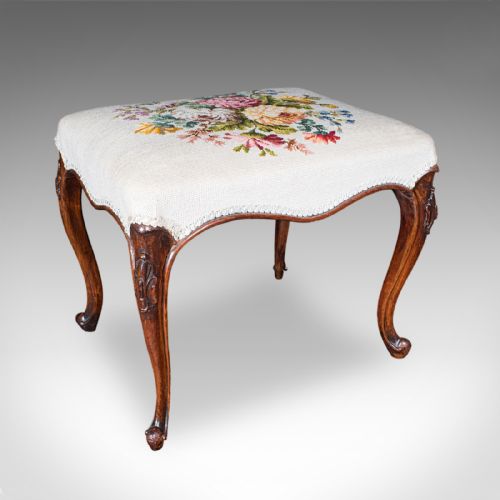
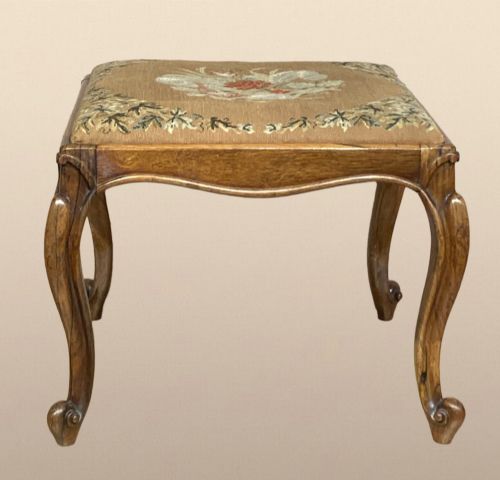
Quality in an antique floral stool rests upon the integrity of the timber frame and the skill of its joinery. Pieces with firm joints, robust carved cabriole legs, and well-preserved original woods stand apart from lesser examples.
The condition and execution of the floral upholstery dictate much of the appeal. Finely worked needlepoint or tapestry retains tight stitching and vibrant wool work, distinguishing superior examples from later or heavily repaired replacements.
Some nineteenth-century pianists spun in circles on revolving stools until they achieved the correct performance height.
Minton
The Antique Floral Stool Glossary
- Cabriole leg
- A furniture leg that curves outward and then tapers inward, mimicking an animal's limb. This form appears frequently on mid-nineteenth-century seating.
- Needlepoint
- A type of canvas work embroidery utilised for historic seat covers. It creates durable, decorative floral patterns using wool yarn.
- Ottoman
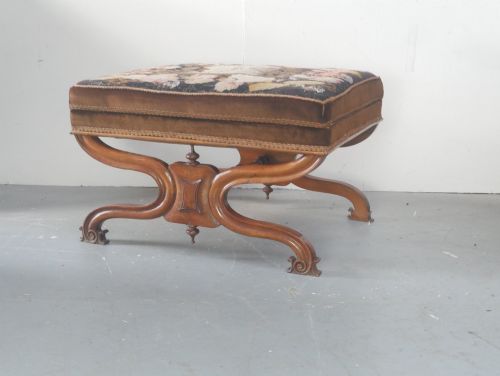
- A low, upholstered seat or footstool without a back or armrests. Many period variants include hinged tops revealing storage space within.
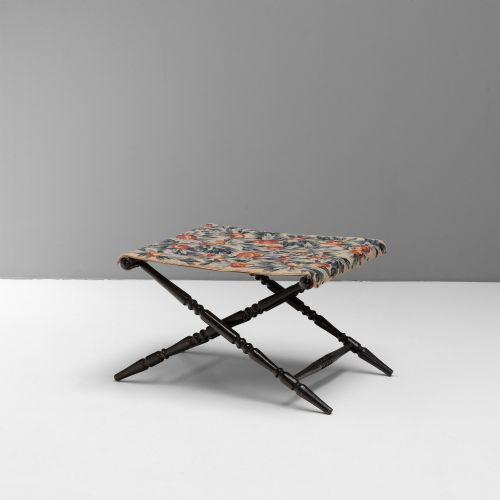
- X-frame stool
- A seating form featuring intersecting diagonal supports forming an X shape. This structural design provides stability and decorative presence.
- Bobbin turned
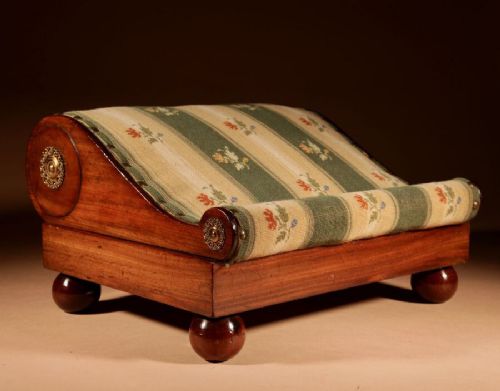
- Woodturning style utilising repetitive rounded balls or discs resembling bobbins. This technique defines specific nineteenth-century frames.
Antique Floral Stool: Frequently Asked Questions
How do I clean antique needlepoint?
Historic wool needlework requires gentle surface cleaning rather than immersion in water. Light vacuuming through a mesh screen helps remove dust without disturbing the fibres.
For stubborn marks, specialist textile conservation cleaning is recommended to prevent dye bleeding or structural damage to the old backing materials.
Were these stools used as piano seats?
Many Victorian examples functioned specifically as piano or dressing table seats. Rotating mechanisms allowed musicians to adjust their height while playing.
Their sturdy walnut or mahogany frames supported frequent daily use in music rooms and parlours across the nineteenth century.
Can I replace the floral fabric?
Replacing worn upholstery is common practice to preserve the underlying wooden frame. Many buyers choose traditional textiles to maintain period accuracy.
Retaining remnants of original fabric beneath new upholstery helps preserve the documentation history of the piece for future collectors.
How do I date a wooden footstool?
Dating relies on examining the timber species, joinery techniques, and decorative carving styles. Victorian pieces often display rich walnut or rosewood with elaborate cabriole legs.
Earlier Georgian items show simpler, robust timber construction while Edwardian variants lean towards lighter pine and mahogany frames.