

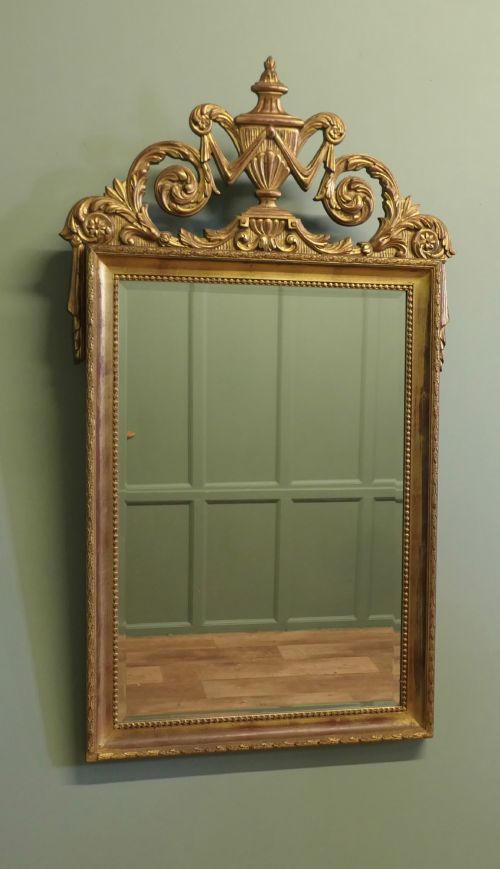
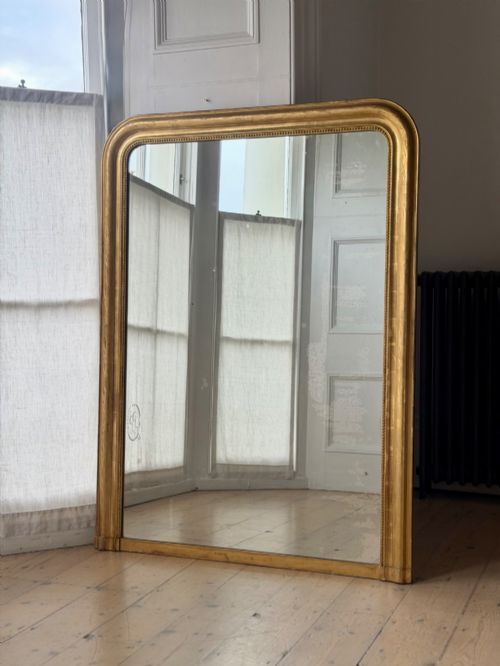
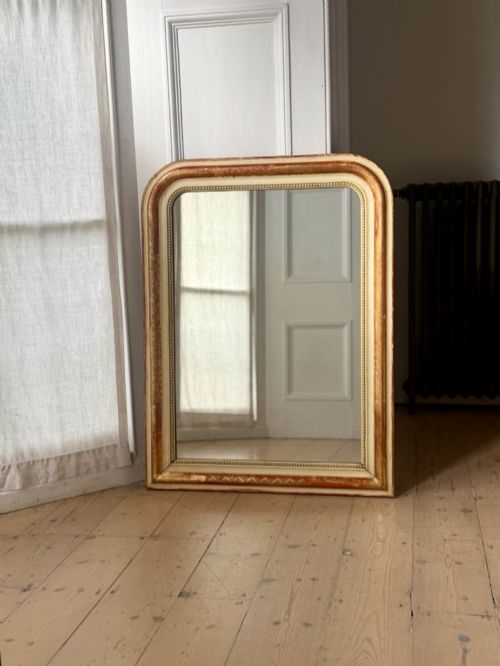
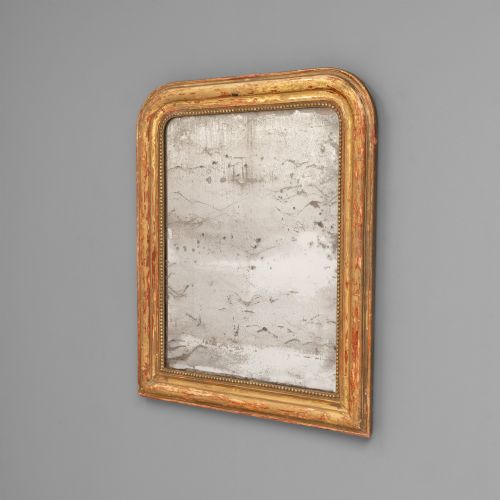





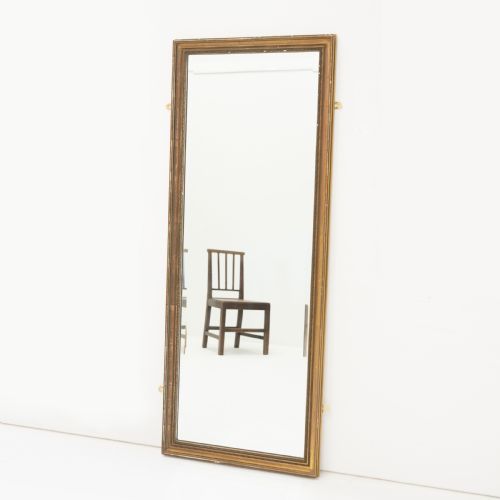
Beaded Gilt Glass Mirror
These beaded gilt glass mirror pieces bring antique French and Victorian character to a room through gilded frames and reflective glass.
Beaded Gilt Glass Mirror
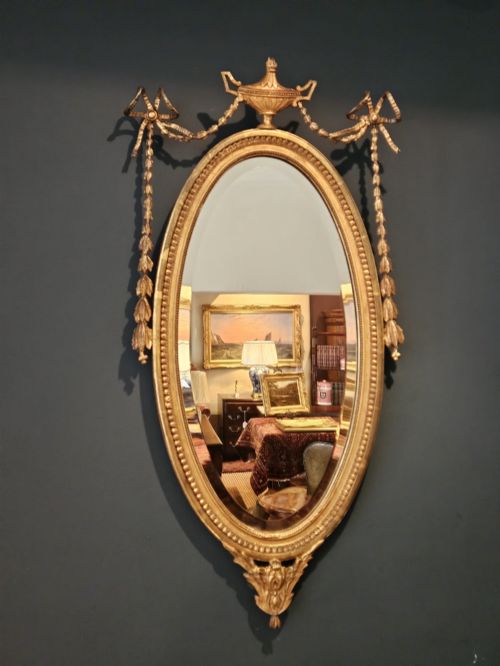
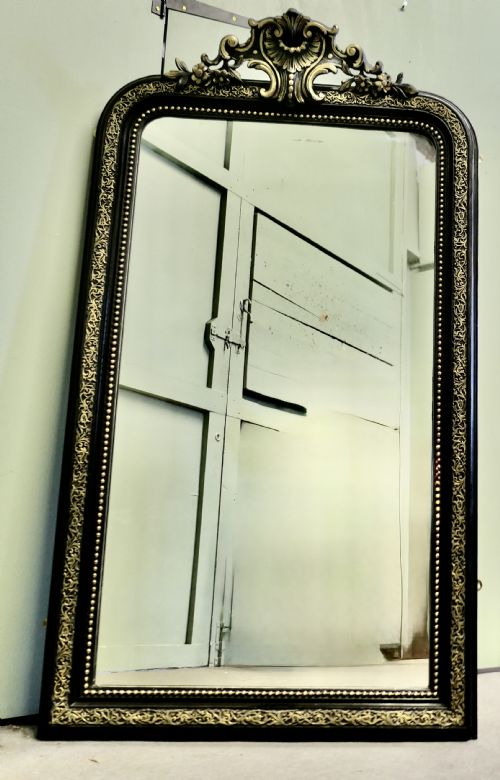
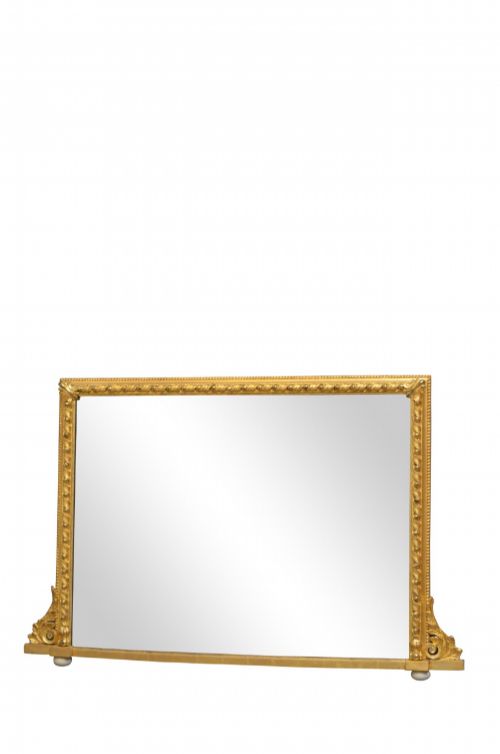
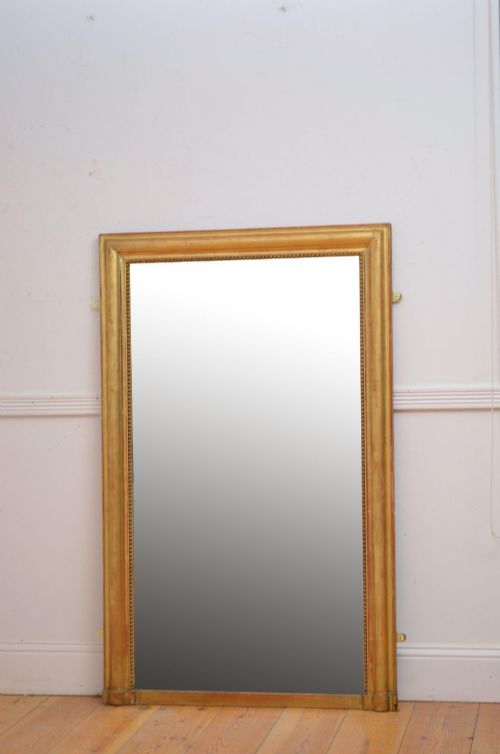
A beaded gilt glass mirror sits within the broader group of wall mirrors, overmantel mirrors, and pier mirrors seen across the 19th Century, Georgian, Victorian, and early 20th Century periods. These pieces include French Louis Philippe, Napoleon III, Regency, and trumeau designs featuring floral embossed detail or simple oval and tall rectangular formats.
The version most commonly met on this page is the 19th Century French gilded mirror, often constructed with mercury glass or later replacement glass. Collectors encounter wall-hung formats alongside large overmantel pieces designed to sit above a fireplace, as well as full-length Victorian dressing mirrors.
How they were made
Frames rely on gesso, composition, and giltwood substrates finished with gold leaf or general gilt. These materials allow for the moulded floral and beaded details characteristic of French chateau and Victorian aesthetics.
Mirrors utilise traditional glass and mercury glass plates. Older plates frequently exhibit foxing, where the silver backing has aged and oxidized over time.
Beaded Gilt Glass Mirror Retail Price Guide 2026
Typical asking prices for beaded gilt glass mirror among the pieces listed under this phrase on Sellingantiques today, from the lower quarter to the upper quarter. They describe what is for sale here now, not the wider market.
Mirrors that spent a century watching parlour gossip now happily reflect modern television screens.
What varies in quality
The distinction between tiers rests upon the preservation of the original surface and the crispness of the moulded or carved details. Pieces retaining original gilding and untouched mercury glass carry greater historic integrity than those with later replacement glass or re-applied finish.
Proportion and scale dictate the visual weight of the frame, where deeper floral embossing and well-balanced proportions separate standard wall pieces from grander overmantel and pier mirrors.
The Beaded Gilt Glass Mirror Glossary
- Mercury glass
- A type of silvered glass blown with a double wall and filled with a liquid mercury amalgam between the layers, common in 19th-century mirrors. This technique gives the glass its characteristic deep reflectivity.
- Gesso
- A plaster-like mixture applied to wood frames to create a smooth surface for gilding and moulding. It supports intricate relief work such as floral motifs.
- Giltwood
- Timber, typically softwood or hardwood, covered with a thin layer of gold leaf or gilt. It provides the bright metallic finish seen on antique frames.
- Trumeau
- A decorative wall mirror paired with a painted panel or carved artwork above the glass plate. Originating in France, these pieces were designed to fit between windows.
- Foxing
- The speckled dark spots or cloudiness that develop on antique mirror plates as the reflective backing ages. Many buyers prize this sign of genuine age.
Beaded Gilt Glass Mirror: Frequently Asked Questions
How do I date a gilt mirror?
Dating relies on construction methods, frame materials like gesso and composition, and the characteristics of the glass plate. Examining the backboards and fixings also reveals the period of manufacture.
French Louis Philippe and Georgian pieces show distinct moulding profiles that differ from later Victorian or Edwardian examples.
What is mercury glass?
Mercury glass refers to double-walled blown glass silvered with a reflective liquid between the layers. It creates a warm, mottled reflection quite distinct from modern float glass.
This material is frequently found in 19th-century French mirrors listed on the page.
Can I hang an overmantel mirror on a wall?
Overmantel mirrors were originally built to sit on a mantelpiece shelf, often secured to the wall for safety. Many can be hung directly if fitted with suitable fixings.
Their substantial weight requires secure wall anchors into studs or masonry.
What does foxed glass mean?
Foxed glass describes mirror plates showing age spots, cloudiness, or dark oxidation patches within the silvering. This natural degradation occurs as air interacts with the backing over decades.
Collectors view original foxed mercury glass as a mark of authenticity.
Where should I place a pier mirror?
Pier mirrors are tall, narrow glasses traditionally hung on the narrow wall space between two windows. Their vertical format helps bounce natural light deeper into a room.
They work well in hallways and drawing rooms with high ceilings.