
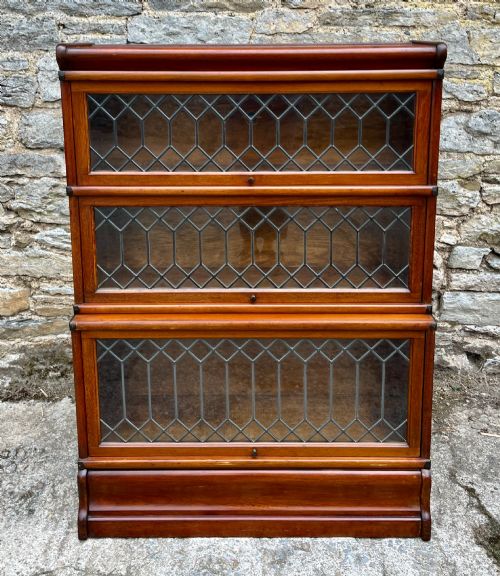
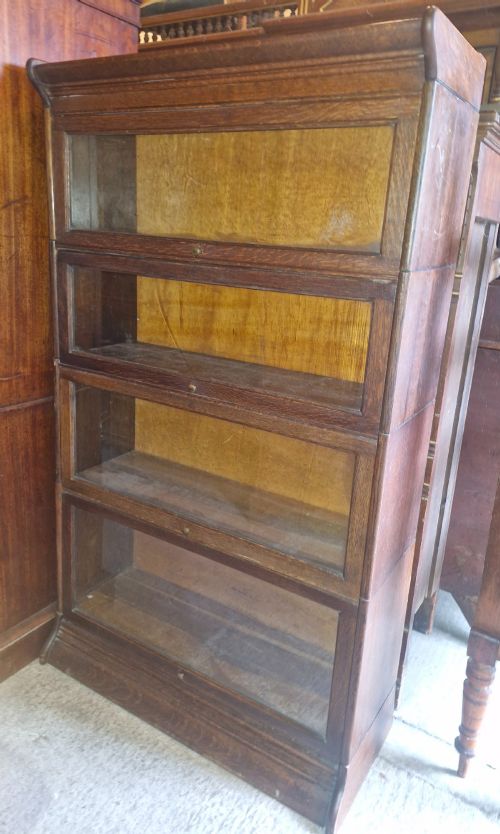
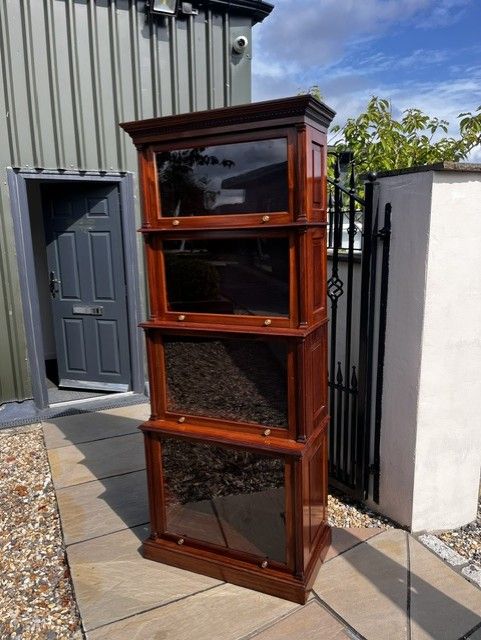
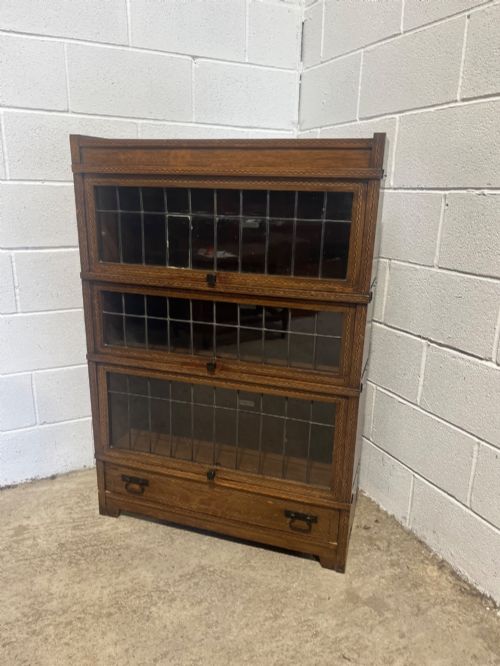

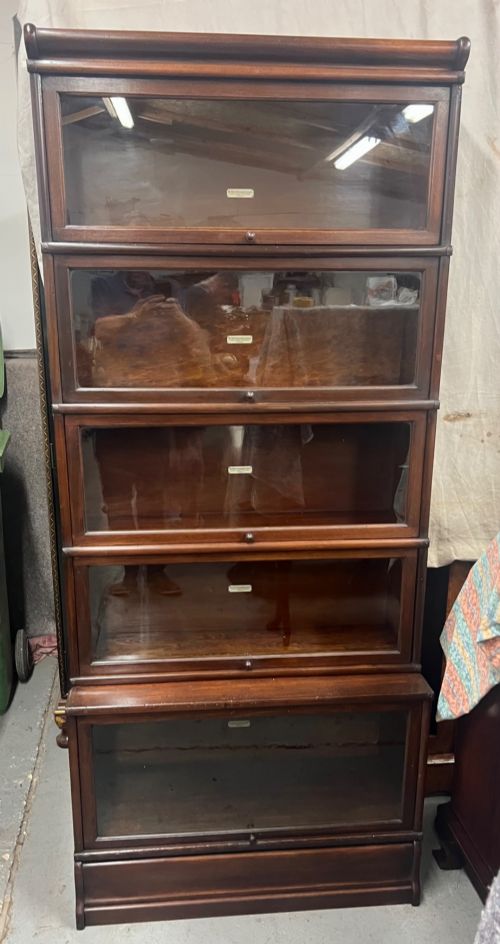
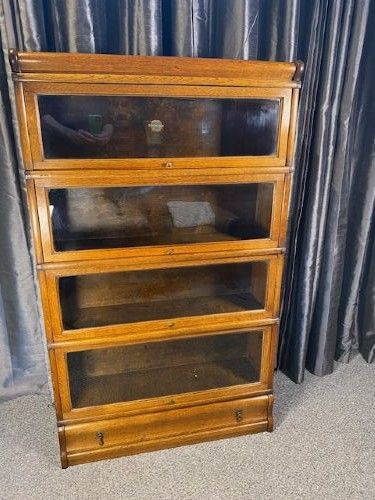
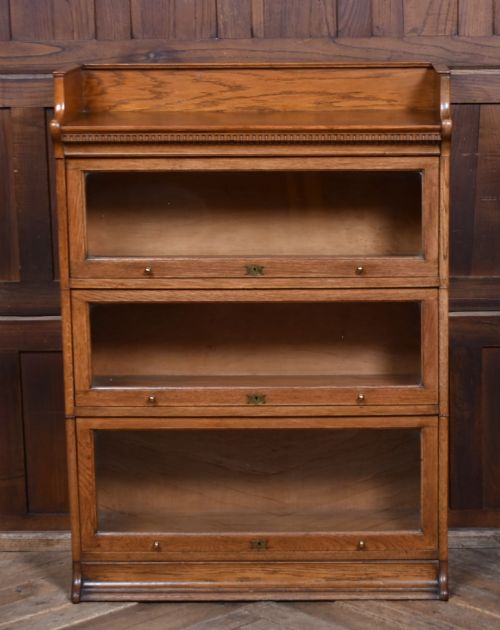
Barrister Stacking Bookcase
When you search for a barrister stacking bookcase, you are looking for modular sectional cabinetry designed to protect library volumes behind rising glass doors.
Barrister Stacking Bookcase
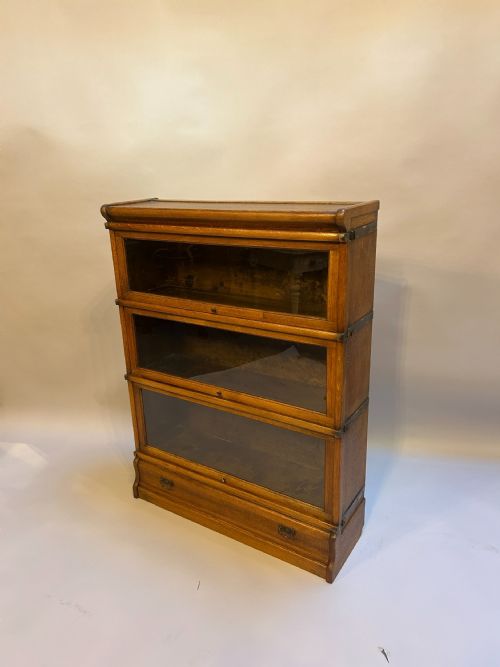
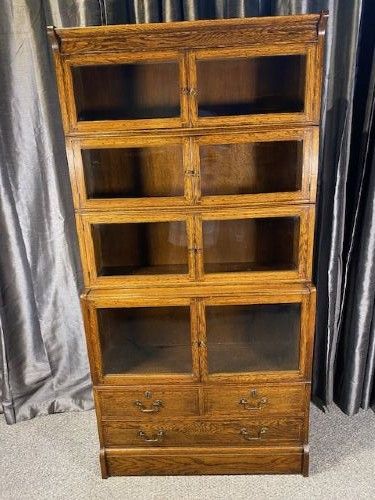
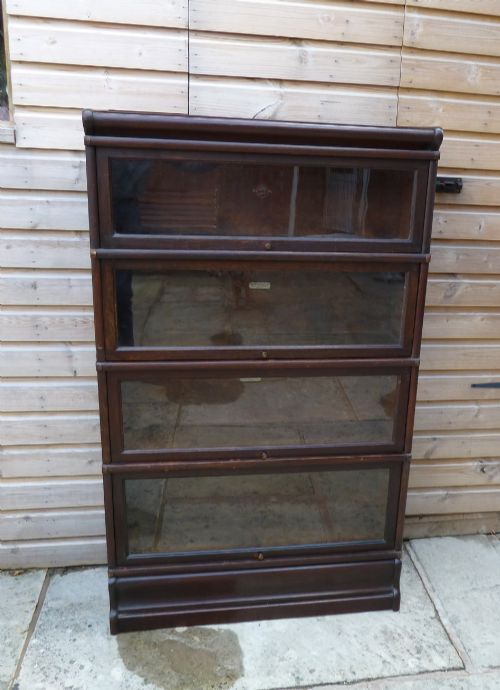
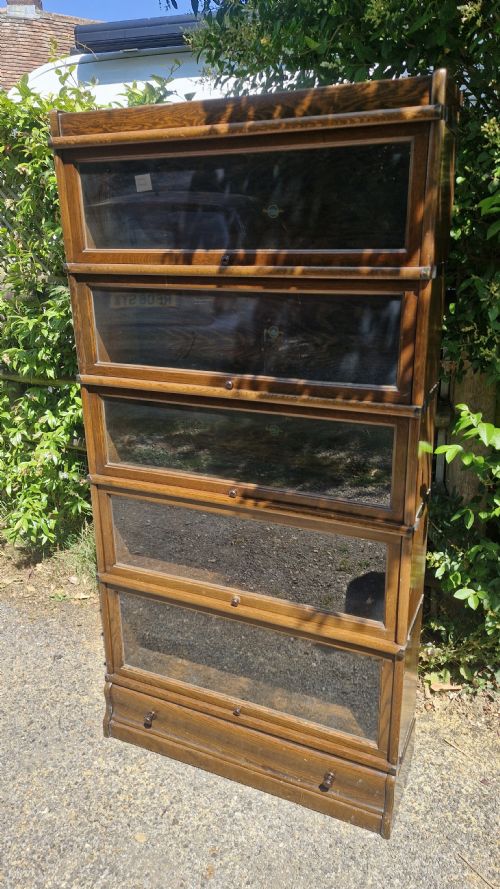
A barrister stacking bookcase consists of individual modular tiers that stack upon one another, topped with a cornice and grounded on a matching base. This ingenious modular format allowed lawyers and scholars to expand their library section by section as their book collection grew.
The version you are most likely to meet on this page is the Edwardian or 1920s oak or mahogany cabinet with glazed rising doors. These sectional pieces appear in various tier heights and widths, frequently bearing the stamps or labels of prominent makers from the early twentieth century.
Originating primarily from the Edwardian period through the 1930s, these bookcases bridge professional utility and domestic elegance. They transition easily from formal offices to living rooms, housing books or display items while keeping dust safely at bay.
How they were made
Makers utilised solid oak and mahogany as the primary structural timbers, often selecting golden oak or rich dark mahogany veneers for external visibility. Metal mechanisms and brass hardware were integrated into the individual sections to allow the glass doors to lift and slide smoothly inside the cabinet.
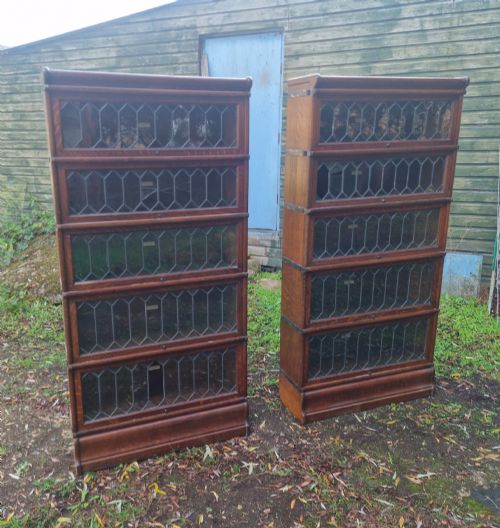
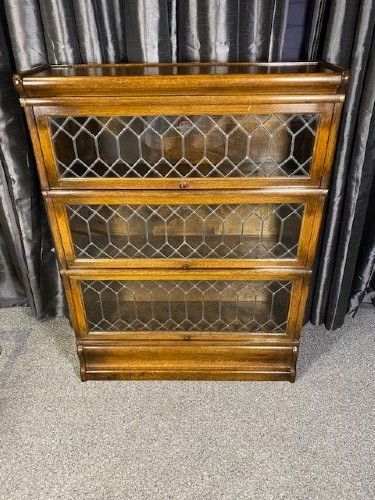
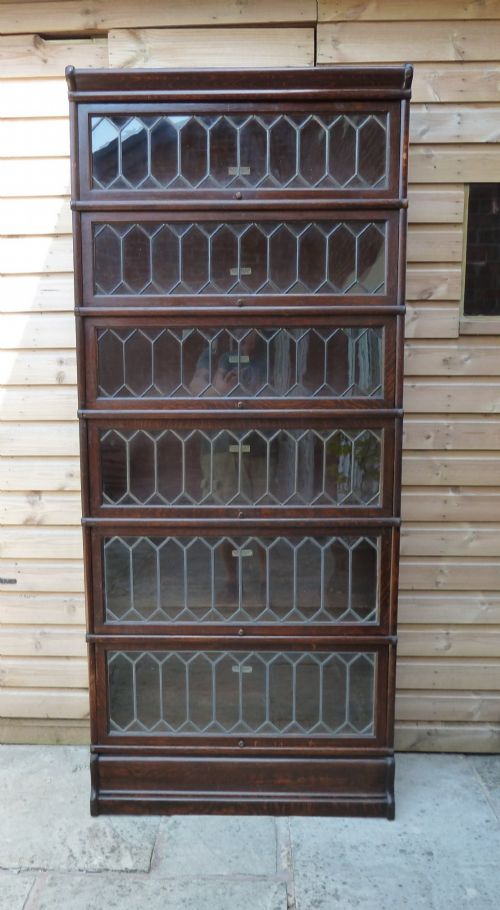
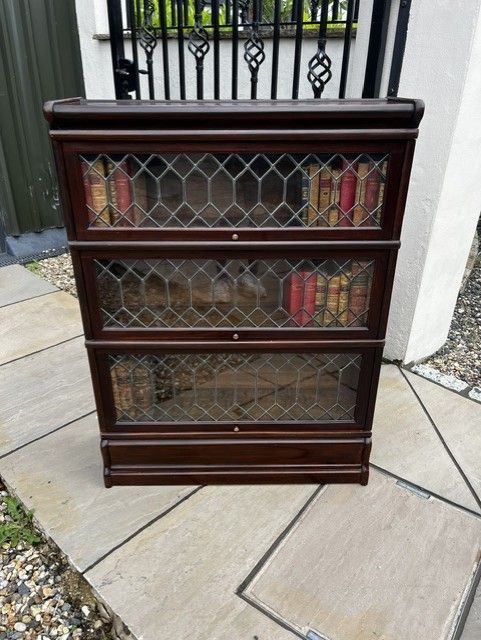
Leaded glass panels frequently feature in the upper tiers of these cabinets, held together with strips of lead to create decorative geometric or diamond patterns. The modular boxes were constructed with precise joinery so that multiple tiers could lock together vertically without wobbling.
Some barristers stored extra snacks behind the glass doors.
What varies in quality
The distinction between standard office utility models and superior specimens lies in the timber selection and the refinement of the mechanical lifting action. Higher quality examples utilise solid mahogany or figured golden oak with careful grain matching across the stacked tiers.
Attention to detail in the hardware and glasswork defines the upper tier of manufacture. Pieces featuring leaded glass panes, solid brass drawer pulls, and smooth, original door-balancing mechanisms command greater appreciation among collectors.
Globe Wernicke·Lebus·Minty·Gunn·Warwick·Amyl·Simpoles
The Barrister Stacking Bookcase Glossary
- Sectional
- Built in separate, detachable horizontal tiers that stack vertically to form a complete tall cabinet. This modular design allowed for easy transport and future expansion.
- Globe Wernicke
- The preeminent American manufacturer whose patented barrister bookcase design was widely adopted by British makers. Their name became synonymous with stacking office furniture.
- Leaded glass
- Small panes of glass joined together by narrow cames of lead to form decorative windows within the cabinet doors. This technique added rigidity and aesthetic charm.
- Cornice
- The decorative moulded projection that sits atop the uppermost tier of the bookcase. It provides a finished architectural cap to the stacked sections.
- Secretaire
- A specialised tier containing a drop-down writing desk surface alongside compartments for stationery. It integrated a bureau function directly into the stacking bookcase system.
Barrister Stacking Bookcase: Frequently Asked Questions
How do sectional bookcases work?
Each tier is an independent wooden box with its own glass door and mechanical linkage. The sections simply rest one on top of another between a fixed base and a top cornice.
This loose-stacked design means the cabinet can be disassembled into manageable single-tier pieces for moving or reconfiguring.
Can I separate the tiers?
Yes, the individual tiers are designed to lift apart once you remove the top cornice and any locking side bands if fitted.
Collectors frequently rearrange or reduce the number of sections to fit specific ceiling heights in modern rooms.
What is the glass door mechanism?
The glass panel is mounted on scissor hinges or metal side arms that guide the door upward and inward into the top of the shelf space.
When closed, the door protects books from dust, and when lifted, it slides completely out of the way for easy browsing.
How do I date an antique barrister bookcase?
Dating relies on examining the timber, the hardware patination, and any maker stamps or paper labels pasted inside the sections.
Most surviving examples date from the Edwardian era through the 1920s, identifiable by their golden oak finishes and distinctive brass manufacturer plates.