
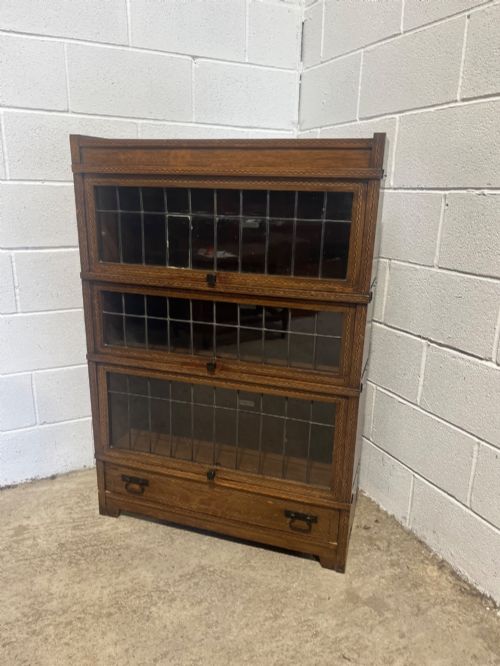
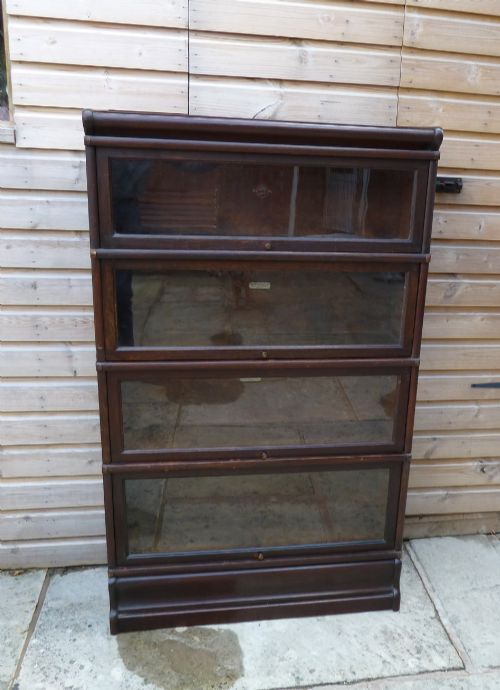
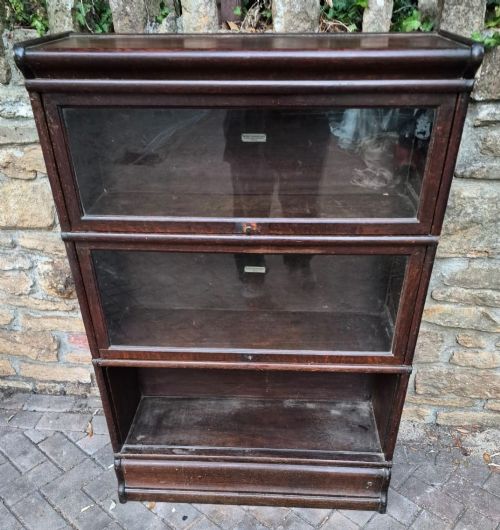
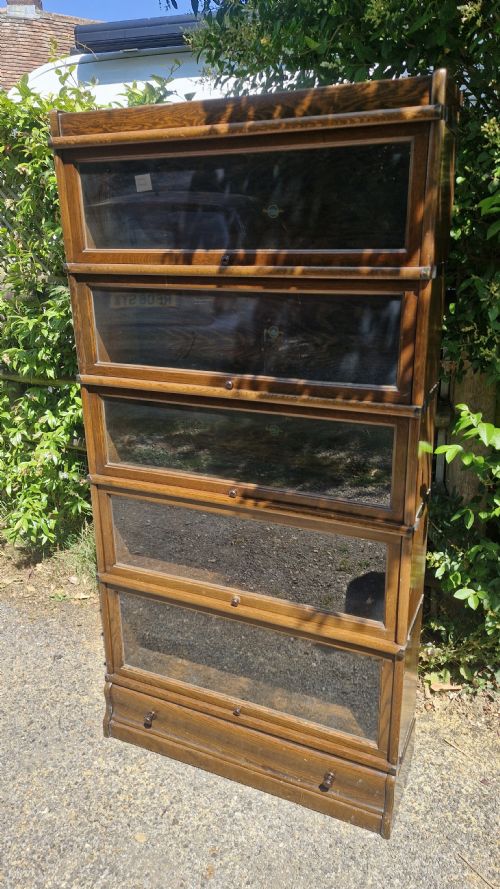

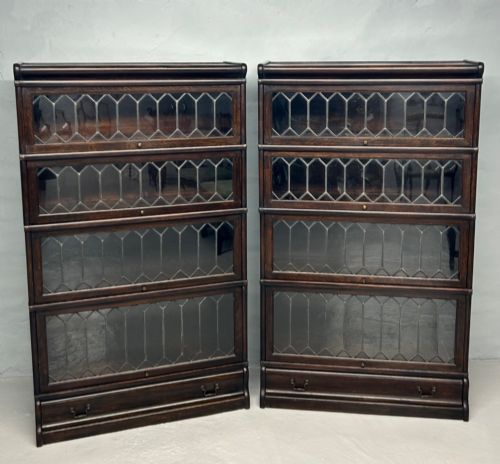
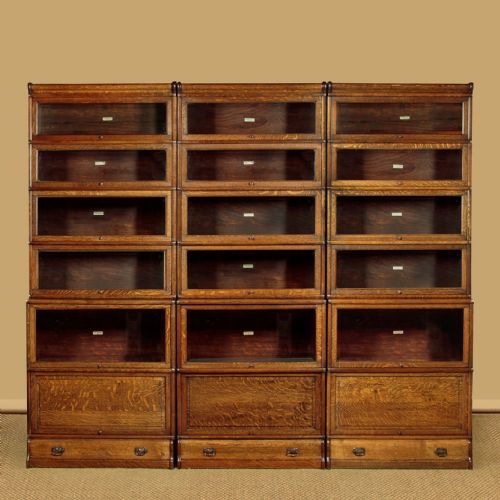
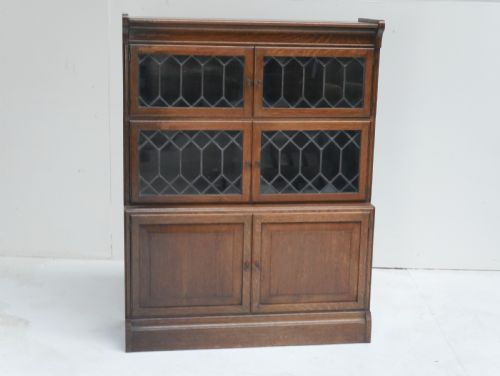
Barrister Bookcase Oak
These oak barrister bookcases offer modular storage and practical elegance, bringing classic stacking design into the modern study or living room.
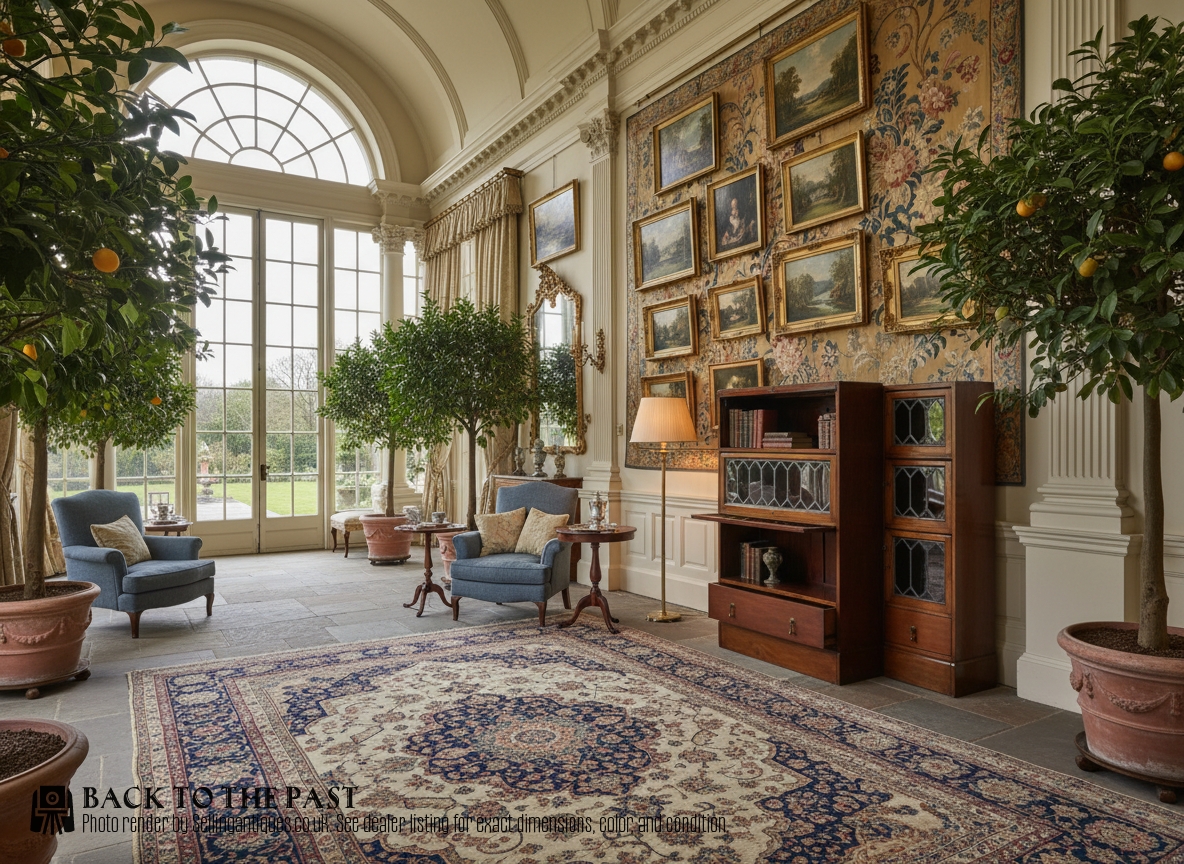
Barrister bookcase oak
A barrister bookcase oak provides modular storage through stacking sections enclosed by glass doors, designed to protect heavy volumes from dust. These pieces originate predominantly from the Edwardian era and the early decades of the twentieth century, reflecting a period of functional office and domestic furnishing.
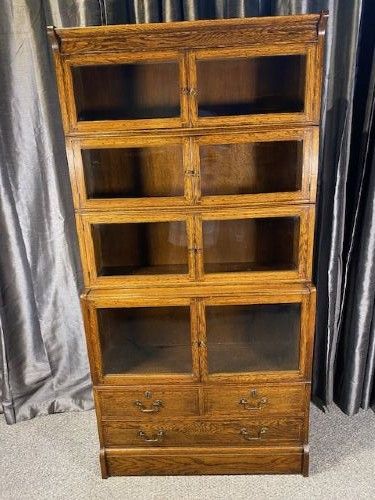
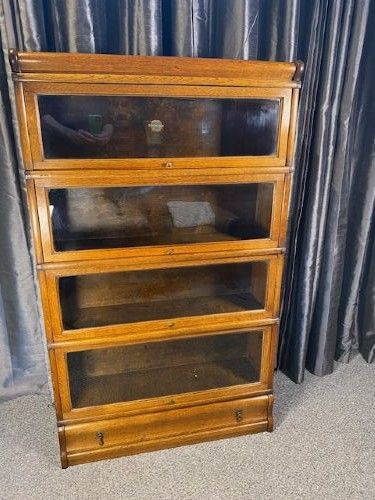
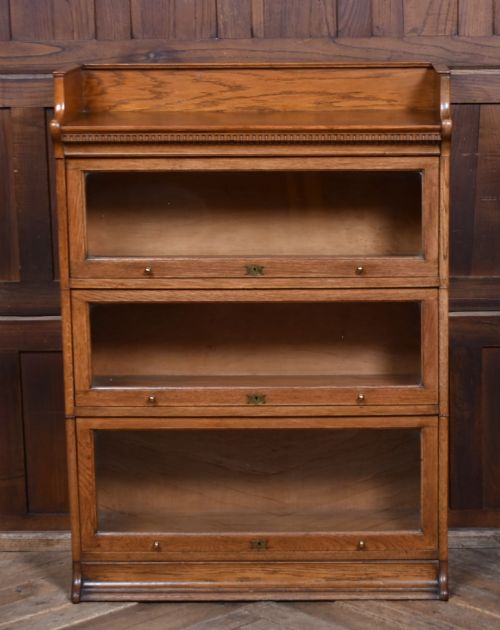
The version most commonly met on this page is the sectional or stacking bookcase built from solid timber. Standard forms range from smaller four-section configurations up to taller compositions, occasionally incorporating fitted secretaire writing desks or corner designs.
Makers such as Globe Wernicke, Lebus, Minty of Oxford, and Gunn dominate the historical record alongside unassigned pieces. These modular units adapt easily to changing spatial requirements while maintaining period character.
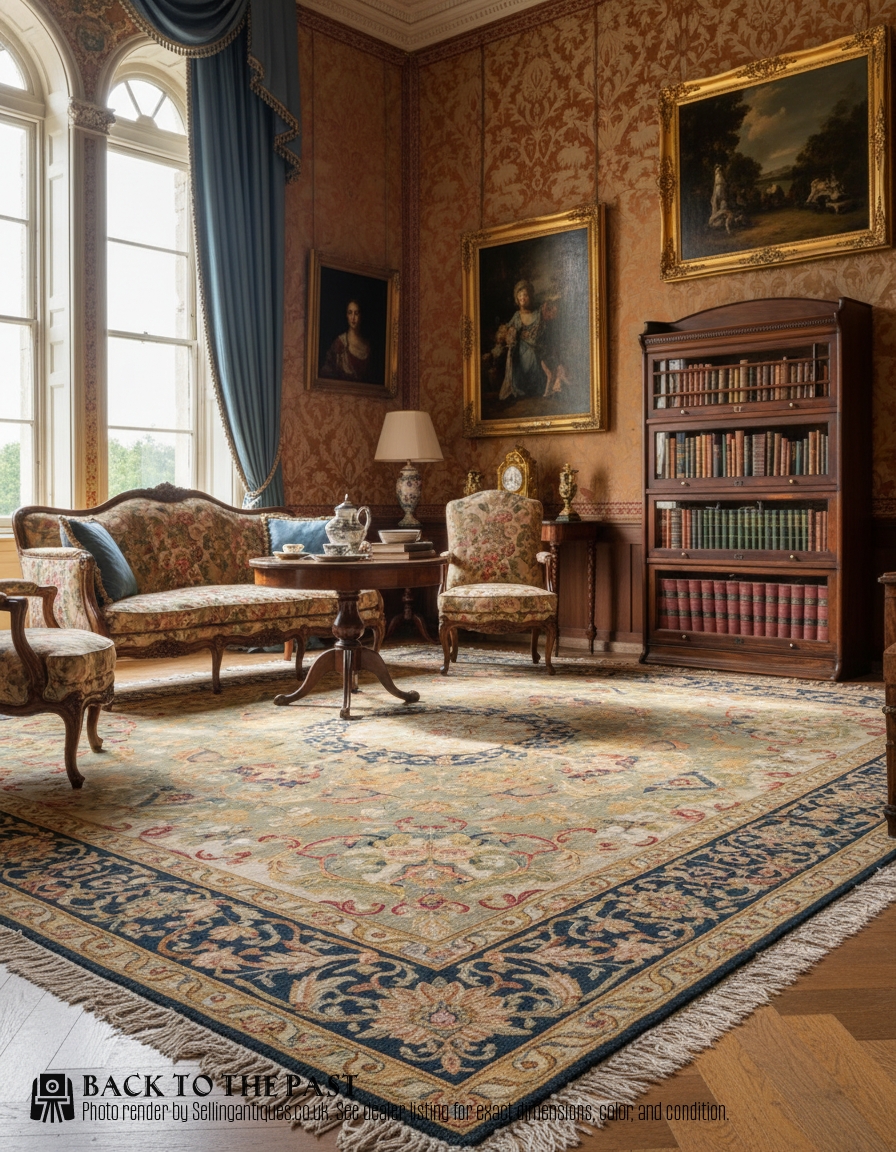
Construction and Materials
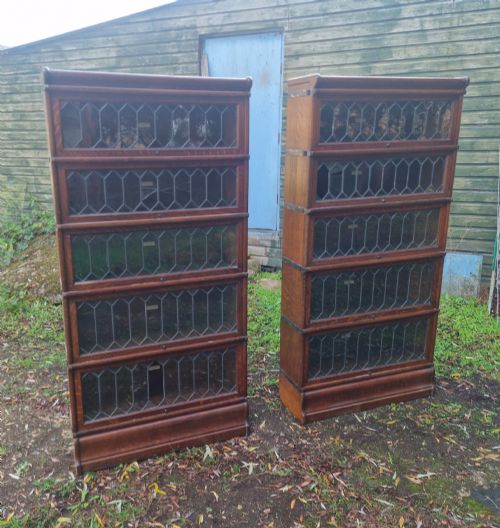
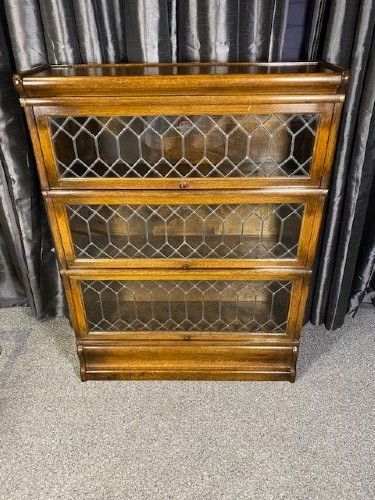
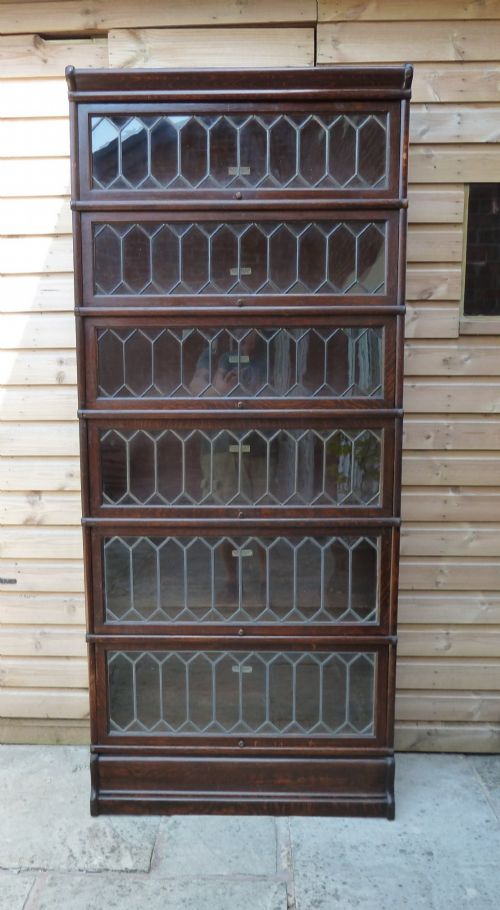
Makers utilised solid oak, often selected for strong figuring, alongside glass for the lifting doors and brass or metal for the internal mechanisms and pulls. Certain variations include wood inlay or leaded glazing to enhance the visual weight of the cabinet.
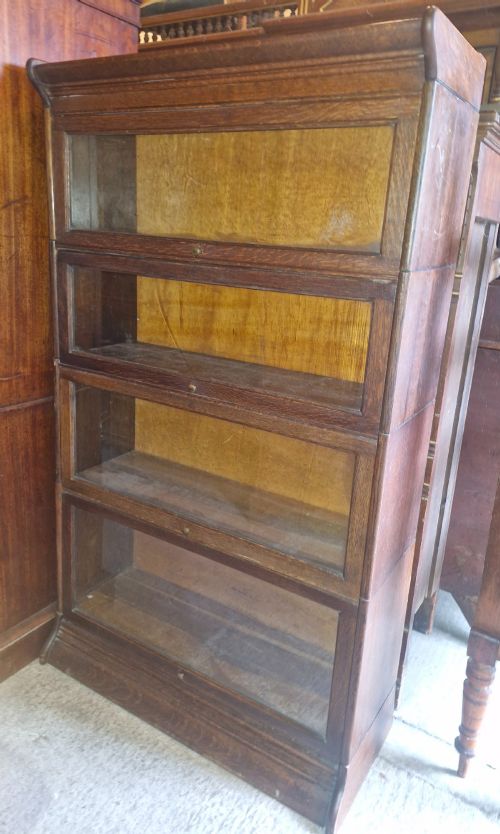
The sectional technique relies on independent stacking tiers that lock together without permanent fixings. Each tier contains a tilting glass door mechanism that slides smoothly into the recess above the books.
Retail Price Guide 2026
Typical UK retail prices for barrister bookcase oak, calculated from the Sellingantiques database of over a million retail prices indexed since 2003. This retail price guide relies exclusively on Sellingantiques data; no external sources or auction records are used, so the figures do not describe the wider market.
The archive records single, double-width, corner, and secretaire variations alongside standard stacking bookcases.
Judging Quality
The distinction between tiers rests upon the precision of the lifting mechanism and the weight of the timber. Finer examples display harmonious grain matching across the stacking sections and robust brass hardware.
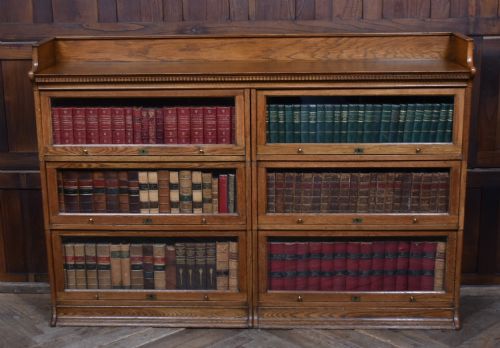
Proportion and scale dictate the visual success of the piece, particularly in taller five-section units or double-width arrangements. Original surfaces and authentic maker stamps elevate the standing of a cabinet.
Globe Wernicke·Lebus·Minty of Oxford·Gunn·William Baker and Co Oxford·Simpoles
The Barrister Bookcase Oak Glossary
- Sectional
- A piece built in independent stacking tiers that lift apart for transport and rearrangement. This modular design defines the barrister bookcase type.
- Secretaire
- A cabinet tier containing a drop-down writing surface and fitted interior compartments. It transforms a standard bookcase into a multi-functional desk.
- Leaded glass
- Small panes of glass held together by lead cames within the door frame. This technique adds decorative geometric detail to the frontage.
- Waterfall
- A style characterised by stepped tiers that recede in depth from bottom to top. It appears in later twentieth-century productions.
- Globe Wernicke
- A prominent manufacturing firm known for standardising the stacking barrister bookcase design. Their patent mechanisms set the benchmark for the form.
Frequently Asked Questions
How do barrister bookcases work?
Each tier operates independently with a glass door suspended on scissor hinges or metal arms. Lifting the door allows it to slide horizontally into the recess above the books.
This clever mechanism protects volumes from dust while permitting easy access to individual shelves without opening a full-length cabinet door.
Can the sections be separated?
Yes, the defining feature of these cabinets is their modular stacking construction. The individual tiers simply rest one upon the other, secured by base and top cornices.
This makes moving and configuring the furniture straightforward, whether arranging a single four-section unit or a taller combination.
What periods do these pieces date from?
The pieces listed and recorded in archives belong primarily to the Edwardian era and the 1910s, 1920s, and 1930s. Stylistic indicators include Arts and Crafts influences and early twentieth-century golden oak finishes.
Earlier nineteenth-century examples occasionally appear, though the modular stacking format gained its greatest popularity in the early decades of the twentieth century.
How do I care for oak stacking furniture?
Maintaining these cabinets involves keeping them away from direct heat sources to prevent timber movement. Regular dusting and occasional application of appropriate wood wax preserve the finish.
Checking the mechanical guides for the glass doors ensures they continue to glide smoothly without binding against the oak frame.