



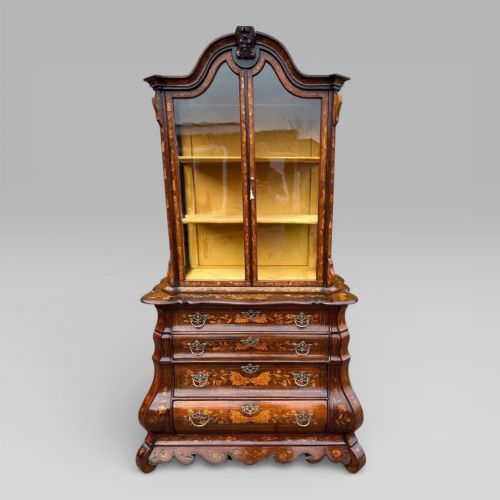
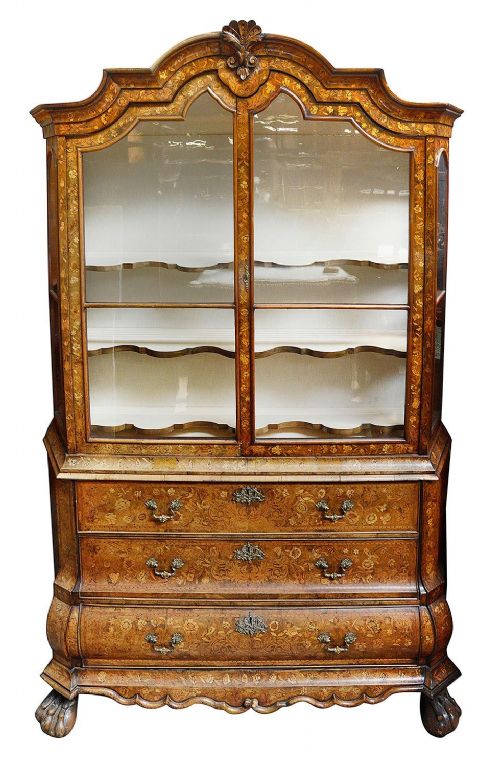
Baroque Cabinet on Chest
A baroque cabinet on chest combines architectural presence with intricate surface work, offering serious storage and display for collectors of regional European furniture.
Baroque Cabinet on Chest
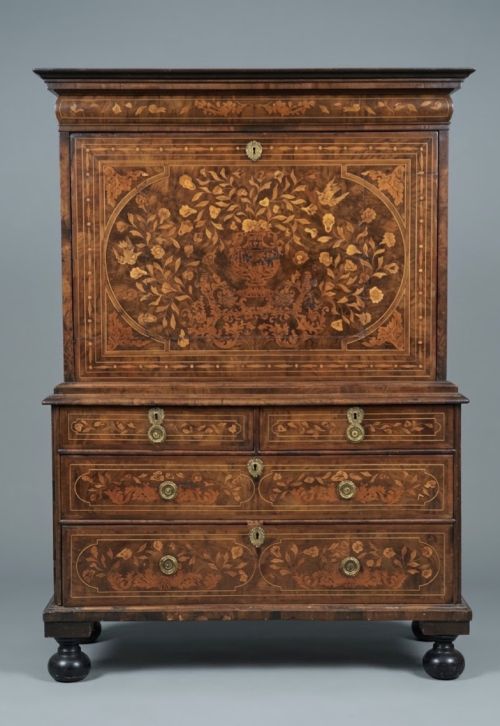
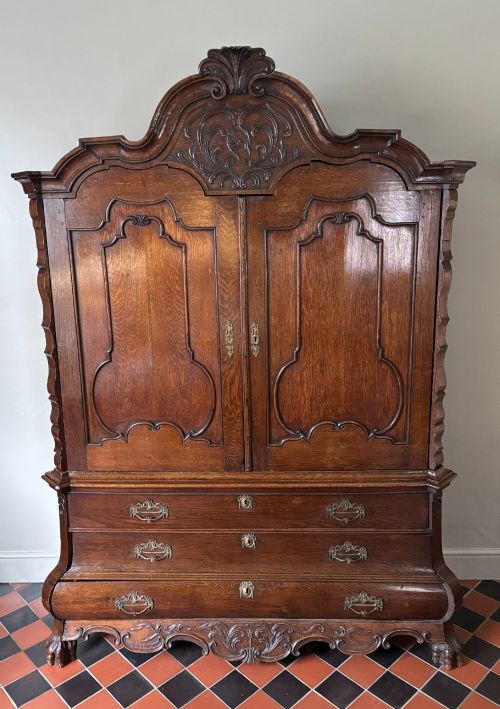
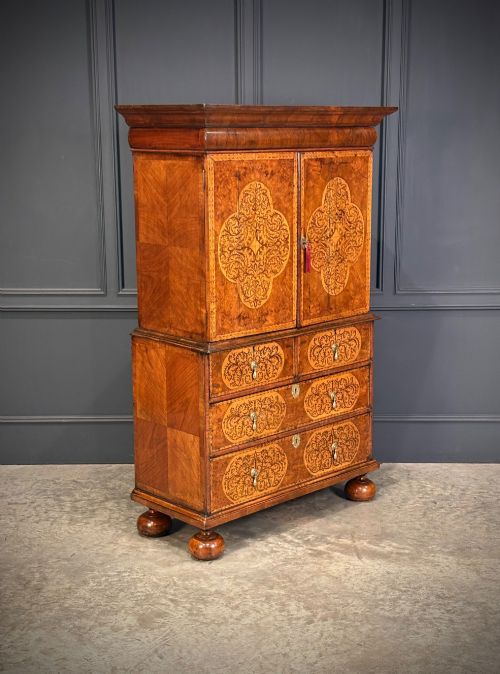
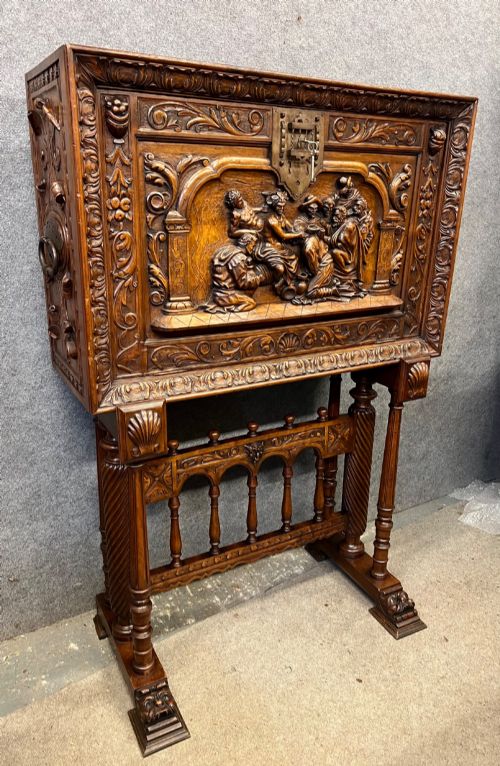
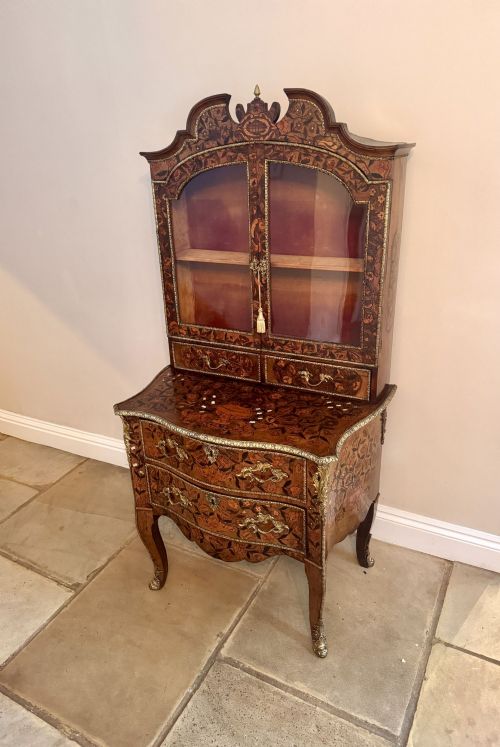
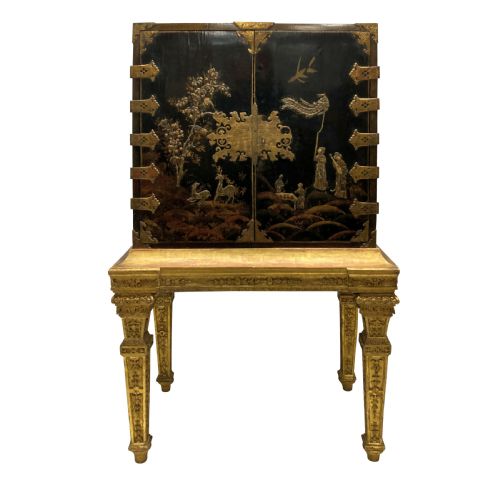
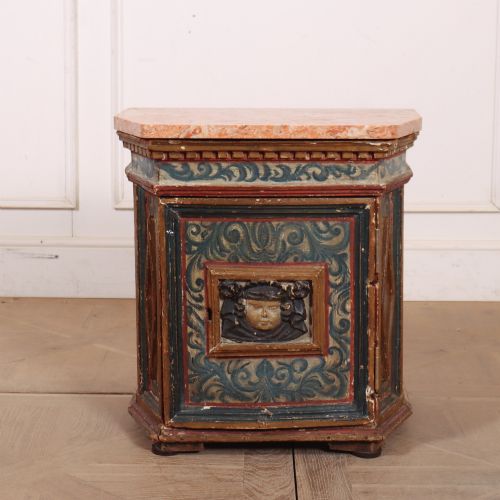
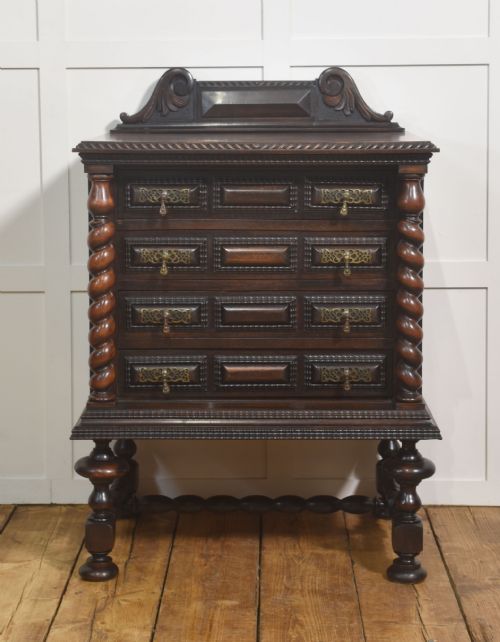
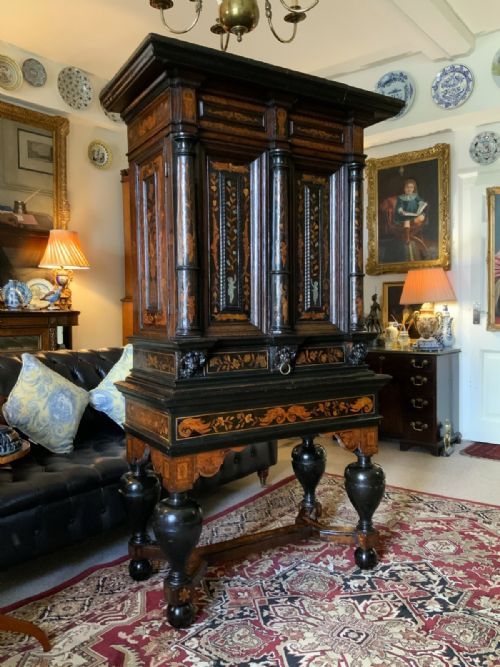
A baroque cabinet on chest brings together a tall upper storage compartment and a lower chest or rigid stand, spanning regional traditions from Dutch floral marquetry to Spanish and Flemish tortoiseshell work. These pieces emerge chiefly across the seventeenth and eighteenth centuries, reflecting dense architectural proportions and intricate door configurations.
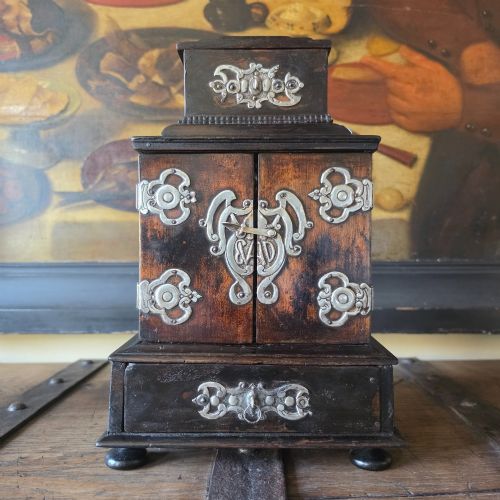
Dutch walnut marquetry examples dominate the selection here, alongside Flemish architectural cabinets and Spanish walnut or ebony designs. Buyers encounter forms ranging from monumental bureau bookcases and bombé display units down to intimate table cabinets and miniature apprentice pieces.
Materials and construction methods
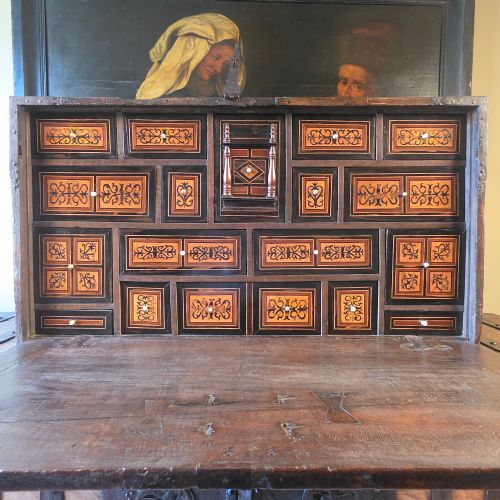
Cabinetmakers built carcass structures in oak, walnut, or pine, applying rich surface veneers including walnut oyster pieces, kingwood, and fruitwood. Inlaid panels utilise pewter, bone, and floral marquetry to create dense pictorial schemes across the drawer fronts and doors.
Elaborate models integrate tortoiseshell, ebonised wood, and gilt bronze mounts, particularly in Flemish and Spanish workshops. Surface detailing relies on precision sawing for veneers and hand-engraved elements fitted directly into the timber base.
Baroque Cabinet on Chest Retail Price Guide 2026
Typical asking prices for baroque cabinet on chest among the pieces listed under this phrase on Sellingantiques today, from the lower quarter to the upper quarter. They describe what is for sale here now, not the wider market.
Apprentice pieces allowed young woodworkers to demonstrate mastery by scaling down monumental cabinets into miniature marvels.
Assessing quality and construction
Quality rests in the crispness of the marquetry cutting and the depth of the timber figuring, such as well-matched walnut oyster veneers. Superior examples maintain original stands, mounts, and hardware without significant replacement of the delicate inlay work.
Structural integrity of the base frame determines longevity, given the substantial weight of the upper cabinet sections. The precision of drawer linings and the retention of early hinges and locks separate standard joinery from masterwork production.
Edwards & Roberts
The Baroque Cabinet on Chest Glossary
- Marquetry
- Decorative veneer work arranged in pictorial patterns using various woods, pewter, or bone. This technique defines much of the Dutch furniture in this category.
- Oyster veneer
- Cross-cut circular sections of branches or small logs laid in repeating patterns to resemble oyster shells. It creates a distinctive rippled surface texture on seventeenth-century pieces.
- Bargueño
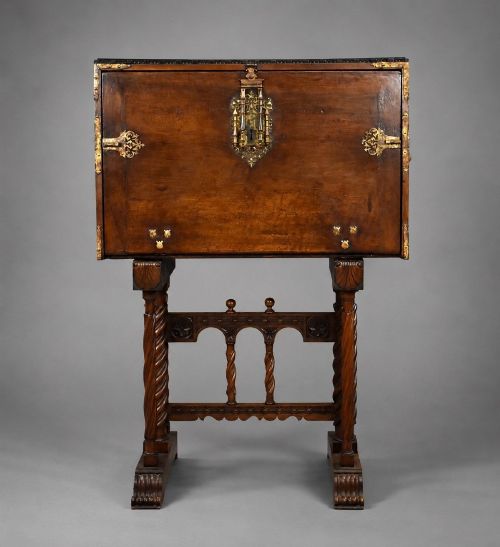
- A traditional Spanish drop-front cabinet on a stand, often fitted with numerous small internal drawers. These pieces typically display intricate bone inlay and gilt mountings.
- Bombé
- Swelling or convex curved cabinet fronts and sides associated with continental furniture. This contoured form demands advanced woodworking skill to execute cleanly.
- Vitrine
- A glass-fronted display cabinet designed for showing porcelain and curiosities. These pieces incorporate glazed upper doors above lower chest or stand sections.
Baroque Cabinet on Chest: Frequently Asked Questions
What is a baroque cabinet on chest?
A baroque cabinet on chest is a dual-part furniture form featuring an upper storage section mounted upon a lower chest or supporting stand. These pieces date predominantly from the seventeenth and eighteenth centuries across various European regions.
They were built to store textiles, documents, or valuables while serving as impressive architectural statements within domestic interiors.
How were these cabinets used?
These pieces functioned as high-status storage units for precious goods, books, or collections of curiosities. Upper compartments often housed specialised drawers, secret compartments, or display shelves.
Lower sections provided foundational support and additional drawer space for larger household items.
How do I date a cabinet on stand?
Dating relies on examining construction methods, timber choices, and decorative motifs such as seaweed marquetry or oyster veneering. Seventeenth-century examples often feature heavy ebonised framing and tortoiseshell panels.
Later eighteenth-century pieces commonly display lighter floral marquetry and bombé contours.
How do I care for antique marquetry?
Keep antique marquetry furniture away from direct sunlight and steady heat sources to prevent wood shrinkage and veneer lifting. Maintain stable room humidity levels to protect delicate inlay materials like bone and pewter.
Clean surfaces gently with a dry or barely damp cloth without utilising modern chemical polishes.