
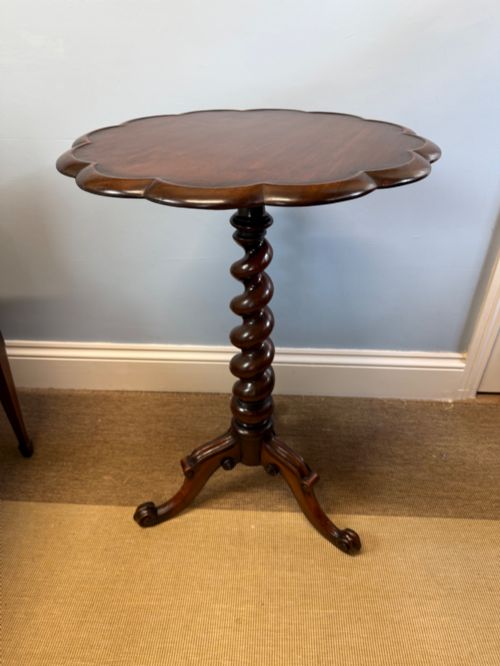
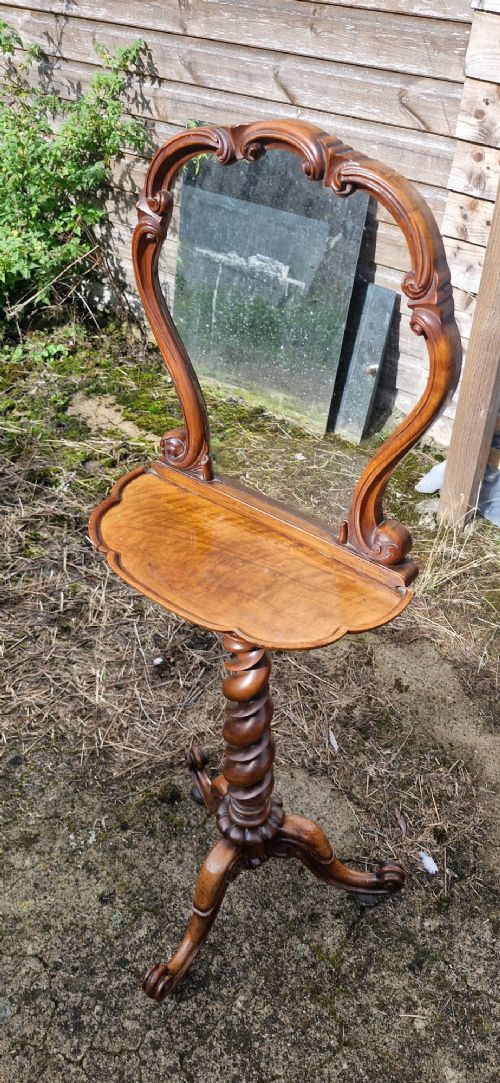
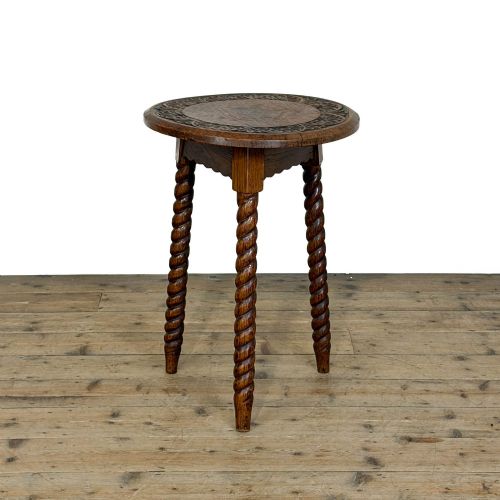
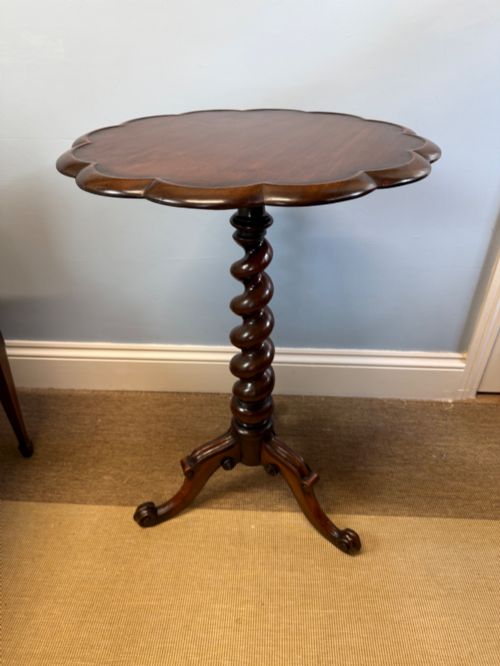
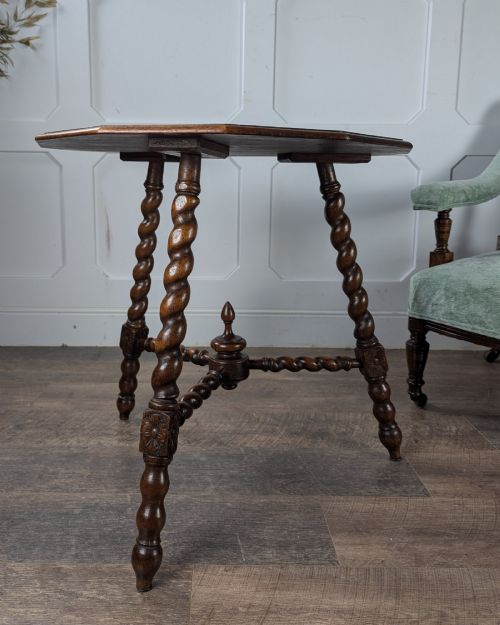
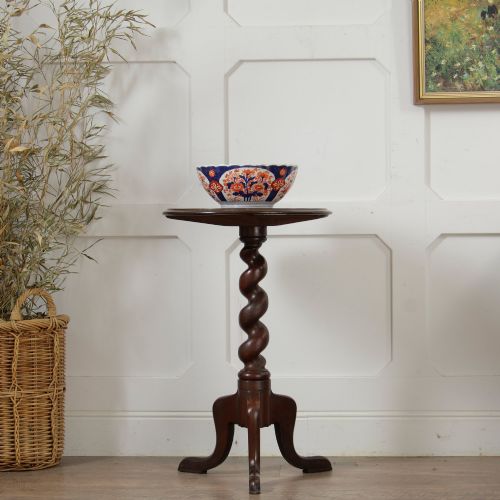
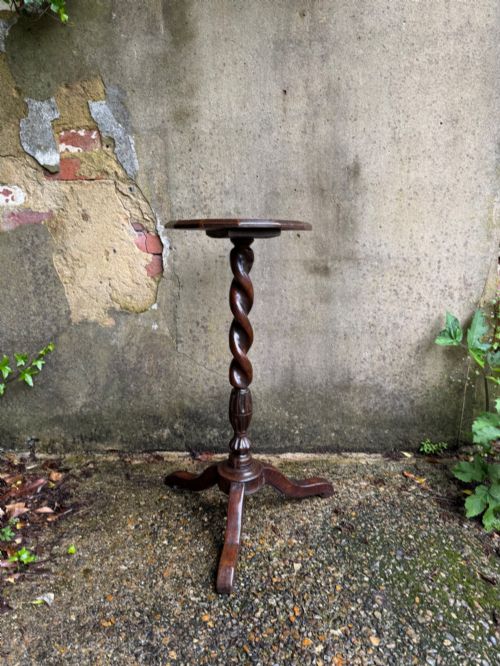
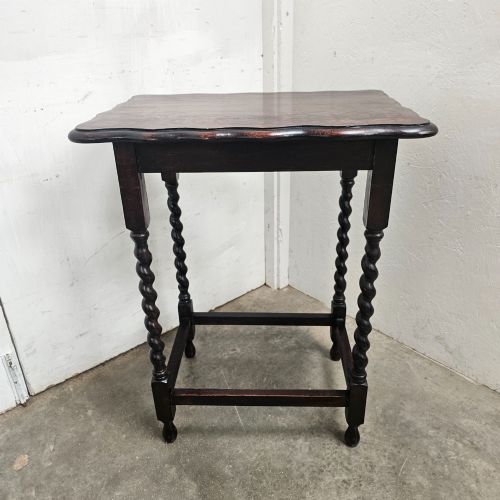


Barley Twist Wine Stand
A barley twist wine stand brings sculptural turned timber and practical surface space together, offering a steady spot for glasses or a lamp.
Barley Twist Wine Stand
A barley twist wine stand represents a distinct form of small support furniture designed to hold drinks, lamps, or decorative items within domestic interiors. These pieces frequently manifest as occasional tables, side tables, and pedestal stands originating across the nineteenth century and the early twentieth century.
The materials span mahogany, walnut, oak, burr maple, and ebonised wood, reflecting the preferences of Victorian and Edwardian cabinetmakers. Walnut and mahogany examples dominate the selection, often taking circular, octagonal, or dish-topped forms supported by tripod bases or central pedestals.
Buyers encountering this search phrase will find that many examples combine standard occasional table formats with the characteristic spiral turning known as barley twist. The construction ranges from simple utilitarian oak stands to finely marquetry-inlaid walnut and burr maple pieces.
Materials and construction methods
Makers utilised solid hardwoods including mahogany, walnut, and oak for the structural frames, legs, and pedestals of these stands. Turning lathes shaped the characteristic helical twist into table legs and central columns, requiring precise hand-chasing to maintain uniform spirals.
Surface decoration frequently involved wood inlay, marquetry, and bone detailing set into walnut or ebonised timber tops. Tops were shaped into circular, pie-crust, or octagonal formats, sometimes secured to pedestals via tilt-top mechanisms or fixed tripod arrangements.
Assessing quality in turned stands
The distinction between ordinary and superior pieces rests upon the crispness of the timber turning and the selection of figured wood veneers. Stands utilising dense, well-figured walnut or rich mahogany with sharply defined spiral twists demonstrate greater cabinetmaking skill than plain, unadorned utility versions.
Integration of secondary materials such as marquetry, bone inlay, or brass elements elevates the sophistication of the piece. Stability of the tripod base and the precision with which the joints meet the central column determine the enduring structural integrity of the stand.
Holland and Son
The Barley Twist Wine Stand Glossary
- Barley twist
- A spiral turning resembling the stalk of barley, carved or shaped into furniture legs and columns. This technique gained prominence during the seventeenth century and saw major revivals in Victorian and Edwardian joinery.
- Tripod base
- A three-legged support structure commonly found beneath small occasional tables and wine stands. It ensures stability on uneven floors by keeping all three feet in continuous contact with the ground.
- Teapoy
- A small stand or box originally designed to store and serve tea, often elevated on a central pedestal. Nineteenth-century examples sometimes double as general spirit or drinks tables.
- Marquetry
- Decorative veneer work forming pictorial or geometric patterns using various coloured woods. It frequently adorns the table tops of high-status nineteenth-century walnut furniture.
- Pie crust table
- A small occasional table featuring a raised, carved, or scalloped moulded edge along the perimeter of the top. This decorative rim prevents items from easily sliding off the surface.
Barley Twist Wine Stand: Frequently Asked Questions
What was a wine stand used for?
These compact stands served to hold glasses, decanters, or small lamps beside seating areas within a reception room. Their portable nature allowed servants to move them easily where extra surface space was required.
Over time, their domestic role expanded to display decorative ornaments, planters, and small floral arrangements in Victorian interiors.
How do I date a barley twist stand?
Dating relies upon examining the timber species, construction joints, and stylistic revival cues visible on the piece. Mid-nineteenth-century examples frequently employ solid walnut or mahogany with hand-turned elements.
Later pieces from the Edwardian period or the 1920s often utilise lighter oak construction and machine-finished turnings. Comparing the patina and wear patterns around the base also guides accurate period placement.
Are these tables stable enough for daily use?
Tripod bases provide dependable balance when the joints remain tight and the feet sit evenly on the floor. Most stands handle normal placement of books, lamps, and drinks without difficulty.
Heavy downward pressure should be avoided on tilt-top mechanisms or delicate inlaid edges to prevent strain on the central column.
Where should I place a wine stand at home?
These compact pieces fit comfortably beside armchairs, in narrow hallways, or as corner accents supporting small lamps. Their small footprint makes them versatile additions to both traditional and contemporary rooms.
Placing them away from direct heat sources protects the polished wood finishes and prevents timber shrinkage.