

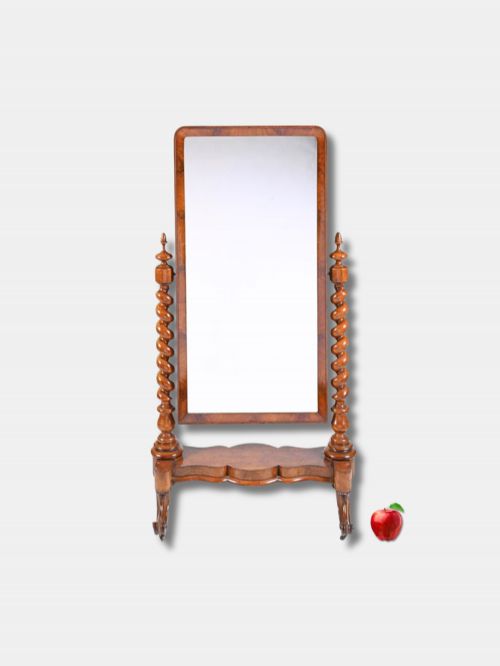


Barley Twist Mirror
These barley twist mirror pieces combine turned woodwork with reflective glass, bringing architectural depth and historic texture into a room.
Barley Twist Mirror
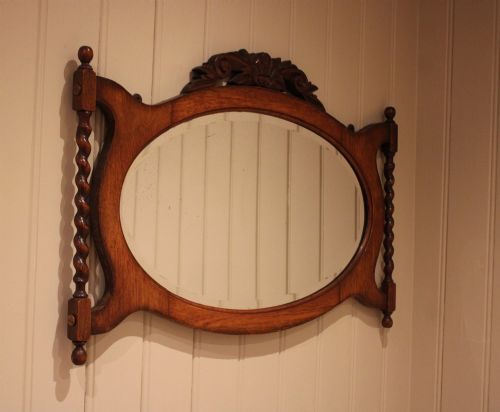
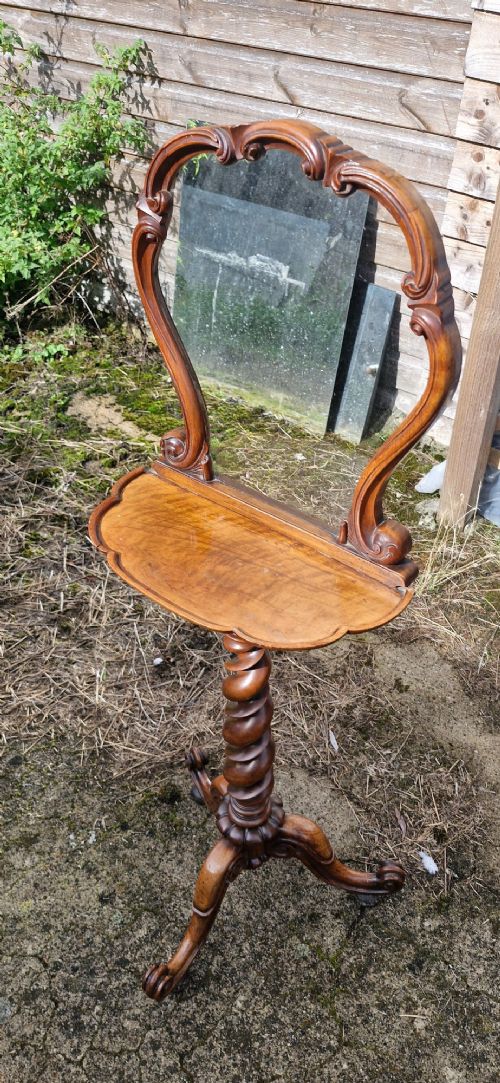
A barley twist mirror combines a reflective plate with spiral-turned wooden supports, drawing on Jacobean Revival and Victorian design traditions. When you search for a barley twist mirror, you encounter floor-standing cheval forms, tabletop dressing mirrors, and wall-hanging examples.
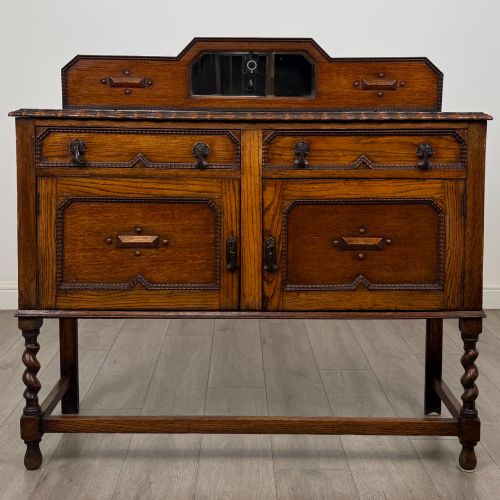
The evidence shows these pieces appearing across the Victorian, Edwardian, and 1920s periods, frequently executed in oak, mahogany, or walnut. Many incorporate the spiral turning either as side columns on a swing frame, uprights on a cheval stand, or structural framing for hall stands and sideboards.
How they were made
Makers shaped the distinctive spiral columns using wood-turning lathes, cutting diagonal grooves down cylindrical shafts of solid oak, walnut, or mahogany. These turned uprights were then joined to heavy base platforms, wall brackets, or swing frames using traditional mortise and tenon joinery.
Mirrored glass plates, sometimes bevelled at the edges, were set into rebated wooden frames and secured with backing boards. Additional decorative elements such as brass pivots, carved crestings, or gilded finishes occasionally completed the construction.
Barley Twist Mirror Retail Price Guide 2026
Typical asking prices for barley twist mirror among the pieces listed under this phrase on Sellingantiques today, from the lower quarter to the upper quarter. They describe what is for sale here now, not the wider market.
Listings for this phrase feature oak, mahogany, walnut, and rosewood across Victorian, Edwardian, and 1920s periods.
What varies in quality
The precision and depth of the spiral turning dictate much of the visual merit, with deeply carved, hollow, or crisply cut twists sitting at the upper end of the craft. Timbers selected for the frame also matter, as dense burr walnut, figured mahogany, and quarter-sawn oak provide greater structural integrity and surface figure than plain secondary woods.
Proportion and scale distinguish standard production from finer workshop pieces, particularly in freestanding cheval mirrors and large hall stands where balance is crucial. The preservation of original mercury or silvered glass plates and matching brass hardware further separates everyday examples from superior survivals.
The Barley Twist Mirror Glossary
- Cheval mirror
- A freestanding full-length mirror mounted on a vertical swivelling frame between four supporting legs or side pillars. This form allows the glass to tilt to various angles.
- Jacobean revival
- A nineteenth-century architectural and furniture style that revived the heavy turned woodwork, rich oak, and rectangular proportions of seventeenth-century England. Barley twist columns are a defining feature of this aesthetic.
- Bevel
- An angled edge cut around the perimeter of a glass mirror plate to catch the light and create a decorative border. It indicates finer glass production.
- Whatnot
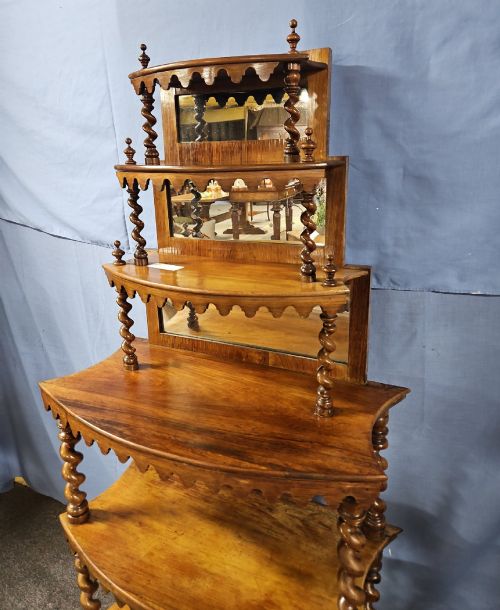
- A multi-tiered open shelving unit used for displaying decorative objects, which occasionally incorporates mirror backs or barley twist supports.
Barley Twist Mirror: Frequently Asked Questions
How do I date a barley twist mirror?
Dating relies on combining the timber species, the style of the frame, and the construction methods used in the backing and joints. Earlier pieces from the mid-nineteenth century often feature dense mahogany or rosewood, whilst later examples from the 1920s frequently utilise solid or veneered oak.
Examining the screws, hinges, and mirror glass plate provides further clues. Hand-bevelled glass and older brass pivot hardware point towards Victorian or Edwardian origins, whereas machine-cut elements typically suggest the 1920s.
Where should I place a cheval mirror?
A cheval mirror requires adequate floor space and good ambient light to function effectively as a dressing glass. Bedrooms, dressing rooms, and wide hallway landings offer suitable environments where the swivelling frame can be adjusted safely.
Because these pieces are tall and heavy, positioning them away from heavy foot traffic prevents accidental knocks. Placing them opposite a window also helps to bounce natural light around the room.
How do I clean the wooden frame?
Maintaining the timber involves dusting regularly with a soft, dry cloth to prevent the buildup of dirt in the recesses of the spiral turns. Avoiding silicone-based polishes preserves the natural finish of the antique wood over time.
Applying a traditional beeswax occasionally nourishes oak, walnut, or mahogany surfaces and enhances the grain. Care should be taken not to let cleaning liquids seep between the wooden frame and the mirror glass.
What is a hall stand with a mirror?
A hall stand combines a central mirror plate, often framed by barley twist supports, with hooks for coats and compartments for umbrellas or hats. These functional pieces stood in Victorian and Edwardian entrance halls to greet visitors.
They merge cabinetry with practical storage, utilising robust timbers like oak to bear the weight of heavy outerwear. The mirrored section helped guests check their appearance before leaving the house.