


Barley Twist Leg Table
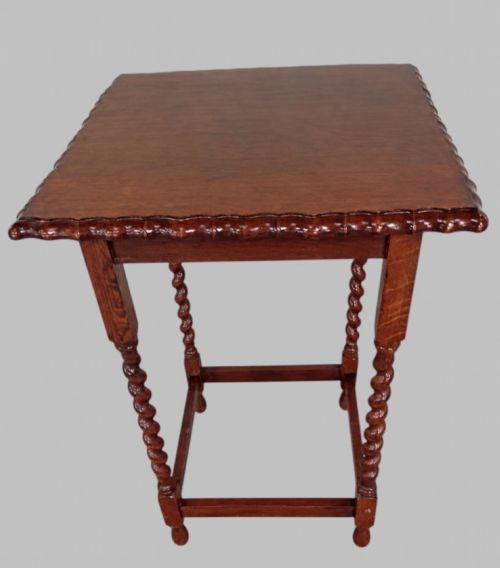
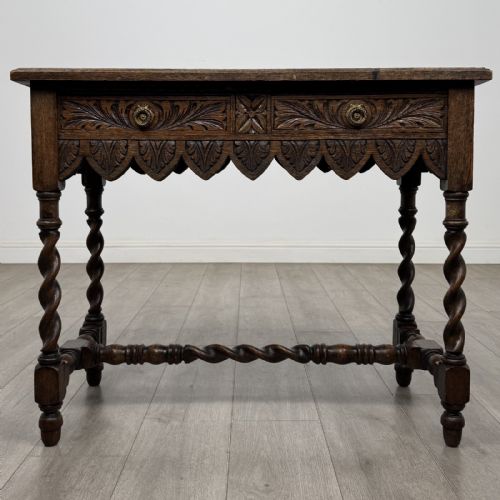
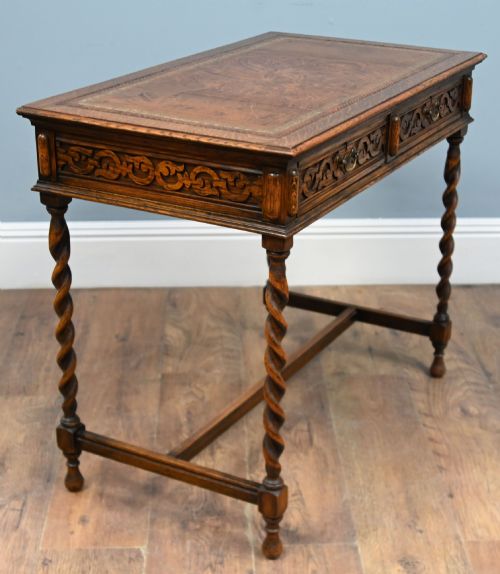
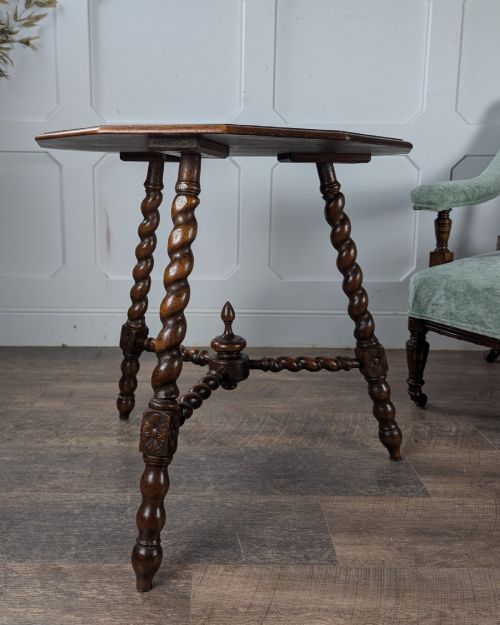
A barley twist leg table brings sculptural turned detail to domestic spaces, drawing the eye through helical curves shaped in timber.
Barley Twist Leg Table
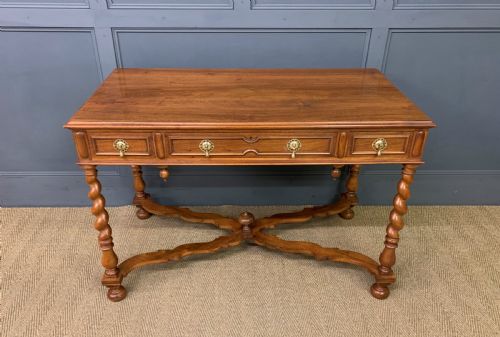
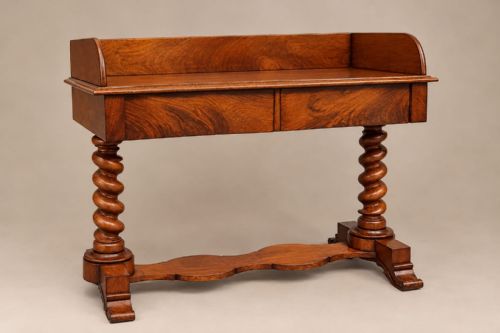
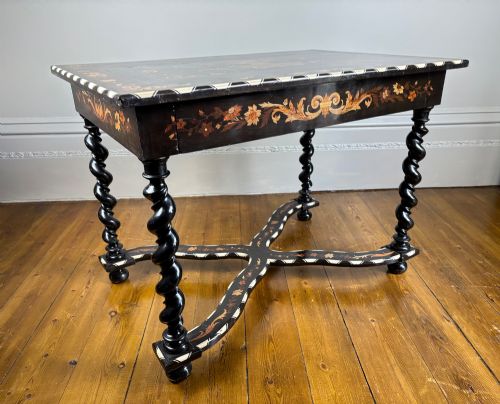
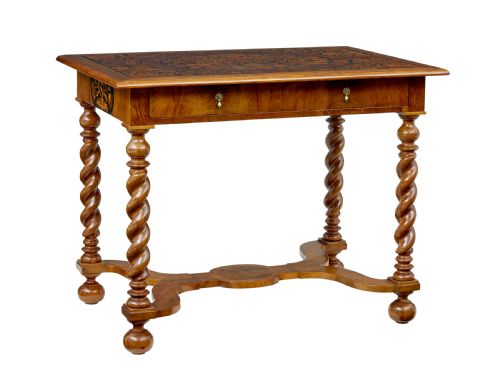
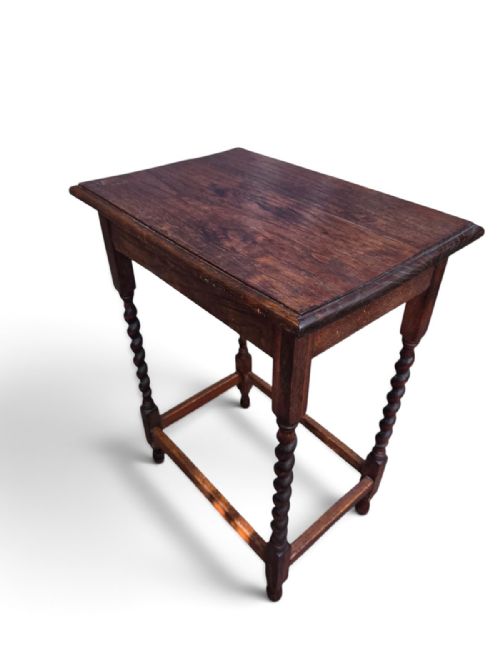
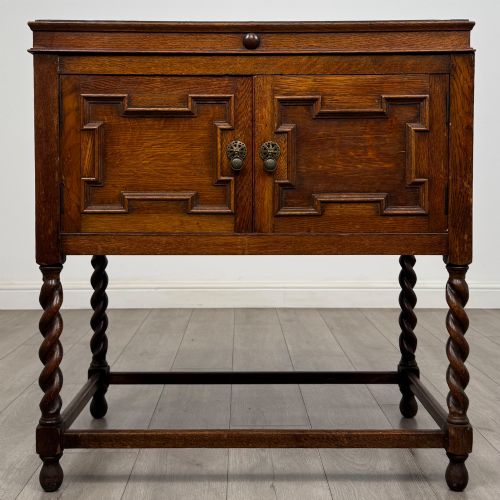
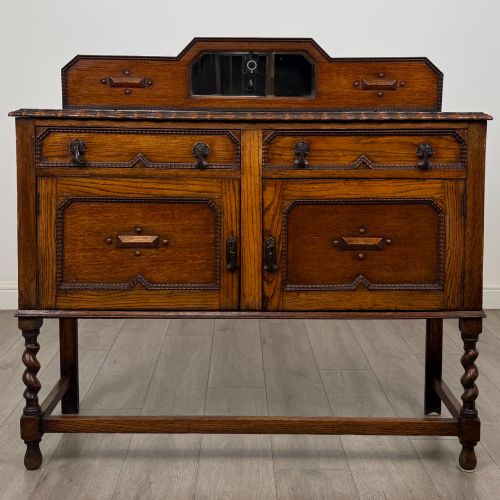
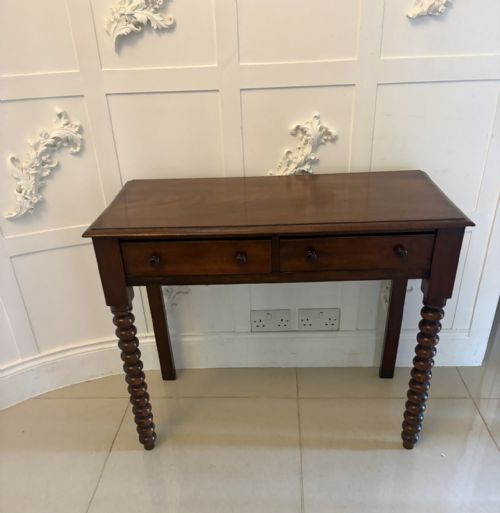
A barley twist leg table uses a distinctive spiral turning that appears across side tables, gateleg dining tables, and occasional stands.
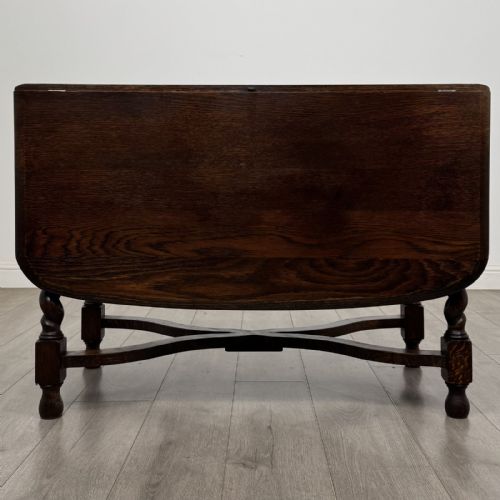
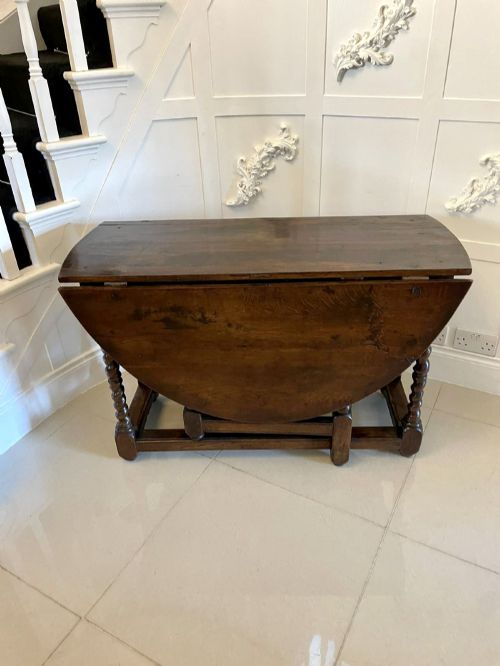
The version most commonly met on this page is the Edwardian or early twentieth-century oak side table, often found with a drop-leaf or gateleg action.
Examples stretch back through Victorian iterations to seventeenth-century origins, appearing in walnut, mahogany, and rosewood alongside solid oak.
How They Were Made
Cabinet makers produced the characteristic spiral legs by hand-carving or lathe-turning timber such as oak, walnut, and mahogany.
Drop-leaf and gateleg versions relied on hinged flaps supported by swing legs to expand the surface area of dining and occasional tables.
Barley Twist Leg Table Retail Price Guide 2026
Typical asking prices for barley twist leg table among the pieces listed under this phrase on Sellingantiques today, from the lower quarter to the upper quarter. They describe what is for sale here now, not the wider market.
One recorded occasional table stands on cast iron feet shaped like an eagle holding a glass ball.
What Varies in Quality
The definition and depth of the spiral carving dictate the visual impact of the leg, with sharper rotations showing greater hand craftsmanship.
The choice of timber grain, such as figured walnut or quarter-sawn oak, distinguishes standard utility pieces from more ambitious cabinet work.
The Barley Twist Leg Table Glossary
- Barley twist
- A form of wood turning resembling a twisted rope or spiral column, popular in seventeenth-century furniture and revived in later periods.
- Gateleg table
- A drop-leaf table where hinged legs swing outward from the frame to support the opened leaves.
- Drop-leaf
- A table design featuring hinged flaps that fold down at the sides to save space when not in use.
- Occasional table
- A small, movable table intended for specific, intermittent use around a room rather than a fixed dining placement.
Barley Twist Leg Table: Frequently Asked Questions
How do I date a barley twist table?
Dating relies on timber selection, construction joints, and secondary woods used in the frame. Earlier pieces from the seventeenth century often show narrower, hand-carved twists in walnut or oak.
Later Victorian and Edwardian revivals utilise machine-assisted turning and lighter oak species, frequently appearing as gateleg dining tables or small occasional stands.
Were these tables used for dining?
Many examples function as large gateleg dining tables designed to seat several people when fully opened. Drop-leaf mechanisms allowed households to collapse the leaves against a wall when floor space was needed.
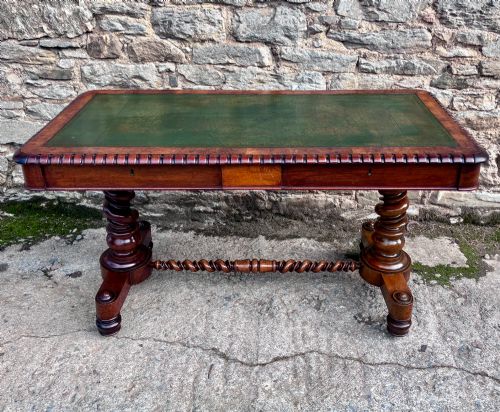
Smaller formats served as side tables, library tables, or writing desks rather than central dining surfaces.
What woods were used for these tables?
Oak is the predominant timber found in these listings, appearing in solid form across Edwardian and Victorian side and dining tables. Walnut and mahogany also feature prominently, alongside imported woods such as rosewood in nineteenth-century desks.
Earlier seventeenth-century pieces frequently utilise native hardwoods with distinct patination and grain patterns.
How do I care for an antique twist table?
Maintenance involves keeping the timber away from direct heat sources and strong sunlight to prevent the wood from drying out or splitting. Gentle dusting with a dry cloth preserves the polished surface.
Applying occasional wax feeds the grain and protects the carved spiral details without building up heavy residues.