






Barley Twist Etagere
A barley twist etagere brings tiered display space and spiral turned timber to a room, offering practical elegance for a collector.
Barley Twist Etagere
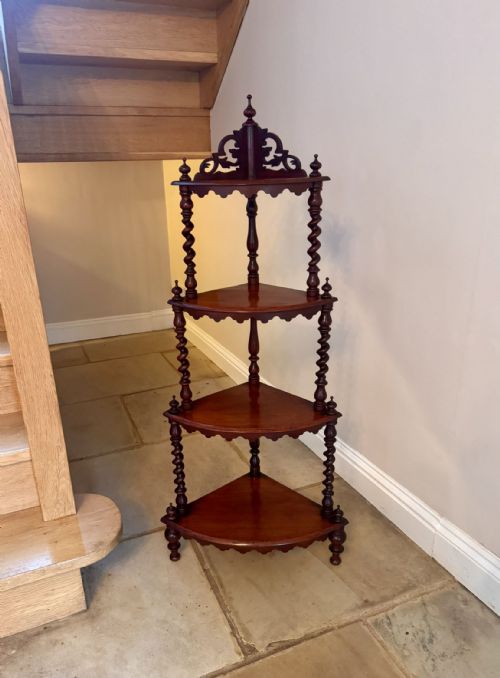
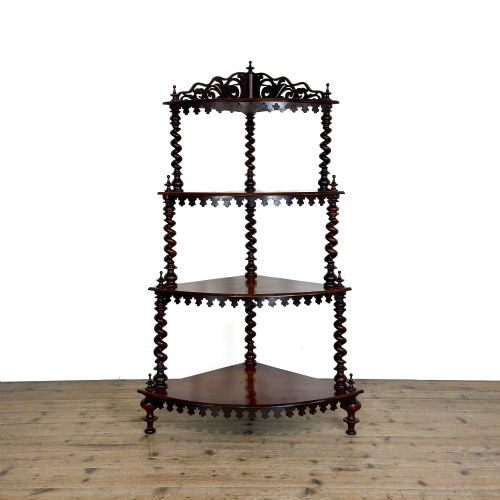
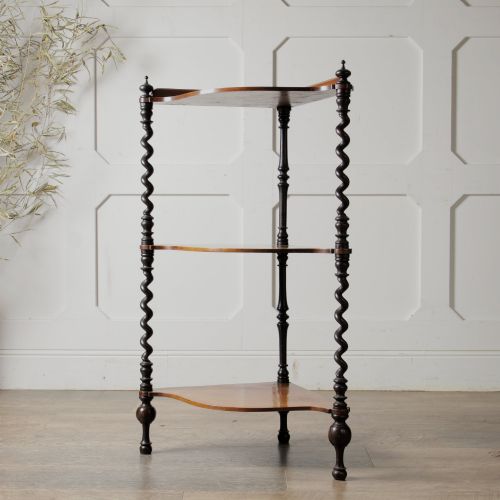
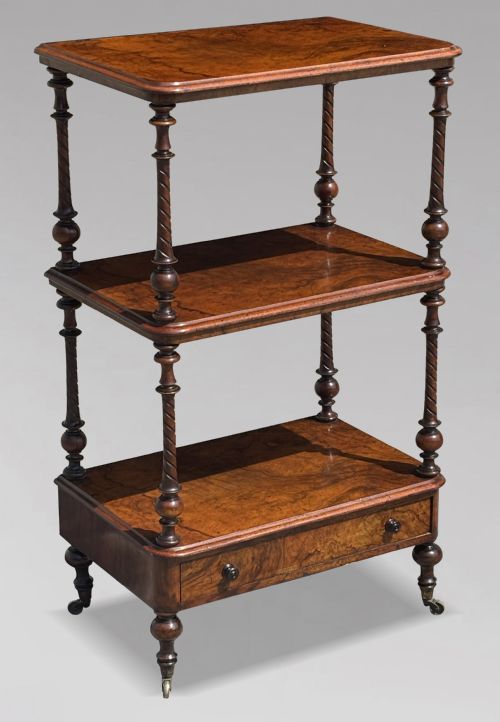
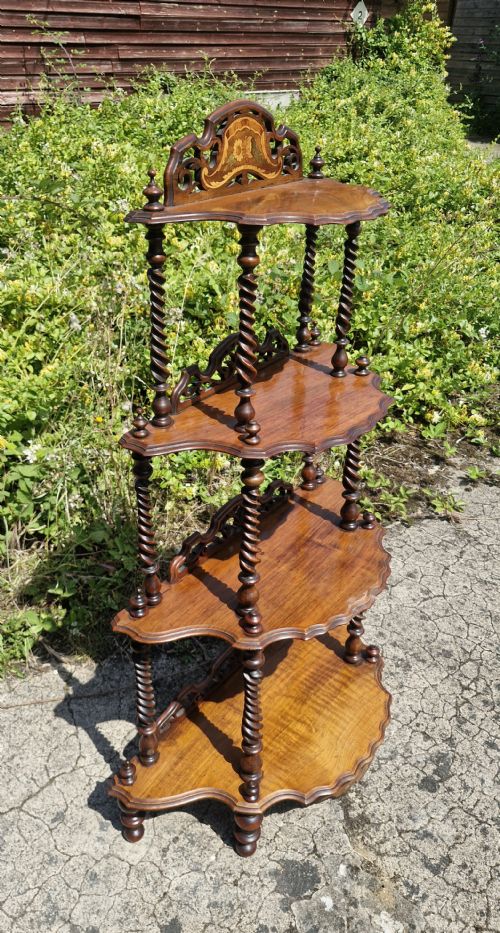
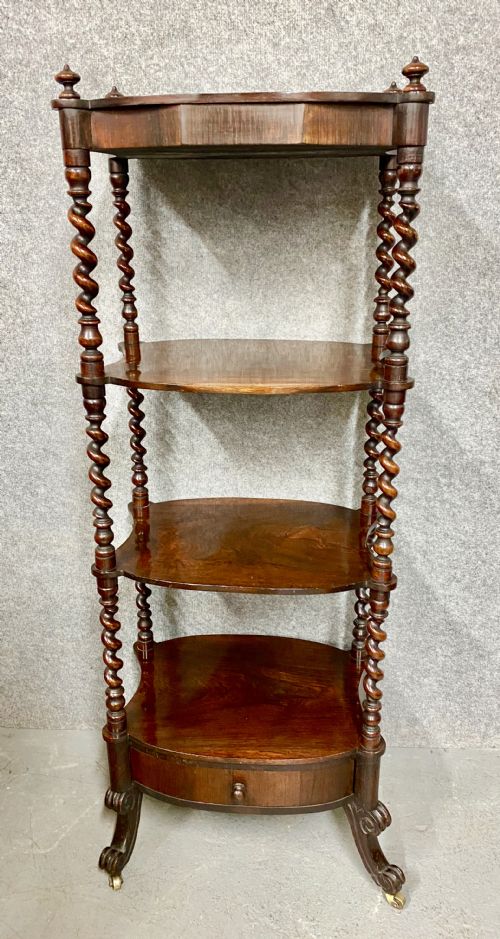
A barley twist etagere combines multi-tiered shelving with spiral turned supports, functioning as an open display stand for decorative objects and books. The pieces on this page span the Victorian period and nineteen-ten, taking the form of etageres, whatnots, corner stands, and display shelves.
Most examples appear in rosewood or walnut, with occasional variations featuring boxwood inlay, wood inlay, brass, glass, and painted finishes. Origin styles range from traditional Victorian to French Chateau, providing vertical storage solutions for corners and walls.
How they were made
Cabinet makers utilised dense hardwoods such as rosewood and walnut, shaping the structural uprights into characteristic spiral or twist profiles using manual turning lathes. Shelves were fitted securely between these turned columns, often reinforced with brass hardware or fine joinery.
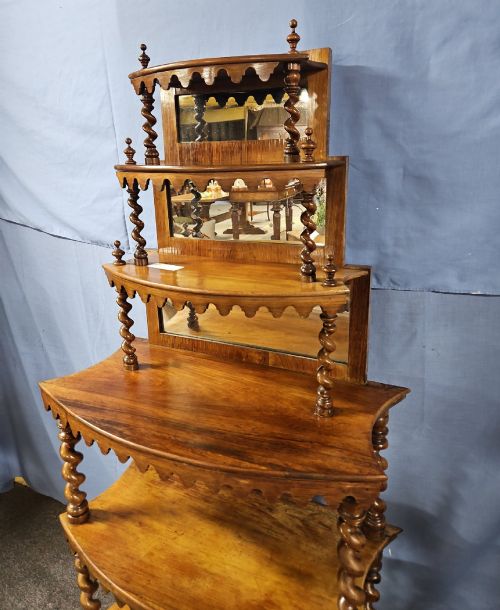
Surface decoration included intricate wood inlay and boxwood inlay set into the timber panels, alongside painted finishes seen on later nineteen-ten examples. Glass components and mirrored backs were integrated into specific display configurations to enhance light reflection.
Barley Twist Etagere Retail Price Guide 2026
Typical asking prices for barley twist etagere among the pieces listed under this phrase on Sellingantiques today, from the lower quarter to the upper quarter. They describe what is for sale here now, not the wider market.
What varies in quality
The distinction between standard tiers and superior examples lies in the crispness of the timber turning and the depth of the wood grain in rosewood or walnut. Finer pieces display seamless joinery, intricate boxwood inlay, and well-balanced proportions across multiple shelves.
Purer stylistic execution, such as authentic Victorian craftsmanship or refined French Chateau detailing, elevates a piece above simpler utility stands. The integration of quality materials like heavy brass fittings and polished glass further defines the upper tier of the range.
The Barley Twist Etagere Glossary
- Etagere
- A piece of furniture consisting of a set of open shelves for displaying small objects. These tiered stands gained popularity during the Victorian era for domestic display.
- Whatnot
- A multi-tiered piece of movable furniture with shelves, used for books or ornaments. The term emerged in the nineteenth century as these open display units multiplied in homes.
- Barley twist
- A spiral turning technique resembling a twisted column of barley sugar. Craftsmen utilised this decorative moulding on the upright supports of tables and shelving units.
- Inlay
- A technique of embedding pieces of contrasting material into a solid surface to form a pattern. Boxwood and various timbers were frequently used for floral or geometric motifs on cabinet work.
- Corner stand
- A shelving unit specifically designed to fit into the ninety-degree angle of a room. These space-saving pieces make effective use of neglected corners for ornament placement.
Barley Twist Etagere: Frequently Asked Questions
What is a barley twist etagere?
A barley twist etagere is an open tiered shelving unit supported by spiral turned wooden columns. It serves as a decorative display stand for ornaments, books, and small collections.
These pieces typically date from the Victorian period and feature multiple levels of display space. They work well in both traditional and contemporary interiors to add vertical interest.
How were etageres used historically?
Historically, etageres were placed in drawing rooms and parlours to display prized porcelain, silver, and decorative objects. They provided open access to items while keeping surfaces tidy.
Corner stands and whatnots fulfilled a similar decorative function, often utilising awkward angles or empty wall spaces for storage and presentation.
What woods were used for these shelves?
Cabinet makers predominantly used dense hardwoods such as rosewood and walnut for their rich colour and grain. These durable timbers supported the weight of tiered shelving.
Finer examples incorporated decorative elements like boxwood inlay or brass fittings to enhance the visual appeal of the timber surface.
How do I style an etagere at home?
Style an etagere by grouping objects of varying heights and textures across the shelves, leaving some open space to showcase the timberwork. Balance heavier books on lower tiers with lighter ceramics or glassware on upper levels.
Position the unit against a plain wall or inside a corner where the spiral turned supports and inlay details can be clearly seen.
How can I tell a Victorian whatnot apart?
Victorian whatnots and etageres are identified by their characteristic timber selection, typically dark rosewood or walnut, combined with hand-turned spiral columns. Their construction relies on period joinery methods rather than modern fixings.
Detailing such as delicate wood inlay and brass accents further indicates nineteenth-century origin, distinguishing them from later reproductions.