




Barley Twist End Table
A barley twist end table brings architectural turned wood and compact utility to a room, offering a functional surface rooted in centuries of cabinet-making tradition.
Barley Twist End Table
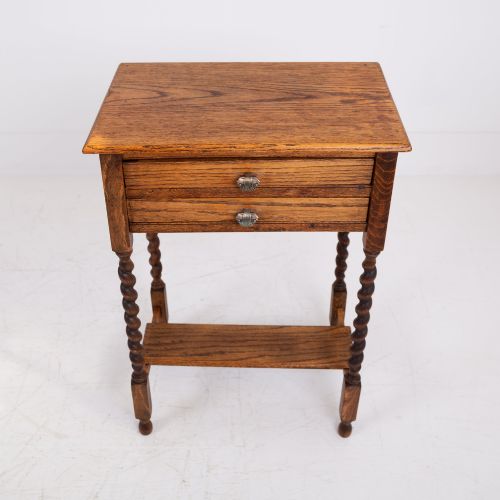
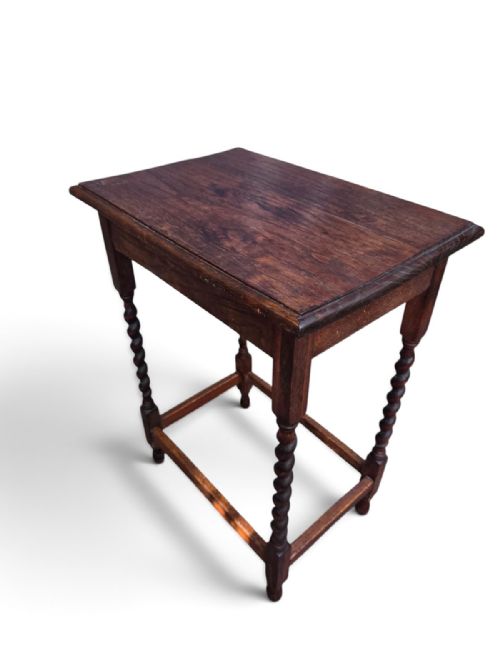
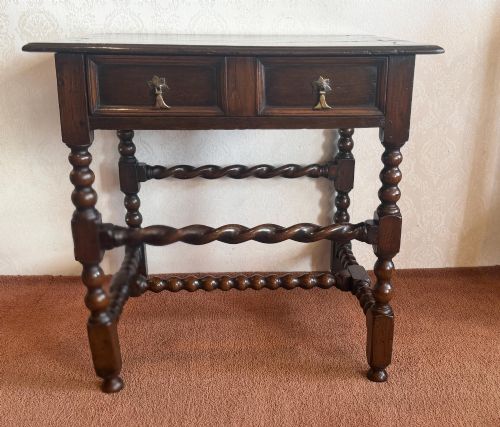
When you search for a barley twist end table, you are looking at small occasional furniture defined by spiralling turned legs, most commonly encountered in oak from the early twentieth century or the nineteen-twenties.
The material record spans side tables, nests of tables, lamp tables, and octagonal forms, alongside larger extending dining tables seen in the archive.
Origins stretch from the seventeenth century and William and Mary periods through Regency and Victorian eras, though the domestic examples on offer today lean heavily towards Edwardian and interwar revival pieces.
How they were made
Construction relies heavily on English oak and walnut, shaped with hand-turned spiralling legs that require precise lathe work to achieve uniform rhythm.
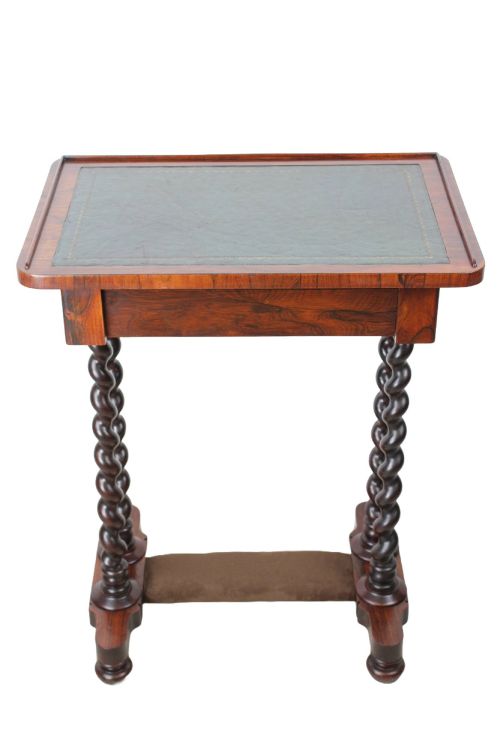
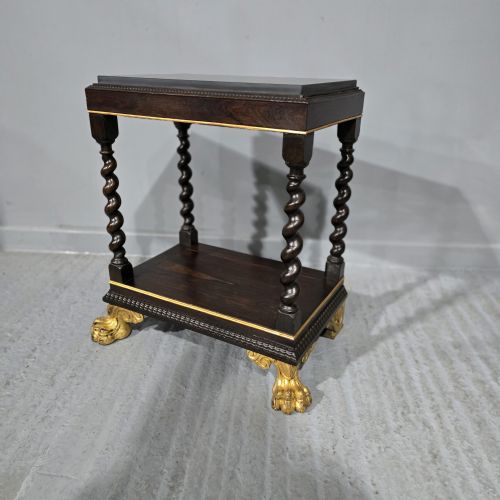
Fine examples incorporate exotic timbers such as rosewood and olive wood, sometimes detailed with brass hardware, leather inserts, or giltwood accents to elevate the surface.
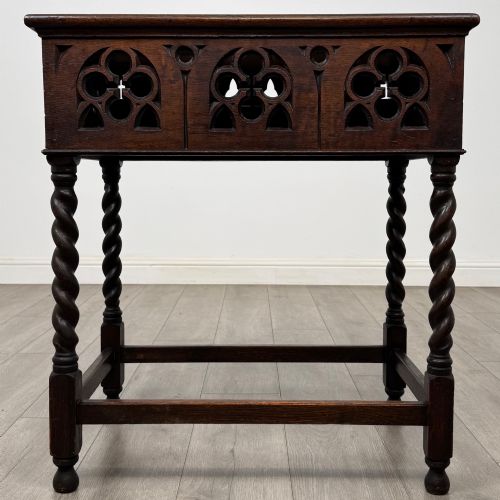
Some nineteenth-century makers doubled down on turning, ensuring that even the stretchers beneath your tea cup joined the party with their own mini-spirals.
What varies in quality
Quality rests in the crispness of the timber turning and the integrity of the joints, where deep, hand-carved twists outshine flat or mechanically rushed factory profiling.
The choice of primary wood dictates the tier of the piece, with dense mature oak and figured rosewood or olive wood oyster veneers sitting well above utilitarian softwoods.
The Barley Twist End Table Glossary
- Barley twist
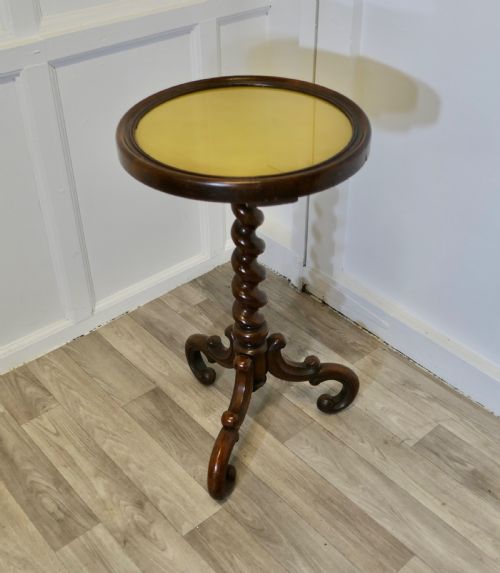
- A spiralling turned furniture leg resembling a twisted stalk of barley. This decorative form gained prominence in seventeenth-century joinery and saw major revivals in the Edwardian era.
- Quartetto nest
- A set of four graduating tables designed to slide neatly beneath one another. They appear frequently in walnut from the early twentieth century.
- Oyster veneer
- Slices cut across small branches to create circular, oyster-like patterns in the grain. This decorative technique appears on seventeenth-century pieces.
- Jacobean revival
- A nineteenth and twentieth-century style imitating seventeenth-century English furniture forms. It accounts for much of the dark oak turning seen today.
Barley Twist End Table: Frequently Asked Questions
What is a barley twist end table?
A barley twist end table is a small occasional surface supported by spirally turned wooden legs. These pieces function as side, lamp, or coffee tables.
They appear across various periods, though oak examples from the nineteen-twenties are particularly common on this page.
How old is my barley twist table?
Dating relies on timber species, construction methods, and stylistic cues like hardware and edge profiles. Seventeenth-century originals feature dense native woods and hand-cut joinery.
Later Edwardian and nineteen-thirties revivals utilise similar turned profiles but often show twentieth-century production markers.
Where should I place an end table?
These compact tables suit living spaces beside armchairs or sofas to hold lamps and books. Their turned legs add vertical visual interest to empty corners.
Nests of tables offer flexible surface area that expands when guests visit and tucks away afterward.
Are these tables made of solid oak?
Many tables utilise solid English oak, especially those produced during the early twentieth-century revival periods. Other examples incorporate walnut, mahogany, or exotic veneers.
Archive records also show occasional larger dining formats built on the same spiralled leg design.