

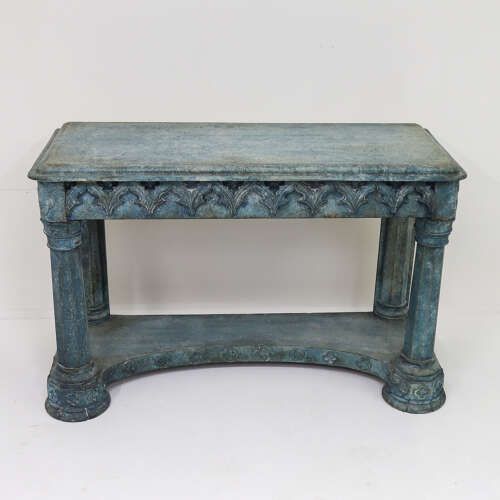


Tracery Carved Table
A tracery carved table brings architectural punctuation into a room through pierced and interlaced woodwork.
Tracery Carved Table
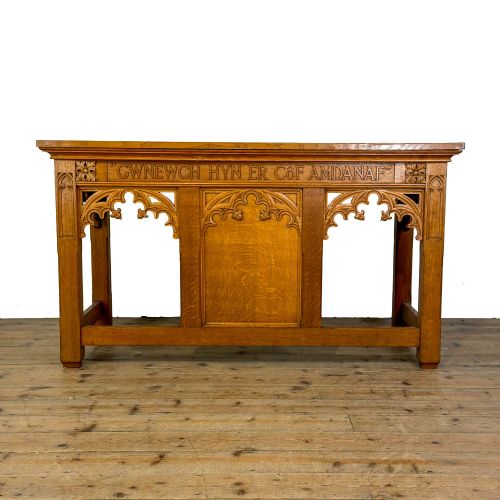
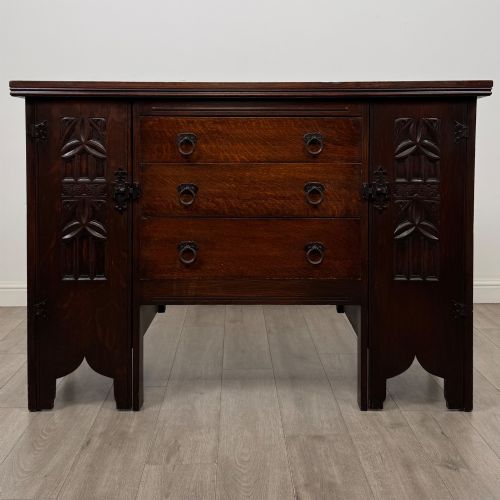
The forms span side tables, console tables, altar tables, dining tables, serving tables, and desks. Oak examples from the nineteenth century and the Edwardian era dominate the selection, often carrying the heavy mouldings and pointed arches typical of the Gothic taste. Console tables and sideboards add alternative surfaces, while smaller items such as stools and table cabinets complete the spread.
Makers drew on historical precedent, blending mediaeval fenestration with functional household use. Pieces range from austere chapel furnishings to highly decorative library and centre tables. This variety allows collectors to choose between ecclesiastical austerity and domestic revivalism.
Materials and construction
Craftsmen built these pieces primarily from solid timber, selecting oak, mahogany, and walnut for their structural resilience and grain. Timbers were seasoned and joined using traditional methods to support heavy surface carvings without warping. Painted wood and pitch pine also appear, offering varied surface textures and tones.
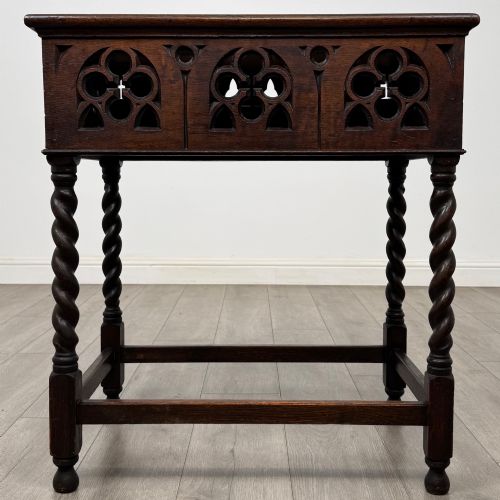
Carving was executed by hand, chiselling openwork tracery and cusped arches directly into the structural frame or applied panels. Brass and iron hardware, including hinges and handles, fastened doors and drawers on larger furniture forms like sideboards and desks. Leather inserts occasionally lined the writing surfaces of desks.
Joinery techniques prioritised rigidity, accommodating the weight of deep mouldings and projecting cornices. Surface treatments ranged from waxed natural grain to painted finishes that highlighted the carved relief.
Listings span the nineteenth century, the Edwardian period, and the nineteen-thirties, dominated by oak and mahogany.
What separates the finest examples
Quality rests in the crispness of the chisel work and the depth of the carved tracery. Superior pieces display sharp intersections in the geometric patterns and a balanced proportion between the architectural ornament and the supporting frame.
The selection of timber dictates the visual weight of the piece, with tightly grained oak and figured mahogany holding a sharper edge than softer woods. Integration of the carved elements into the overall structure distinguishes masterwork furniture from simpler provincial items.
The Tracery Carved Table Glossary
- Tracery
- Architectural stonework ornamentation adapted into woodwork, forming openwork patterns of intersecting ribs. It defines the character of these tables.
- Gothic Revival
- A nineteenth-century aesthetic movement reviving mediaeval architectural forms, pointed arches, and decorative motifs. This style heavily influences the carved details on these pieces.
- Altar table
- A heavy ecclesiastical table adapted for secular or ceremonial use, frequently constructed from solid oak with deep friezes. These provide substantial surface area and architectural presence.
- Console table
- A table designed to stand against a wall, often supported by brackets or console legs. Painted examples in this category display dramatic colour and form.
- Centre table
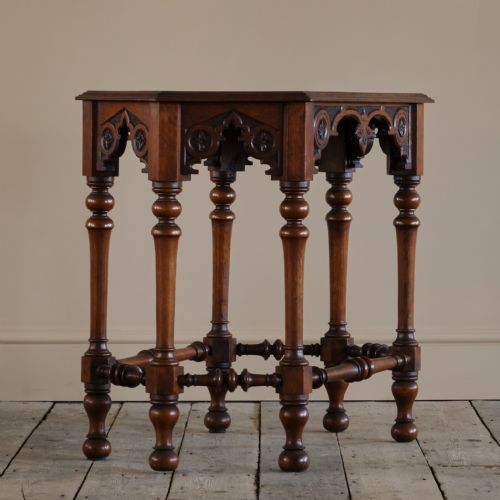
- A freestanding table finished on all sides for placement in the middle of a room. Library and centre tables in this selection feature detailed carving visible from any angle.
Tracery Carved Table: Frequently Asked Questions
Where should I put a tracery carved table?
These pieces suit entrance halls, libraries, or living rooms where their architectural woodwork can function as a focal point. They pair well with plain walls that allow the carved details to stand out.
Avoid placing them in damp areas or direct sunlight, which can dry out older timber and crack the carved panels.
How do I care for antique oak furniture?
Maintain the wood by applying a quality beeswax periodically to nourish the grain and protect the surface from moisture. Dust regularly with a soft, dry cloth to prevent dirt settling into the carved recesses.
Keep tables away from direct heat sources such as radiators to prevent the timber from splitting.
What is the difference between Gothic Revival and Arts and Crafts?
Gothic Revival focuses on literal interpretations of mediaeval church architecture, featuring pointed arches, heavy mouldings, and intricate tracery. Arts and Crafts values honest construction and simplified forms with less overt historical ornamentation.
Both styles utilise solid timbers like oak and mahogany, but their decorative ambitions differ significantly.
Can I use an altar table as a sideboard?
Chapel altar tables and serving tables offer generous surface space suitable for serving food or displaying decorative objects. Their sturdy construction handles weight easily.
Their height and depth make them practical alternatives to traditional sideboards in dining rooms.