

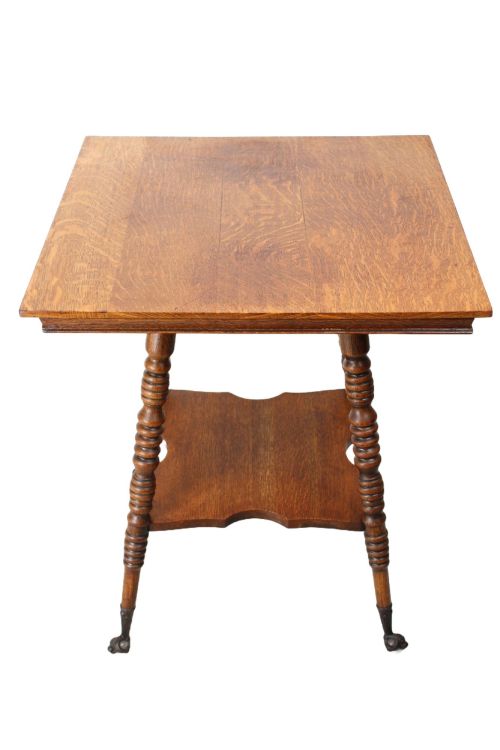
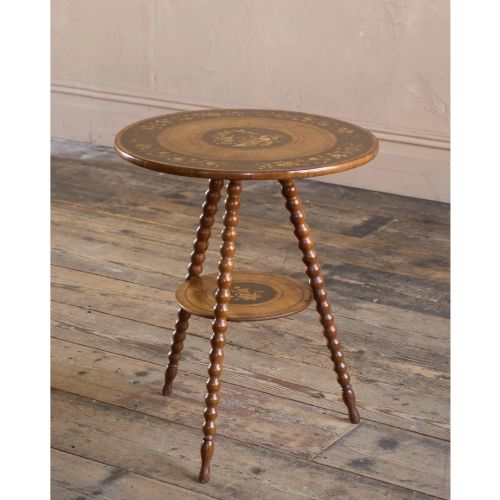
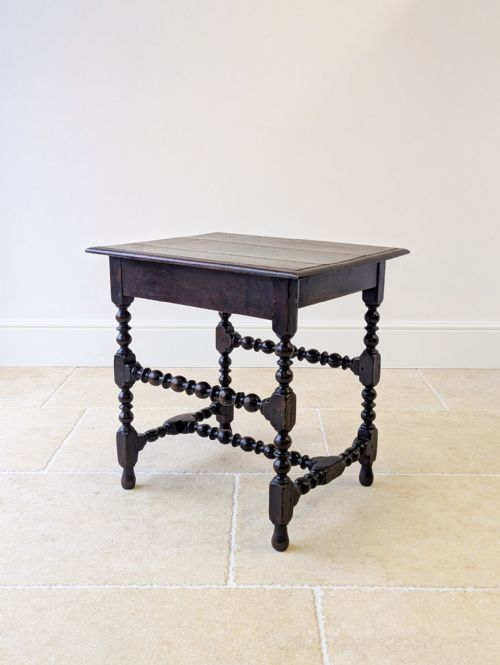
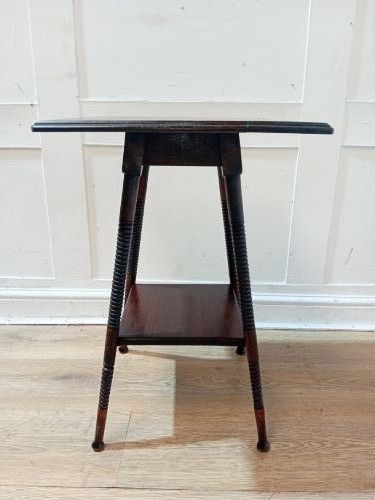


Bobbin Turned Lamp Table
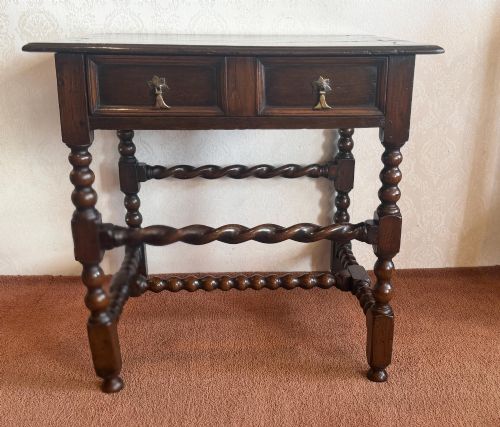
A bobbin turned lamp table brings robust joinery and rhythmic turned spindles into a room, offering a sturdy surface for daily use.
Bobbin Turned Lamp Table
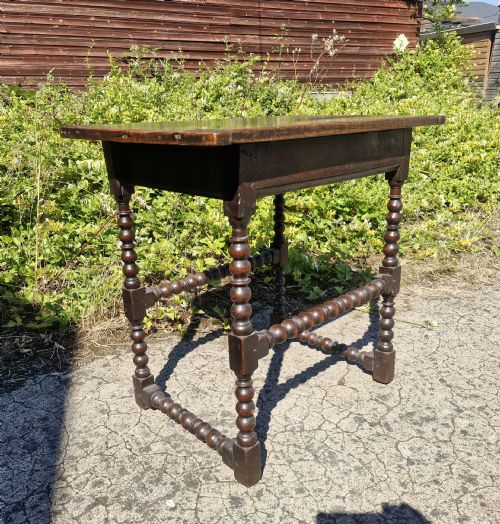
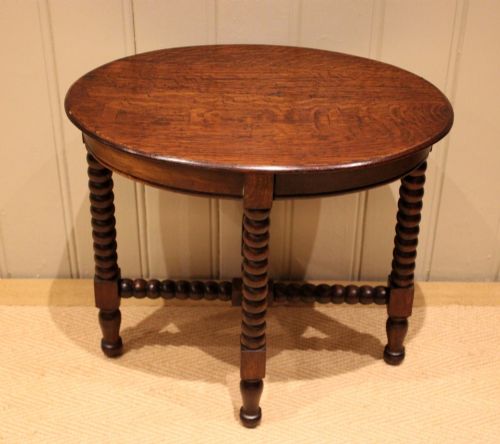
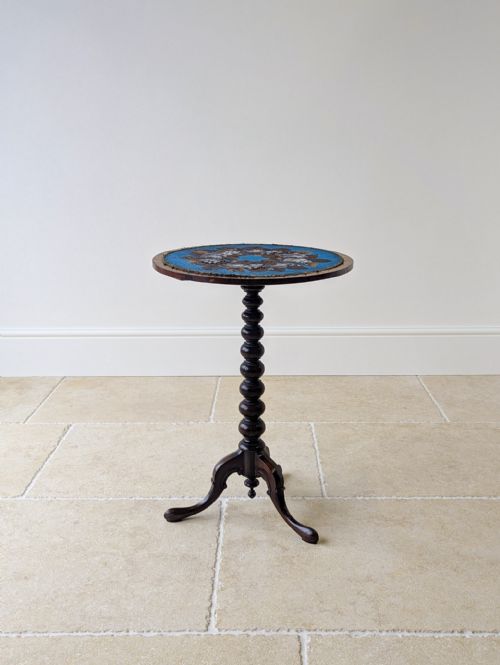
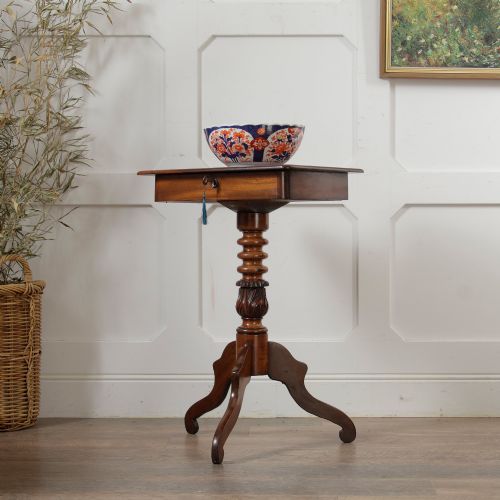
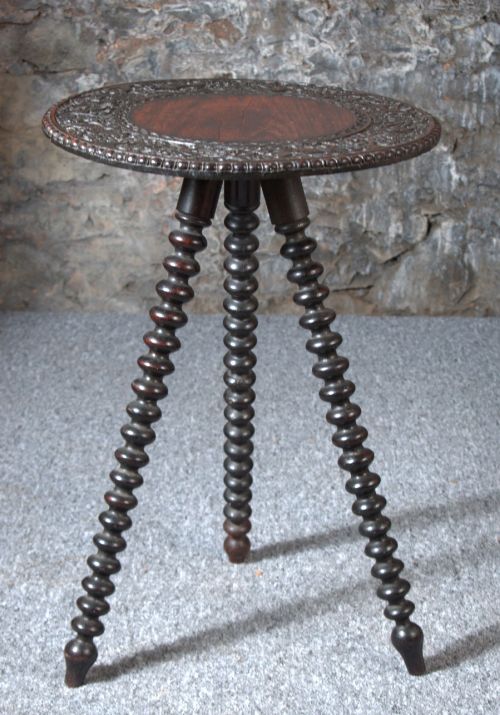
A bobbin turned lamp table serves as a compact surface, typically functioning as a side table, occasional table, or lamp table within domestic spaces.
The pieces appearing on this page span several centuries, reaching from the seventeenth century through the Victorian era and into the early twentieth century.
Oak forms the foundation for many examples, alongside walnut, mahogany, pine, and rosewood, reflecting periods such as the Jacobean Revival, Arts and Crafts, and Victorian styles.
How they were made
Cabinet makers utilised solid hardwoods like oak, walnut, and mahogany, frequently turning timber on a lathe to create the distinctive spool or bobbin profiles on the legs.
Joinery methods involved traditional framing, sometimes incorporating drawers, veneer work, or marquetry details depending on the prevailing style of the period.
The listings on this site feature tables constructed from oak, walnut, mahogany, pine, and rosewood across multiple centuries.
What varies in quality
The calibre of a piece depends on the crispness of the lathe work on the turned elements and the selection of timber used for the top and frame.
Original structural integrity and surface patination separate standard regional pieces from finer workshop productions.
LIBERTY of LONDON·WILLIAM BIRCH
The Bobbin Turned Lamp Table Glossary
- Bobbin turning
- A form of woodturning that produces a series of rounded, spool-like shapes along the length of a leg or stretcher. This technique gained prominence in seventeenth-century furniture design.
- Side table
- A small functional table designed to stand against a wall or beside seating. These pieces often feature a single drawer or an undershelf.
- Occasional table
- A light, movable table intended for specific, intermittent use in a room. They appear in various geometric forms including round, oval, and square tops.
- Barley twist
- A spiral carving resembling a twisted rope, frequently seen on seventeenth-century and revival furniture legs. It shares visual similarities with bobbin turning.
- Patina
- The surface sheen and colour acquired by wood and metal through age and handling. A deep patina indicates long-term use and maintenance.
Bobbin Turned Lamp Table: Frequently Asked Questions
What is a bobbin turned lamp table?
A bobbin turned lamp table is a compact surface featuring legs shaped on a lathe into repeated rounded spool motifs. These tables function as side furniture for lamps and decorative items.
They appear in various timbers including oak, walnut, and mahogany across different historical periods.
How do I date a bobbin turned table?
Dating relies on timber selection, construction methods, and overall style characteristics. Seventeenth-century examples often display heavy oak framing, while Victorian and later pieces show different secondary woods and joinery.
Reactivation styles like the Jacobean Revival also replicate earlier turning techniques during the nineteenth century.
Where were these tables placed?
These tables sat beside chairs, against walls, or in hallways as functional surfaces for lighting and small objects. Their compact footprint suited domestic rooms of varying proportions.
Occasional and side tables moved easily around the home according to daily requirements.
Are all bobbin turned tables oak?
No, while oak forms a large proportion of the earlier pieces, makers also utilised walnut, mahogany, pine, rosewood, and exotic hardwoods. Different eras favoured distinct materials for their furniture production.
Surface treatments also vary from polished wood to painted or ebonised finishes.