


Barley Twist Display Stand
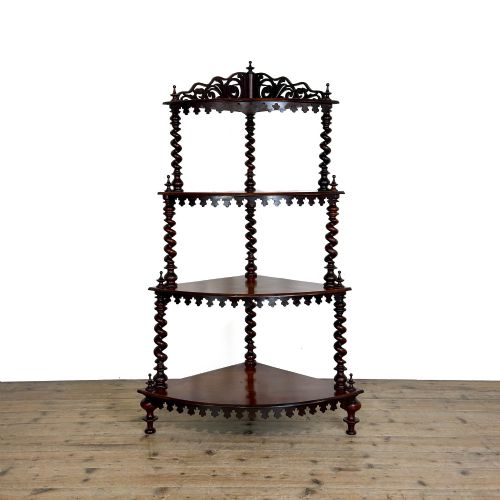
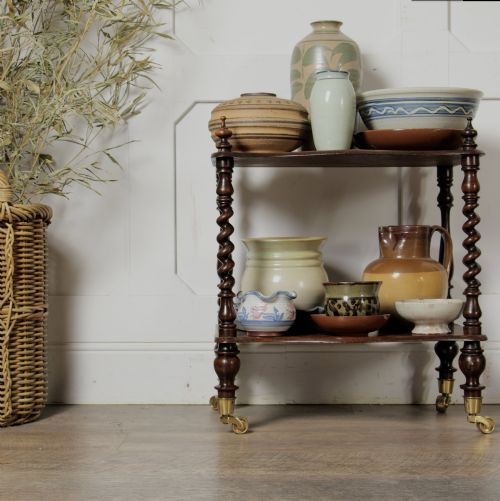
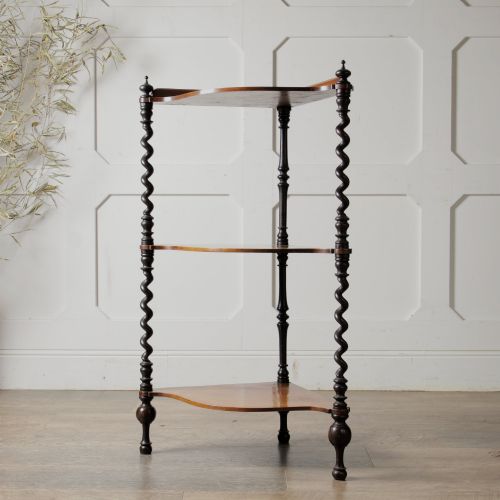
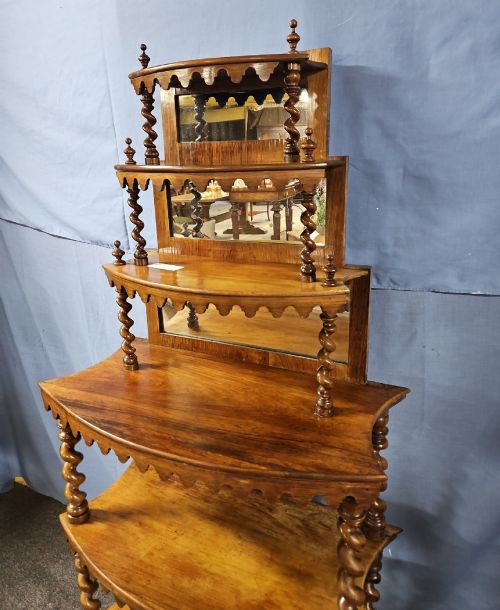
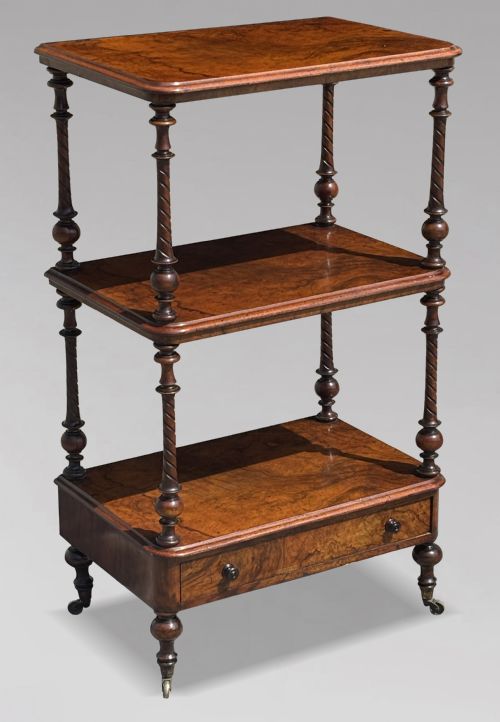
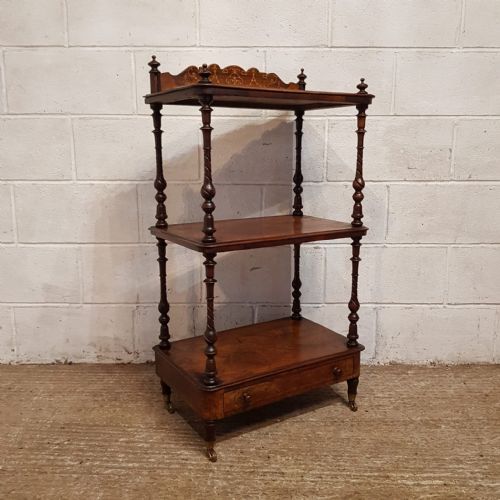
These barley twist display stand pieces elevate objects using spiral turned columns.
Barley Twist Display Stand
A barley twist display stand brings vertical tiering and support to rooms, often taking the form of whatnots, etageres, plant stands, and pedestals.
You are most likely to meet Victorian walnut and mahogany pieces featuring spiral columns alongside oak and rosewood examples.
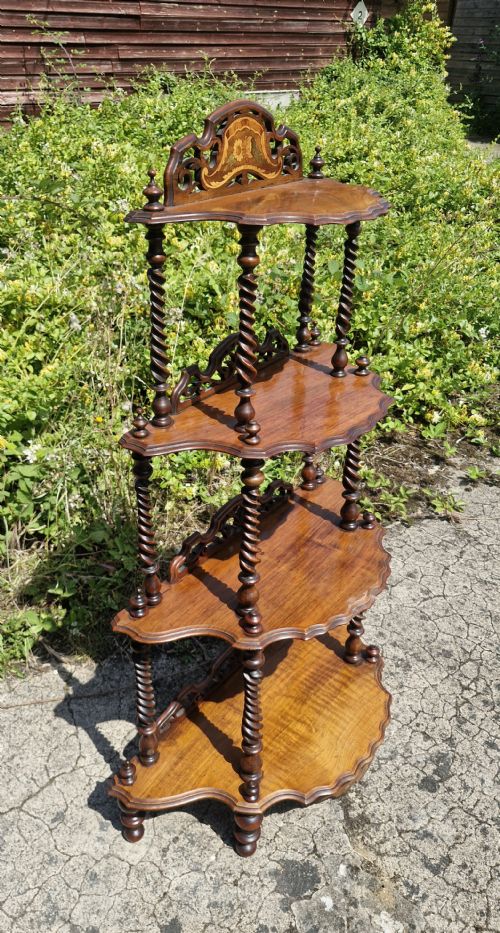
Makers utilised multi-tiered shelving formats and corner designs to maximise display space in domestic interiors.
What varies in quality
The selection of timber grain, particularly burr walnut or figured mahogany, defines the visual richness of the tiers and columns.
Precision in the lathe work and the stability of multi-tier assemblies distinguish standard utility pieces from finer examples.
Listings feature walnut, mahogany, rosewood, and oak across Victorian, Edwardian, and Regency periods.
The Barley Twist Display Stand Glossary
- Barley twist
- A spiral turning resembling a twisted rope, carved or spun into wooden columns and uprights. This form appeared frequently in furniture of the seventeenth century and saw revivals during the Victorian and Edwardian eras.
- Whatnot
- An open set of shelves designed for displaying ornaments, books, or small objects. These pieces often feature multiple tiers supported by turned columns.
- Etagere
- A piece of furniture consisting of a set of open shelves for displaying articles. French examples often incorporated materials like marble and canework.
- Torchiere
- A tall stand or pedestal originally intended to support a torch or lamp. Victorian versions frequently serve as plant stands or bust supports.
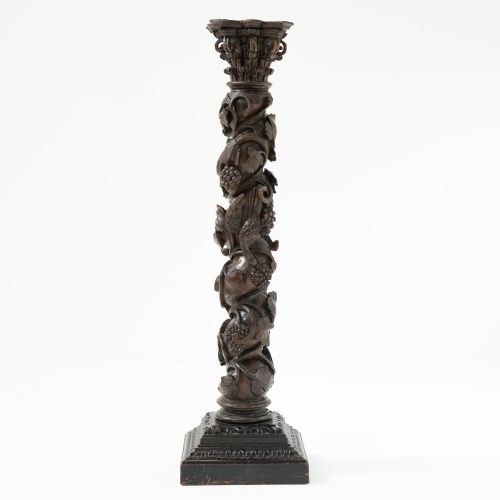
- Solomonic column
- A twisted column resembling a spiral vine, popular in Baroque architecture and furniture design. It provides a dynamic vertical element to pedestals.
Barley Twist Display Stand: Frequently Asked Questions
What is a barley twist display stand?
A barley twist display stand is a piece of furniture featuring spiral turned wooden columns supporting one or more tiers. These items function as platforms for plants, sculptures, and decorative objects.
They appear in various formats including corner units, tall multi-tier whatnots, and single pedestals spanning walnut, mahogany, and oak.
How were whatnot shelves used?
Whatnot shelves served as prominent display furniture in nineteenth-century drawing rooms and parlours. They held porcelain, small books, and decorative ornaments.
Corner versions maximised floor space in smaller rooms while taller multi-tier units created vertical focal points against walls.
What materials are common?
Walnut, mahogany, and oak dominate the construction of these stands, frequently utilised with burr veneers. Rosewood also appears on finer nineteenth-century examples.
Some pieces incorporate brass fittings, marble inserts, or glass components to complement the primary timber structure.
How do I date a stand?
Dating relies on timber selection, turning style, and overall construction methods. Victorian pieces often display rich walnut or mahogany with precise spiral turnings.
Later Edwardian and nineteen-twenties examples tend to use simpler oak frameworks and standard turned uprights.
Where should I place one?
These stands suit corners or empty wall spaces where they can hold plants, lamps, or collections of small objects. Their vertical format draws the eye upward.
Matching the timber tone to existing room furnishings helps integrate these tiered units into modern interiors.