




Waterfall Display Shelves
Waterfall display shelves step down in tiers to hold books and objects, bringing proportion and layered elegance to any room.
Waterfall Display Shelves
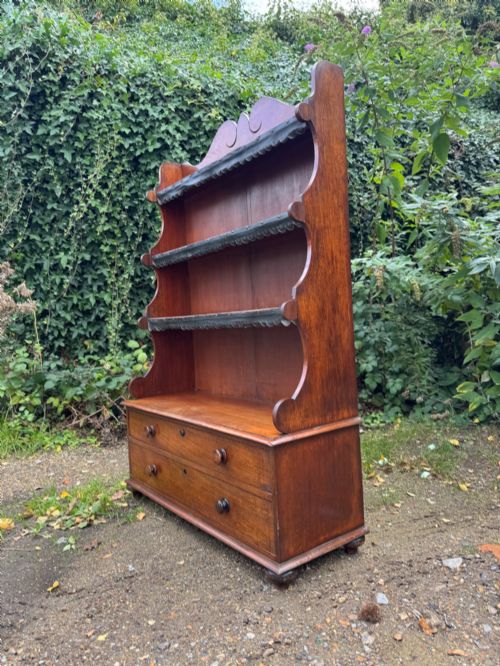
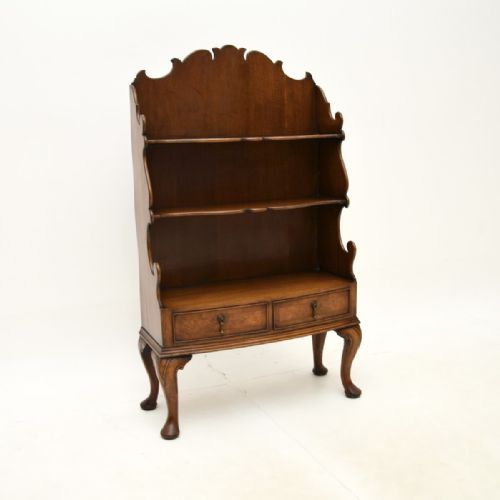
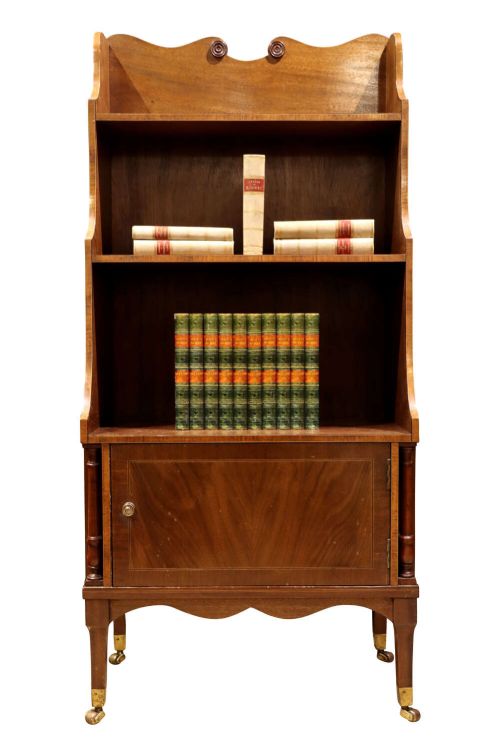
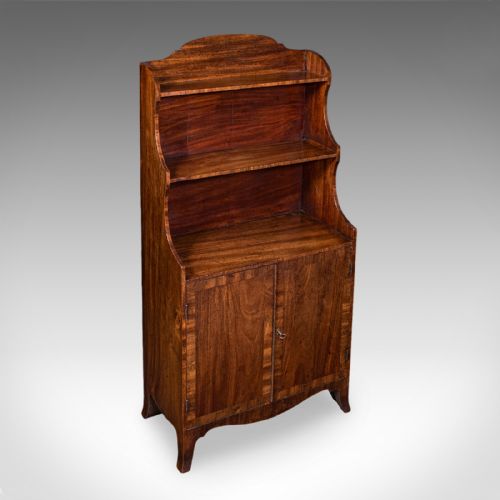
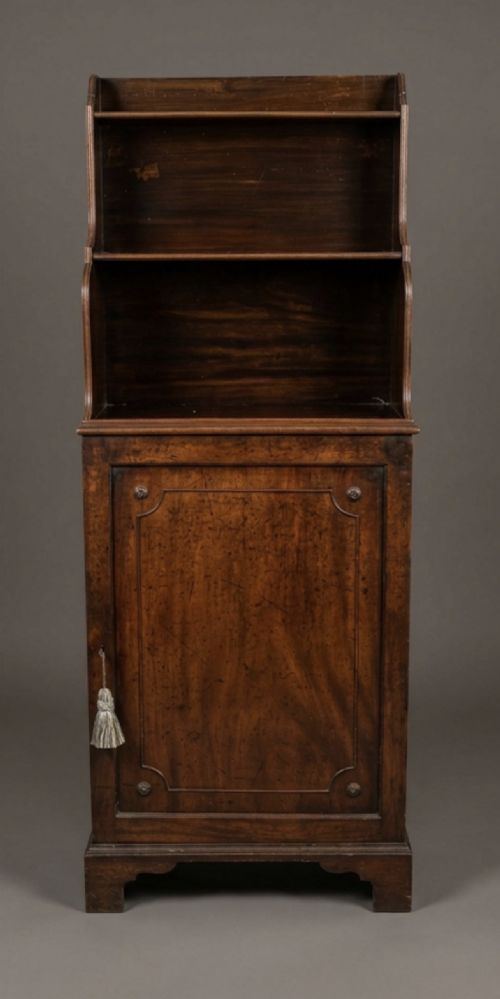
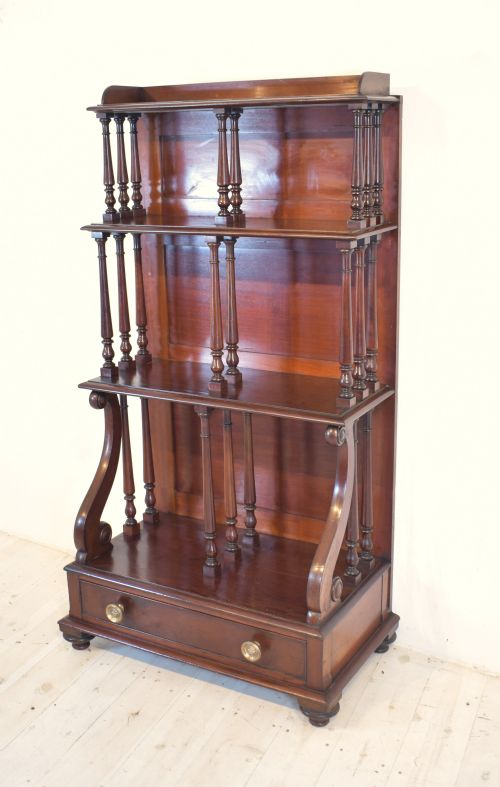
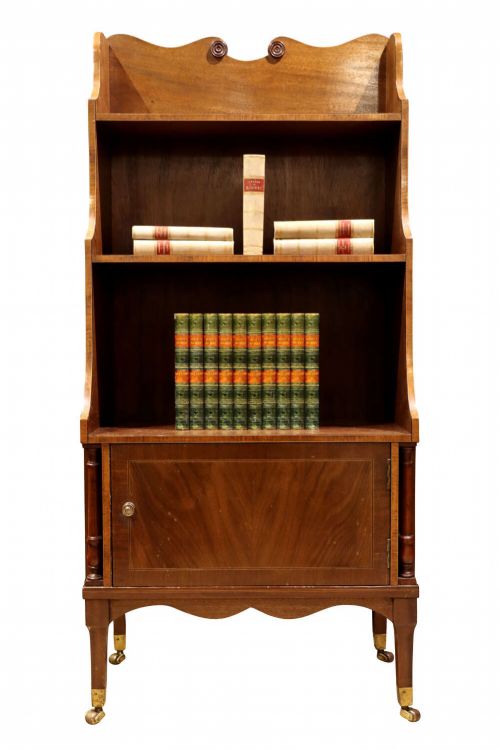
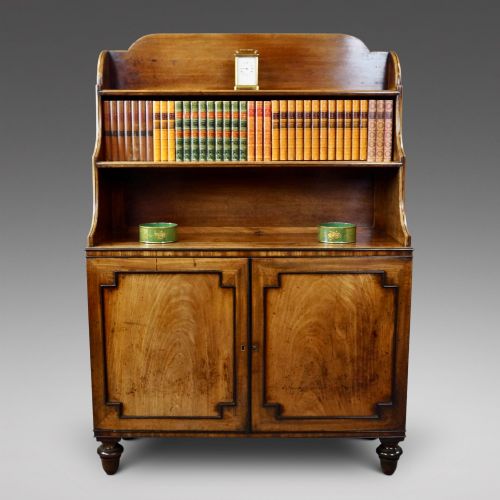
Waterfall display shelves take their name from the cascading tiers that step back progressively from bottom to top. This form appears across several periods, most notably during the Georgian, Regency, and Victorian eras, as well as the Edwardian period and the early twentieth century. These pieces function primarily as bookcases or open shelving units designed to show off volumes and decorative objects.
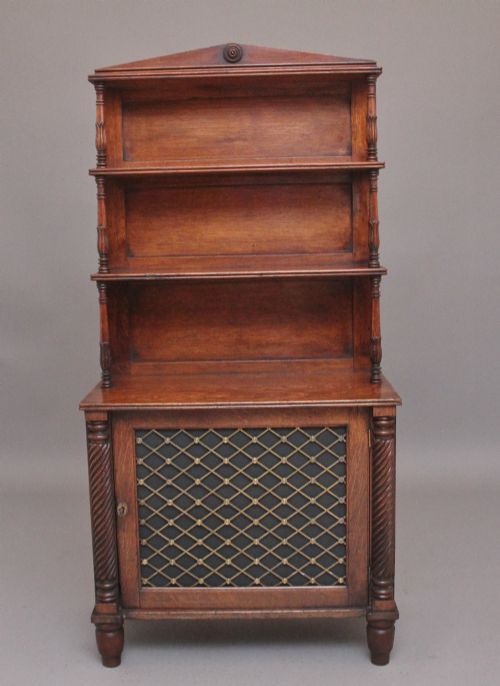
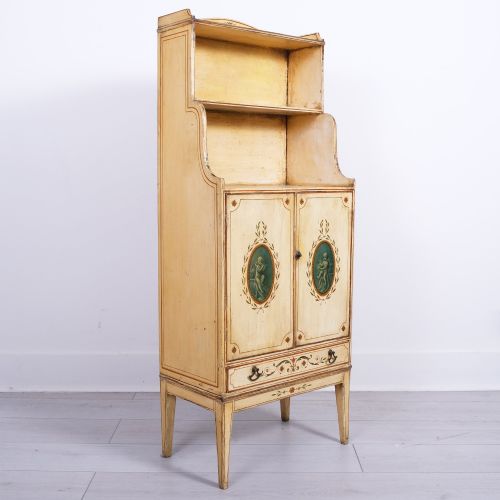
Stylistic expressions range from restrained Regency and Georgian designs to late Victorian inlay and Edwardian simplicity. Buyers encounter everything from petite chiffoniers to large open bookcases featuring galleries and brass castors. The tier counts vary, with multi-tiered examples offering substantial display space.
How they were made
Makers constructed these tiered units predominantly using dense hardwoods such as mahogany and rosewood, frequently selecting flame mahogany veneers to accent the primary surfaces. Oak and satinwood also appear regularly, alongside painted wood finishes and occasional elements in teak and elm. These timbers were chosen for structural stability and their capacity to take a fine polish.
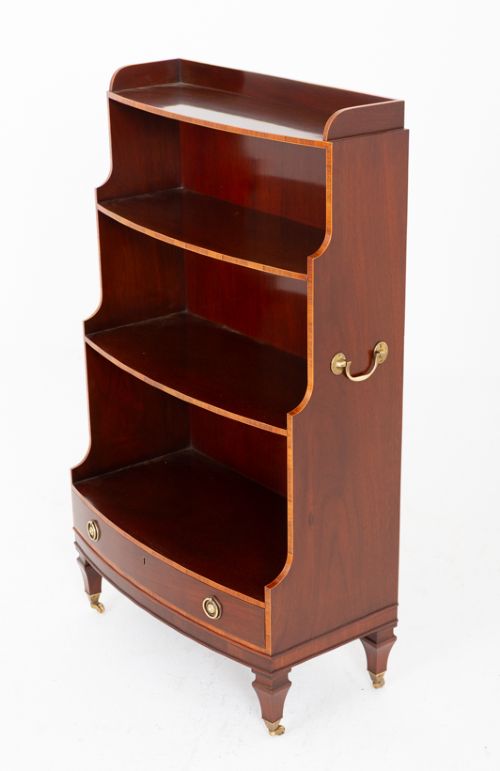
Construction techniques involved graduating the depth of each shelf from base to summit, creating the characteristic stepped profile. Fret-cut details, inlaid woodwork, and brass castors appear on finer iterations, whilst galleries provide security for the uppermost tier. Joinery relies on traditional methods appropriate to the respective Georgian, Victorian, and later periods.
Waterfall Display Shelves Retail Price Guide 2026
Typical asking prices for waterfall display shelves among the pieces listed under this phrase on Sellingantiques today, from the lower quarter to the upper quarter. They describe what is for sale here now, not the wider market.
Listings feature mahogany, rosewood, oak, and satinwood across periods spanning the Georgian era to the early twentieth century.
What varies in quality
The selection of timber dictates much of the visual merit, with richly figured flame mahogany and carefully matched rosewood grain sitting at the upper end of the scale. Subtle string inlay and fret-cut carpentry distinguish more ambitious workshop productions from simpler utilitarian shelving. Original surfaces and patination preserve the integrity of the piece.
Proportion and structural balance govern the architectural success of the stepped tiers. Examples furnished with integrated cupboards, drawers, or original brass castors demonstrate a higher degree of initial craftsmanship. Refined edge moulding and well-executed gallery rails further elevate the standing of a piece.
Gillows
The Waterfall Display Shelves Glossary
- Waterfall bookcase
- A set of open shelves stepped back in successive tiers from bottom to top. This form maximises stability and visibility for books and decorative objects.
- Etagere
- A piece of furniture consisting of a set of open shelves for displaying small ornaments. These are typically lighter in construction than a standard bookcase.
- Chiffonier
- A low sideboard or cabinet often equipped with drawers or doors beneath open shelving. Georgian and Victorian examples frequently integrate this storage with upper display tiers.
- Flame mahogany
- A veneer cut from the fork of the mahogany tree to produce a dramatic, flickering grain pattern. Cabinet makers used this to draw the eye on primary display surfaces.
- Gallery
- A raised rail or border running along the edge of a shelf to prevent items from falling. These take the form of pierced woodwork or slender spindles.
Waterfall Display Shelves: Frequently Asked Questions
How do I style waterfall display shelves?
Arrange books vertically and horizontally alongside small decorative objects, placing heavier volumes on the deeper lower shelves. The stepped format naturally draws the eye upward, so reserve the top tiers for smaller items.
Allow some negative space on each shelf to let the timber grain and construction details remain visible. This keeps the cascading tiers from appearing cluttered.
How do I tell a Regency piece from a Victorian one?
Regency pieces often display clean classical lines, restrained use of brass inlay, and dark mahogany or rosewood surfaces. Proportions remain architectural and balanced.
Victorian examples frequently introduce richer inlay work, fret-cut details, and sometimes brass castors or gallery rails. The joinery and secondary timbers reflect the manufacturing shifts of the later nineteenth century.
Can I place these shelves in the middle of a room?
Freestanding models finished on all sides function effectively as room dividers or away from walls. Their stepped profiles create visual interest from multiple angles.
Wall-hanging variants and those with unfinished backs require placement directly against a solid vertical surface. Consider the room layout and traffic flow when positioning a taller freestanding unit.