



Barley Twist Console Desk
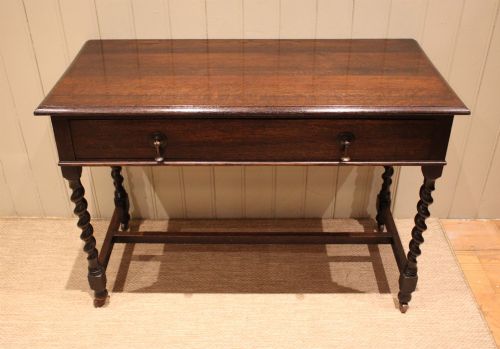
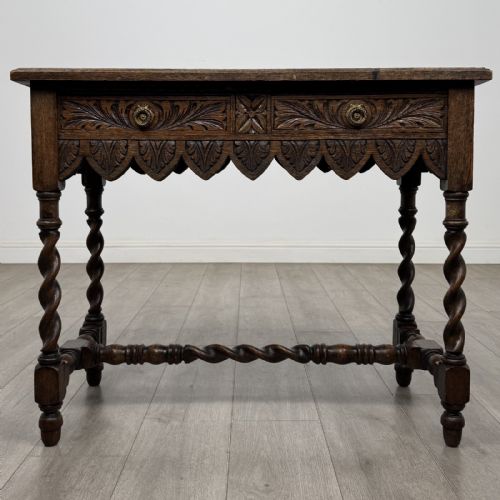
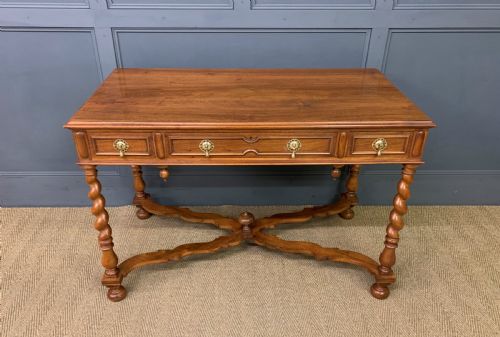
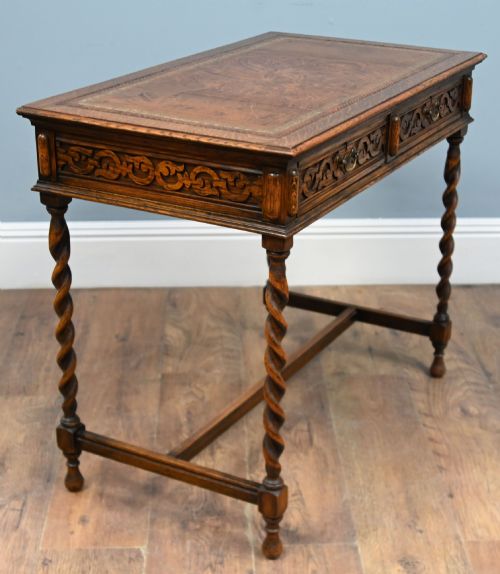
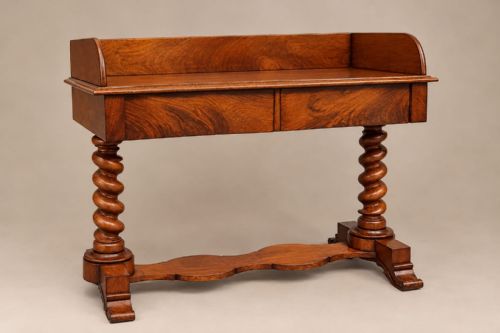
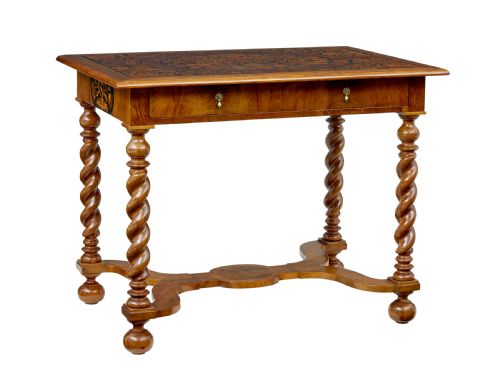
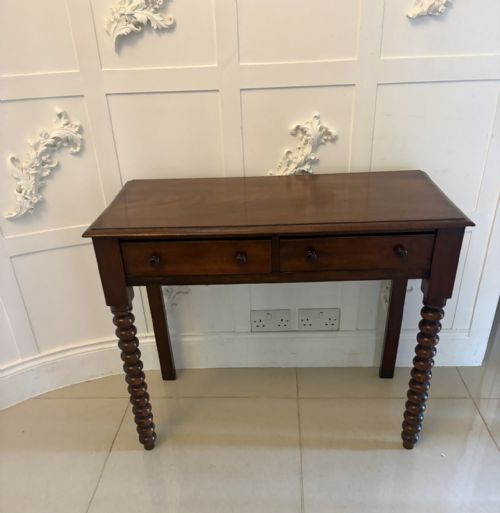
These barley twist console desk pieces bring tactile turned timber into a study or hall, offering sturdy surfaces for daily writing.
Barley Twist Console Desk
When buyers search for a barley twist console desk, they encounter timber tables and writing surfaces grounded in 18th century, Victorian, and William IV traditions. These items span side tables, writing tables, centre tables, and specific writing desks fitted with drawers.
The version most commonly met on this page is the Victorian walnut or oak side table and writing table, often featuring carved legs and multiple drawers. Alongside these, buyers find earlier Georgian forms in mahogany, alongside continental examples in rosewood and ebonised wood from Spanish and Portuguese traditions.
Makers such as Edwards & Roberts appear in the evidence alongside uncredited regional craftsmanship in oak, walnut, and fruitwood. The forms serve equally as compact desks, lamp tables, and narrow console surfaces suited to smaller rooms.
How they were made
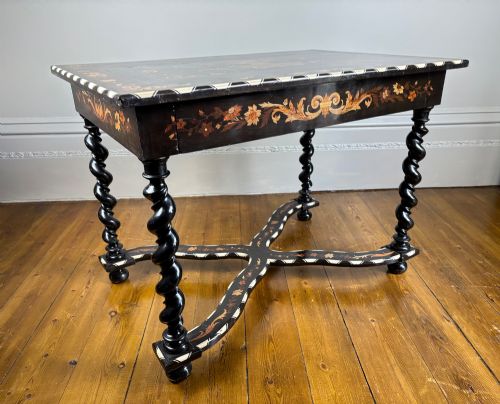
Joiners constructed these pieces primarily from solid hardwoods including oak, walnut, mahogany, and rosewood, incorporating secondary timbers like fruitwood. Surfaces frequently display intricate marquetry, bone inlay, or fitted leather writing inserts.
The distinctive twist legs are formed by woodturning, where timber is shaped on a lathe to create the characteristic helical rope pattern. Carved details and drawer housings rely on traditional mortise and tenon joinery, secured with wooden pins or early brass fittings.
Barley Twist Console Desk Retail Price Guide 2026
Typical asking prices for barley twist console desk among the pieces listed under this phrase on Sellingantiques today, from the lower quarter to the upper quarter. They describe what is for sale here now, not the wider market.
Listings span periods from the 18th century through the Victorian era, executed in oak, walnut, mahogany, and rosewood.
What varies in quality
The distinction between standard examples and the finest pieces lies in the crispness of the woodturning and the depth of the hand-carved ornamentation. Finer items exhibit precise symmetry in the twist and superior selection of figured veneers such as walnut and rosewood.
Secondary construction details, including the thickness of drawer linings, the quality of inlaid bone or marquetry, and the retention of original brass hardware, separate workshop-made furniture from simpler utilitarian pieces.
Edwards & Roberts
The Barley Twist Console Desk Glossary
- Barley twist
- A turned wooden column resembling a spiralling rope or the stalk of barley. This decorative form appears frequently on table legs and supports.
- Marquetry
- The art of applying thin veneers of various woods, bone, or other materials to form decorative patterns and pictures on a surface. It is commonly found on tabletops from the 19th century.
- Console table
- A narrow table designed to stand against a wall, often serving as a hall table or a compact writing surface. These pieces balance against the architecture of a room.
- Goncalo Alves
- A dense, highly figured tropical hardwood with dark brown streaks, used for luxury cabinet-making during the 19th century. It provides a distinctive striped grain pattern.
- Ebonised wood
- Timber treated with a dark finish to imitate the appearance of ebony. This technique was favoured in Dutch and Spanish revival furniture.
Barley Twist Console Desk: Frequently Asked Questions
What is a barley twist console desk?
A barley twist console desk is a table featuring spiral-turned wooden legs, utilised historically for writing and displaying items.
These pieces combine decorative turned supports with functional surfaces, appearing in various woods from the 18th and 19th centuries.
How do I identify a Victorian writing table?
Victorian writing tables typically feature turned legs, integrated drawers, and construction in walnut, oak, or mahogany.
Many examples include leather writing inserts on the top surface and hand-carved details characteristic of the mid to late 19th century.
Where were these tables placed?
These tables served multiple functions in period homes, functioning as writing desks in studies or side tables in hallways.
Their compact proportions allowed them to sit against walls or float in the centre of rooms as writing and display surfaces.
What woods are most common?
The primary timbers found on these pieces are oak, walnut, and mahogany, with occasional rosewood and fruitwood.
Continental pieces frequently utilise ebonised wood and exotic veneers alongside bone inlay and marquetry decoration.