


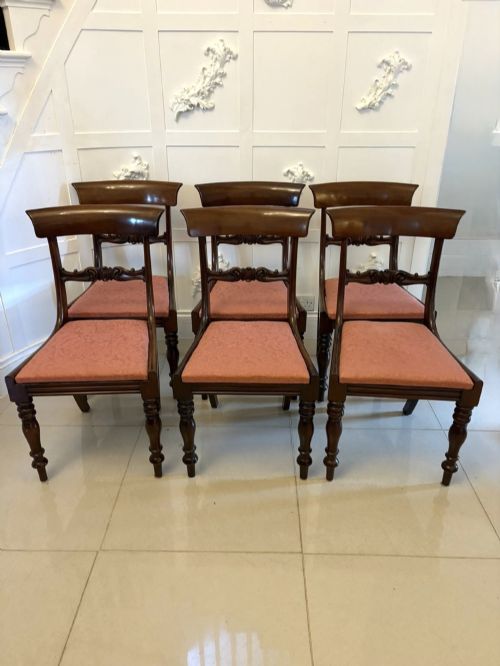
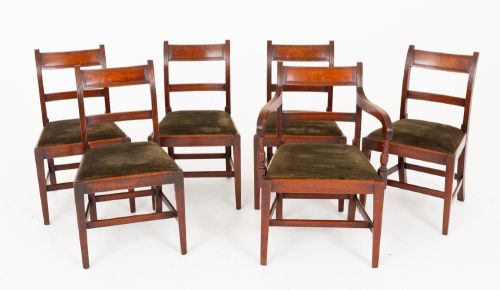
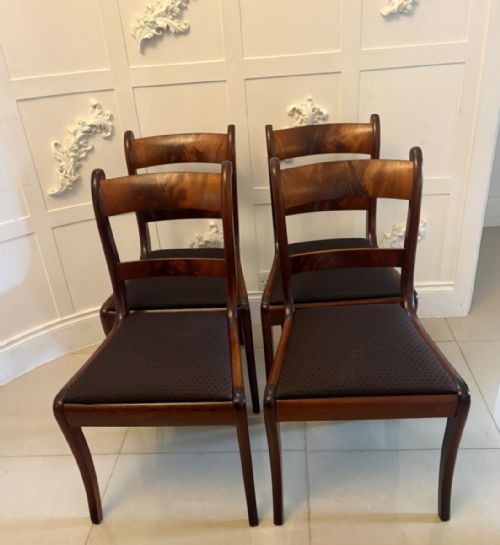
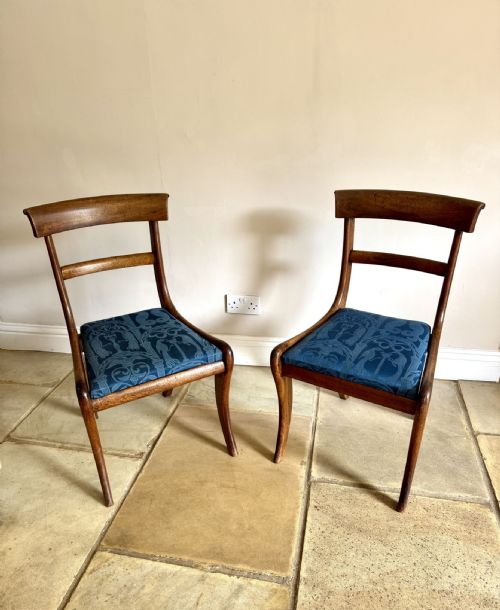

Bar Back Side Chairs
Bar back side chairs are timber dining seats defined by their horizontal splats, offering sturdy elegance for period interiors.
Bar Back Side Chairs
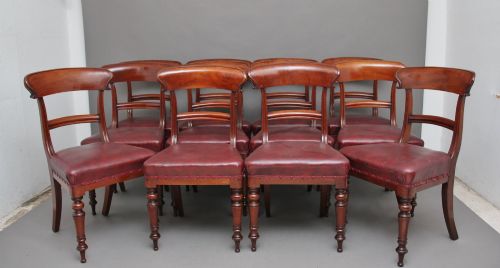
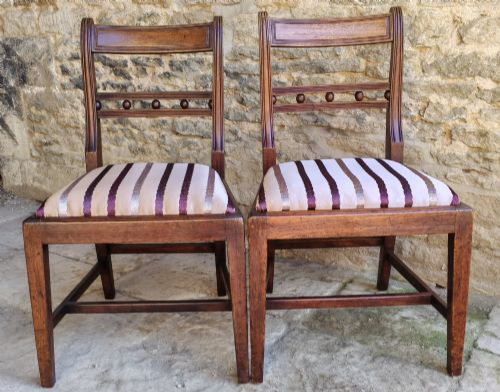
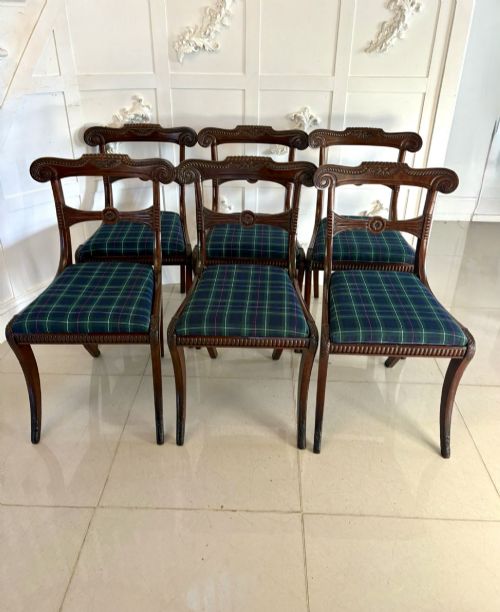
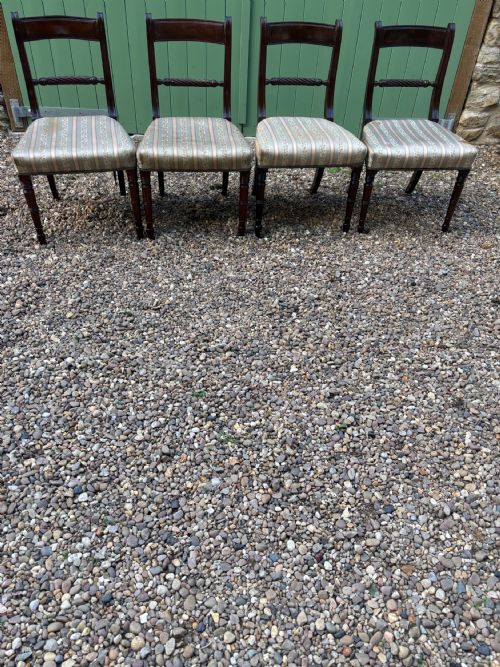
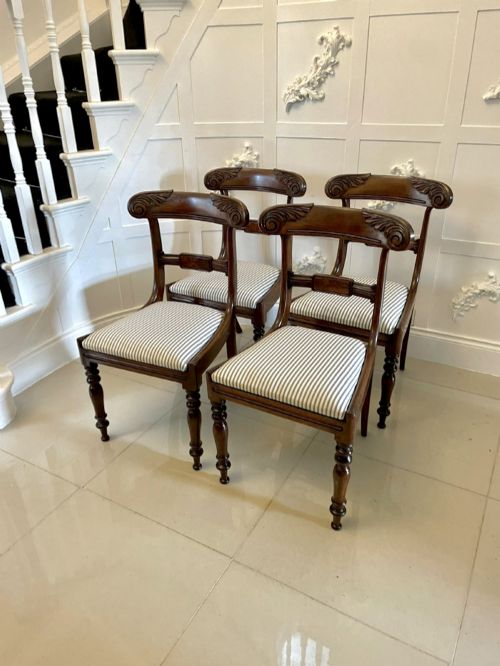
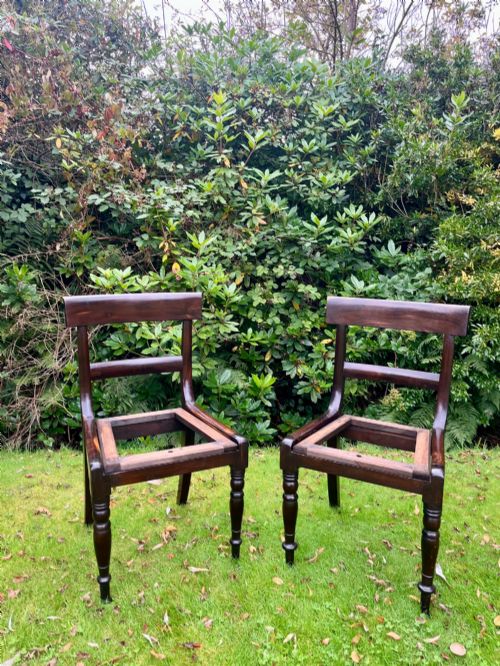
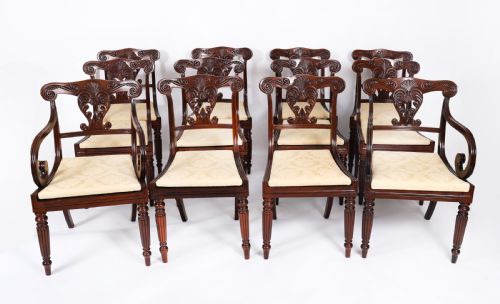
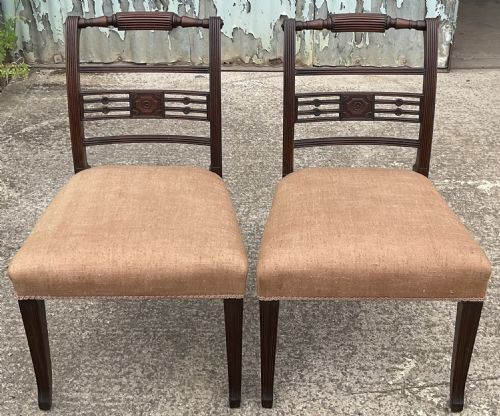
Bar back side chairs are primarily encountered as dining chairs originating from the Regency, Georgian, and Victorian periods. You will frequently find them listed in matched sets of four, six, or eight, alongside occasional pairs.
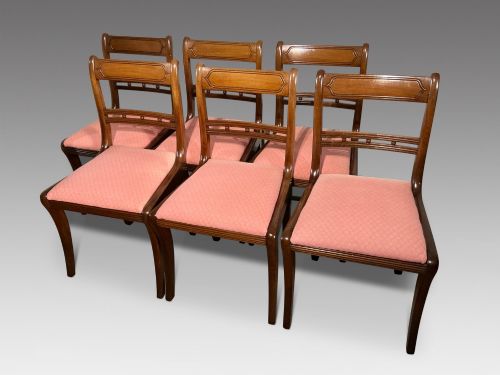
The defining characteristic of these chairs is the horizontal cross-rail forming the back, often shaped or reeded. Alongside standard dining chairs, the evidence shows forms adapted for bedrooms and kitchens.
Materials and construction methods
Mahogany is the predominant timber used in these pieces, occasionally supplemented by rosewood, laburnum, or inlaid details. Craftsmanship relies on traditional joinery to support the characteristic sabre or turned legs.
Seats are commonly upholstered in materials such as fabric, leather, velvet, or general textiles to provide comfort. Brass accents and detailed carving also appear on select examples from the Regency and William IV eras.
Bar Back Side Chairs Retail Price Guide 2026
Typical asking prices for bar back side chairs among the pieces listed under this phrase on Sellingantiques today, from the lower quarter to the upper quarter. They describe what is for sale here now, not the wider market.
Listings span multiple eras from Georgian and Regency to Victorian, predominantly constructed from mahogany with fabric or leather upholstery.
Assessing quality in construction
Quality separates through the crispness of timber carving, the selection of figured mahogany, and the integrity of the structural frame. Sets that remain unified in timber grain and colour command greater attention than mismatched collections.
The refinement of leg profiles, whether reeded, sabre, or turned, indicates the standard of workshop output. Original upholstery foundations and well-preserved joinery further distinguish superior examples.
The Bar Back Side Chairs Glossary
- Bar back
- A chair design featuring a horizontal wooden slat resembling a bar across the upper backrest. This form gained prominence during the Regency and William IV periods.
- Sabre leg
- A concave curved leg that tapers toward the foot, commonly seen on Regency chairs. It provides both stability and a distinctive neoclassical silhouette.
- Reeded
- A decorative moulding consisting of parallel convex strips resembling bundled reeds. It is frequently carved into the legs or back rails of mahogany dining chairs.
- Carver
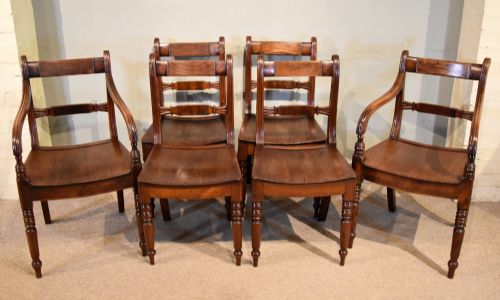
- An armchair designed to match a set of side chairs, usually placed at the head of a dining table. These often appear paired with side chairs in larger suites.
Bar Back Side Chairs: Frequently Asked Questions
How many bar back side chairs do I need?
Sets typically range from pairs up to twelve chairs, depending on your dining table length.
Larger sets of six, eight, or ten are frequently documented in Georgian and Regency styles.
Are these chairs suitable for daily dining?
These timber chairs are structurally built for everyday dining use, provided the frame joints remain secure.
Upholstered drop-in or padded seats can also be recovered in modern fabrics to suit daily living.
How do I tell Regency from Victorian chairs?
Regency examples often feature neoclassical elements like sabre legs, reeding, and rosewood or mahogany timbers.
Victorian pieces tend to introduce turned legs, heavier proportions, and revival styles dating towards the later nineteenth century.
What is the difference between side chairs and carvers?
Side chairs are built without arms to sit compactly along the sides of a dining table.
Carvers include integrated armrests and are traditionally positioned at the table ends.