



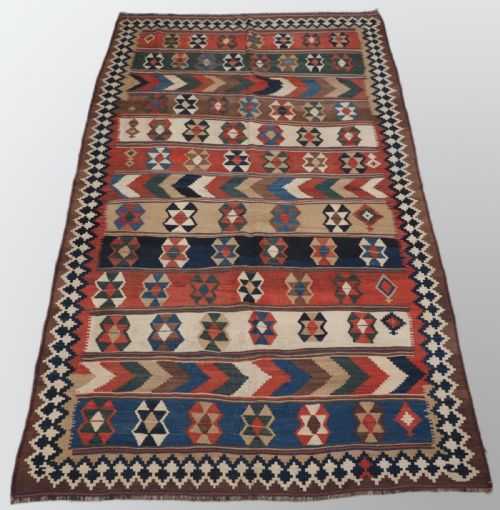

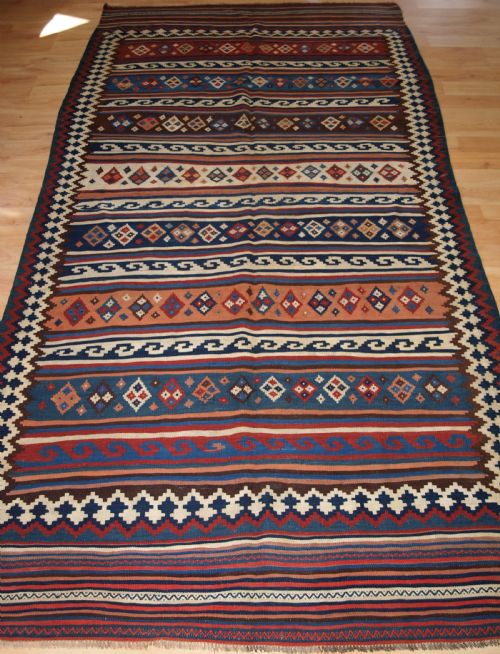
Banded Design Kilim
A banded design kilim brings together tribal weaving traditions, offering striking horizontal stripes and flatwoven textiles that anchor a room with history.
Banded Design Kilim
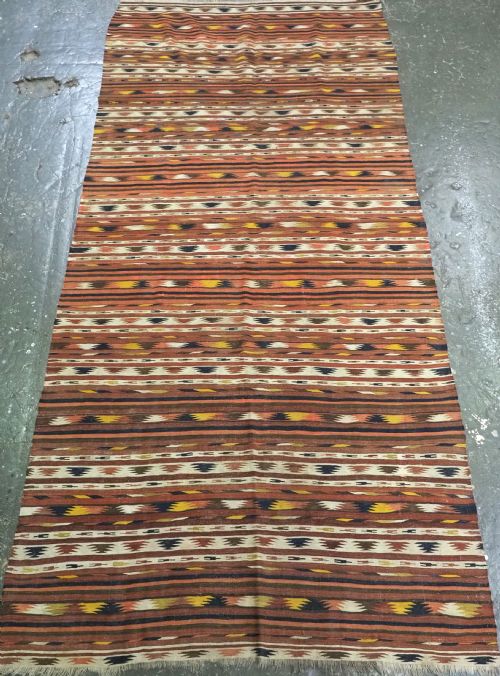
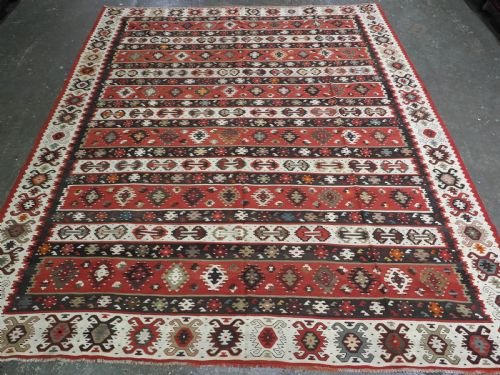
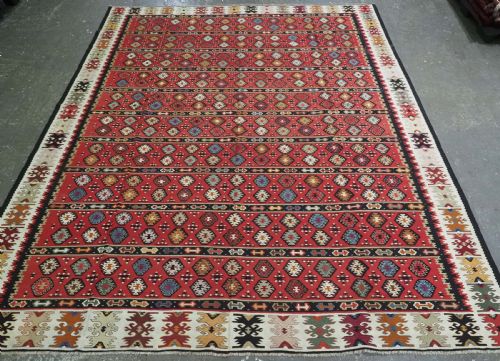
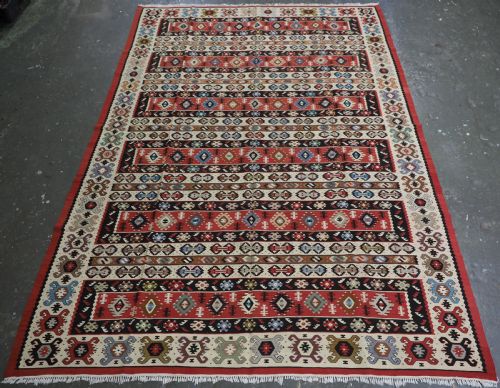
A banded design kilim is a flatwoven textile defined by horizontal bands, geometric rows and tribal motifs originating from Central Asian, Caucasian, Persian and Balkan regions. When exploring banded design kilim items, buyers encounter nomadic storage bags, saddlebag faces, runners and large floor rugs.
The pieces on this page span from the late nineteenth century through to the 1930s, representing traditions such as Yomut Turkmen, Shirvan, Uzbek Gajeri, Baluch, Pirot, Sarkoy and Qashqai work. Rugs and carpets dominate the selection, alongside smaller tribal textiles and utilitarian bags complete with original backs.
How they were made
These textiles are constructed using wool and hand-spun wool, often paired with cotton foundations, employing traditional flatweaving techniques that produce a pileless cloth. Weavers utilised natural dyes to achieve the warm soft colours, pinks and bold clear tones recorded across the pieces.
The structure relies on tight weft work where the coloured weft threads are beaten down to completely cover the warp threads, creating crisp linear bands and chevron patterns. Utility items such as mafrash and torba storage pieces combine this flatweave construction with sturdy backs designed for nomadic daily life.
Several storage bags retain their original backs, proving that nomadic utility containers made remarkably resilient cushions.
What varies in quality
Quality in these flatweaves is visible in the fineness of the weave and the precision of the horizontal banding. A very fine weave demonstrates greater control by the weaver, resulting in tighter structures and sharper geometric edges.
The handling of natural dyes and colour palettes also distinguishes examples. Pieces with harmonious soft colours or balanced bold tones show superior aesthetic cohesion across the field.
The Banded Design Kilim Glossary
- Kilim
- A flatwoven carpet or rug produced without a pile across various tribal and regional traditions. This construction method creates a lightweight textile suitable for both floor use and hanging.
- Mafrash
- A large nomadic storage bag or bedding sack, usually manufactured in pairs by Turkmen or Caucasian tribes. Examples often feature banded flatweave designs across the face.
- Torba
- A smaller storage bag traditionally hung inside a nomadic tent for household possessions. They frequently display intricate horizontal bands and tribal motifs.
- Weft work
- The technique of passing coloured yarns horizontally across vertical warp threads to build the pattern. In these pieces, the weft completely obscures the warp.
- Hand-spun wool
- Yarn spun by hand rather than by industrial machinery, yielding slight variations in thickness. This traditional material absorbs natural dyes with rich depth.
Banded Design Kilim: Frequently Asked Questions
What is a banded design kilim?
A banded design kilim is a flatwoven textile characterised by horizontal stripes and geometric bands created by nomadic and village weavers across the Middle East, Caucasus and Balkans.
These pieces range from small Baluch and Uzbek saddlebags to large Pirot, Sarkoy and Caucasian floor rugs dating from the late nineteenth century to the 1930s.
How were these kilims used originally?
Nomadic and village communities utilised these flatweaves as floor coverings, blankets, horse covers and heavy storage containers for household goods.
Pieces such as mafrash and torba faces served as functional bags inside tents before surviving as collectible tribal textiles.
How do I care for a vintage flatweave?
Protect your textile by placing a suitable rug underlay beneath it to prevent slipping and reduce friction against the floor.
Vacuum gently using a suction-only attachment without the rotating brush roll, and consult a specialist textile cleaner when washing is required.
How do I distinguish regional types?
Regional attribution is identified through specific colour palettes, wool qualities, structural techniques and characteristic geometric motifs unique to groups like the Yomut, Shirvan or Qashqai.
Balkan Pirot and Sarkoy examples often display distinct European market influences alongside traditional village patterning.