
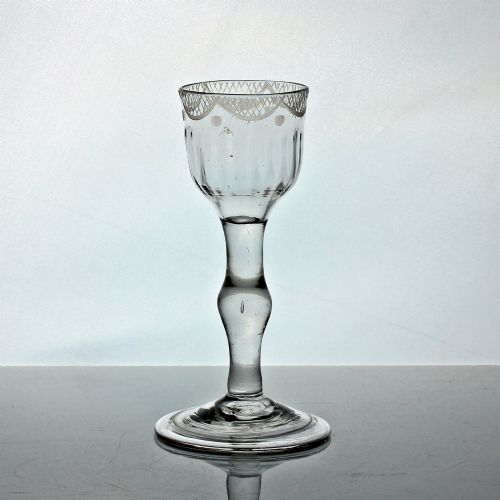


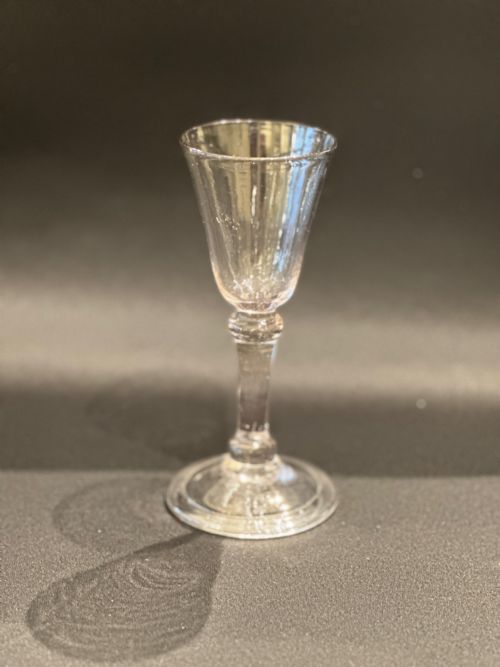
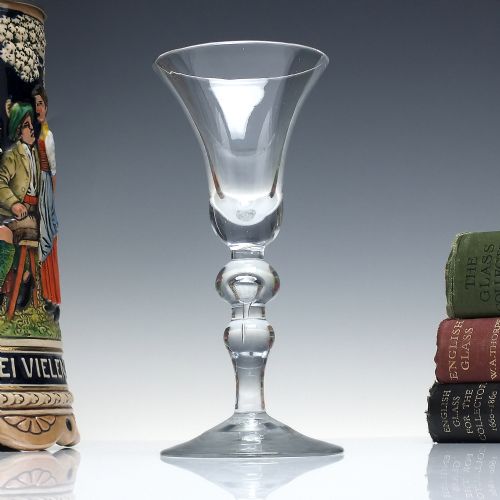
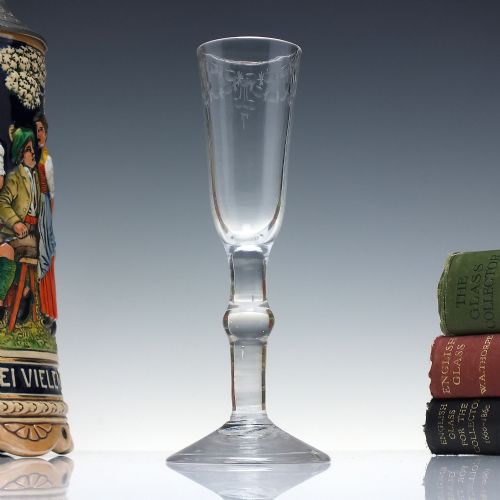

Balustroid Stem Wine Glass
These balustroid stem wine glass examples are eighteenth-century English drinking vessels valued for their distinctive stems and Georgian period craftsmanship.
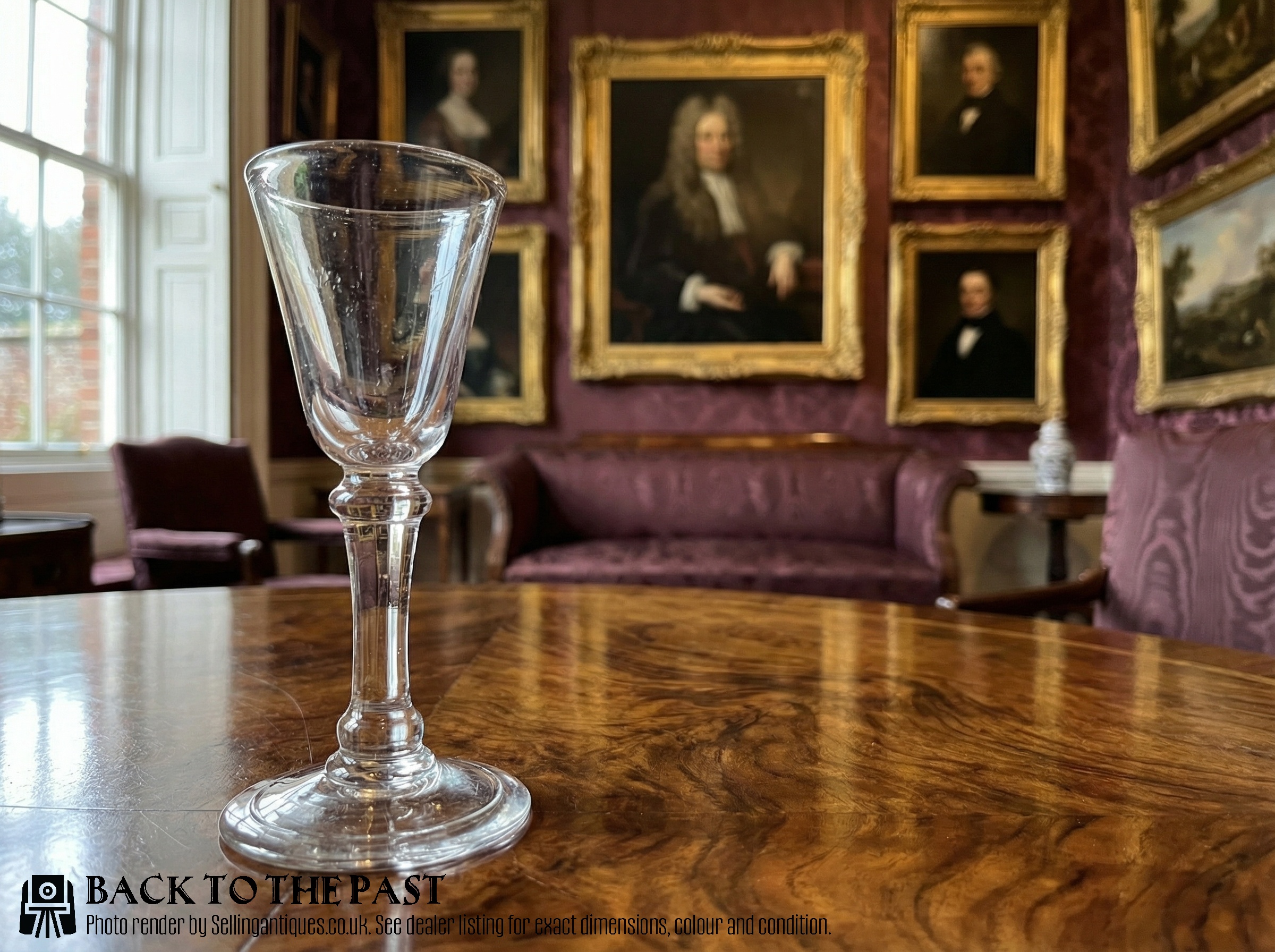
Balustroid Stem Wine Glass
When you search for balustroid stem wine glass, you find eighteenth-century Georgian drinking vessels made in England. The pieces take the form of stemware and wine glasses, including slender and ratafia variations.
You are most likely to meet Georgian examples from the decades around seventeen-forty on this page. These drinking glasses feature distinctive stems bridging the foot and the bowl.
The objects recorded here belong firmly to the eighteenth century, spanning periods from George II onwards. They represent domestic glassware utilised during the Georgian era.
How they were made
The makers worked primarily with lead glass, lead crystal, flint glass, and clear glass. These materials provided the substance and clarity required for eighteenth-century stemware.
Hot-glass techniques shaped the bowls, stems, and feet of each drinking glass, sometimes incorporating a domed foot or a hollow stem. Artisans also applied surface decoration such as swag and tail engraving.
What varies in quality
Quality rests upon the proportion and form of the balustroid stem relative to the bowl and foot. Slender proportions and specialised shapes like the Kit Kat or ratafia elevate certain pieces.
The crispness of engraved decoration, such as swag and tail patterns, distinguishes finer examples from plain drinking glasses. The handling of the metal and the presence of a domed foot also contribute to the distinction.
The Balustroid Stem Wine Glass Glossary
- Balustroid stem
- A stem form intermediate between the heavy baluster and the later plain stem, typical of eighteenth-century English wine glasses. It retains thickened portions reminiscent of architectural balusters.
- Flint glass
- An early British term for high-quality lead glass containing potash and lead oxide. This heavier material increased refractive index and clarity.
- Ratafia glass
- A tall, narrow drinking glass designed for sweet cordials and liqueurs. These slender vessels appear during the mid eighteenth century.
- Domed foot
- A foot raised centrally into a dome shape before meeting the stem. This feature adds stability and visual presence to Georgian stemware.
- Kit Kat
- A specific proportion and style of wine glass associated with the early eighteenth century. These glasses often display slender profiles.
Balustroid Stem Wine Glass: Frequently Asked Questions
What is a balustroid stem wine glass?
A balustroid stem wine glass is an eighteenth-century English drinking vessel featuring a transitional stem style between a full baluster and a plain stem. These Georgian glasses showcase the heavy lead glass and flint glass manufacturing of the period.
They reflect the domestic dining habits of the seventeen-thirties and forties. Collectors prize them for their distinct silhouette and material weight.
How do I date a Georgian wine glass?
Dating relies on observing the form of the stem, the shape of the bowl, and the construction of the foot. Eighteenth-century pieces often exhibit specific traits like domed feet or hollow stems associated with decades like seventeen-forty.
Comparing the metal composition and engraving styles helps confirm the period. English glassware from this era displays characteristic tool marks and material density.
What were these glasses used for?
These vessels served wine and specialty drinks during formal dining and social occasions in the Georgian era. Specific forms accommodated different beverages, such as narrow glasses for ratafia.
Their substantial lead crystal construction made them durable for daily dining use. Today, collectors appreciate their historical function alongside their decorative appeal.
How should I display my wine glass?
Display these eighteenth-century glasses in stable cabinets away from direct sunlight and temperature fluctuations. Ensuring secure shelving protects the delicate lead glass and engraved surfaces.
Good lighting highlights the clarity of the clear glass and the details of the balustroid stem. Proper placement prevents accidental knocks while allowing clear visibility of the form.