


Baluster Leg Oak Table
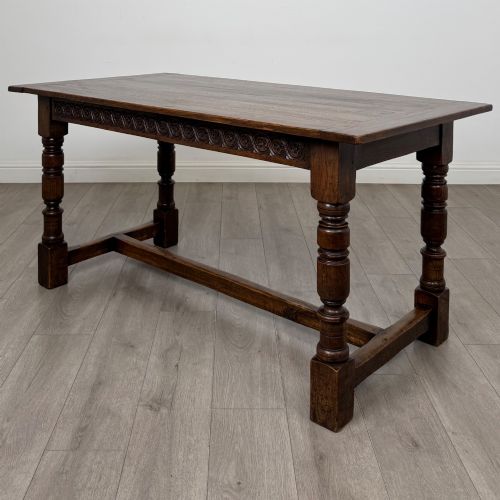
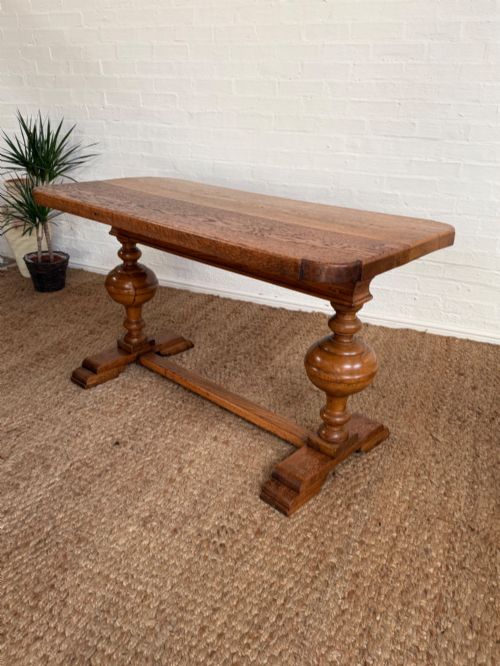
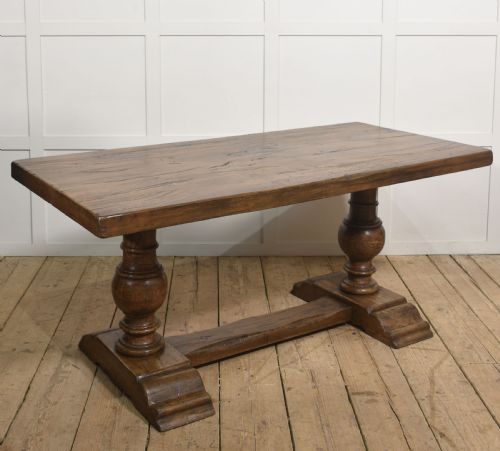
These baluster leg oak table examples bring sturdy character into a dining room through solid construction and turned supports.
Baluster Leg Oak Table
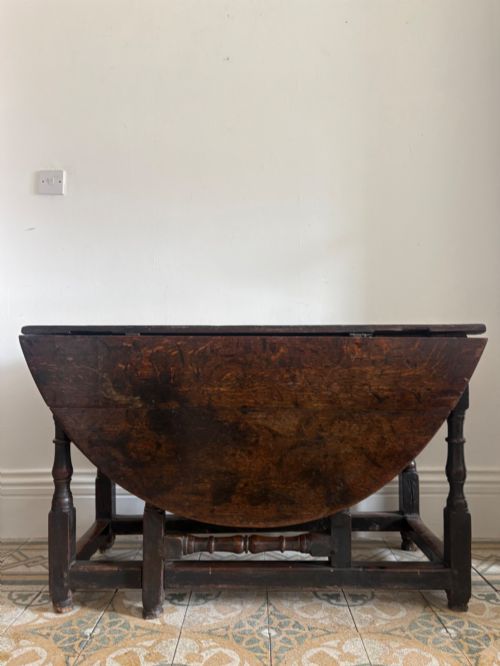
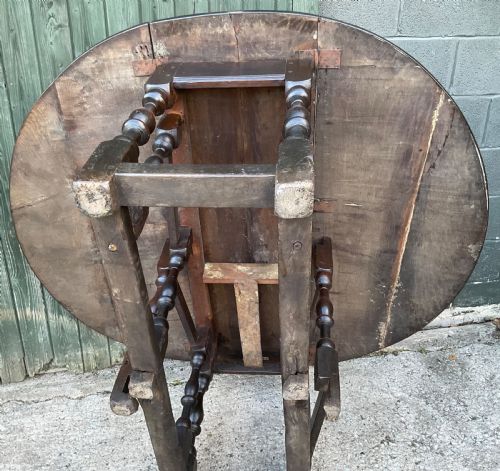
A baluster leg oak table centres around robust timber framing and distinctive turned supports, combining utility with historical weight. When you search for a baluster leg oak table, you encounter forms ranging from seventeenth-century gatelegs to twentieth-century refectory and farmhouse styles.
The pieces on this page span several centuries and revival movements, including Edwardian interpretations and Jacobean styles. Oak remains the consistent medium, whether finished as solid oak, scrubbed oak, or bleached oak.
Dining tables and refectory forms dominate the selection, offering substantial surfaces designed for communal gathering. Buyers frequently meet pieces that balance seventeenth-century architectural motifs with later domestic adaptations.
Materials and construction methods
Makers utilised solid oak to build frames capable of withstanding heavy daily use. Turning lathes shaped the characteristic baluster legs from square stock, producing symmetrical supports that anchored the heavy plank tops.
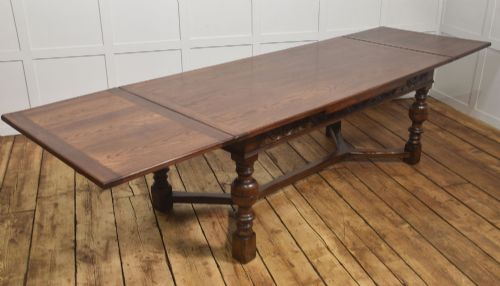
Joinery methods relied on traditional pegged mortise and tenon joints to secure the underframe. Gateleg mechanisms and draw-leaf expansions required precise hinge work and sliding timber supports to allow surface extension.
Listings feature oak tables spanning the seventeenth century, the Edwardian era, and the early decades of the twentieth century.
Distinctions in craftsmanship
Quality separates pieces by the selection of timber grain and the precision of the turned baluster legs. Superior examples display balanced proportions between the heavy top and the supporting underframe, with harmonious patination across the oak surfaces.
The integrity of the original construction dictates lasting value, distinguishing tables with period-appropriate pegged joints from later assembled alternatives. Surface treatments also vary, from naturally aged scrubbed oak to deliberate revival finishes.
The Baluster Leg Oak Table Glossary
- Baluster
- A vertical architectural support with a swelling contour, turned on a lathe to form the legs of these tables.
- Refectory table
- A long, narrow dining table traditionally used in monastic or institutional dining halls and adapted for domestic spaces.
- Gateleg table
- A table featuring hinged leaves supported by swing-out legs that pivot like a gate to hold the surface open.
- Jacobean style
- A design aesthetic reflecting the early seventeenth-century period, characterised by dark oak, geometric moulding, and heavy turned supports.
- Bleached oak
- Timber treated to lighten its natural tone, a finish seen on several farmhouse and refectory pieces in this selection.
Baluster Leg Oak Table: Frequently Asked Questions
What is a baluster leg?
A baluster leg is a turned wooden support featuring a rounded, swelling profile created on a lathe.
It provides sturdy structural support while adding decorative architectural detail to the table frame.
How do I date an oak table?
Dating relies on examining the joinery methods, tool marks, and hardware integrated into the construction.
Period pieces show hand-cut peg joints and natural timber ageing that differ significantly from twentieth-century revival interpretations.
Are these tables suitable for daily use?
Solid oak construction and robust baluster frames make these tables exceptionally durable for everyday dining.
Their heavy timber surfaces handle regular family meals while developing a richer patina over time.
What is the difference between refectory and gateleg tables?
Refectory tables feature fixed, long rectangular tops supported by permanent underframes and heavy legs.
Gateleg tables incorporate drop leaves and pivoting legs that fold away to save space when not in use.