
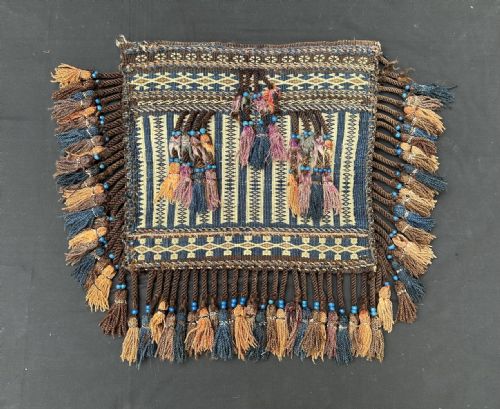
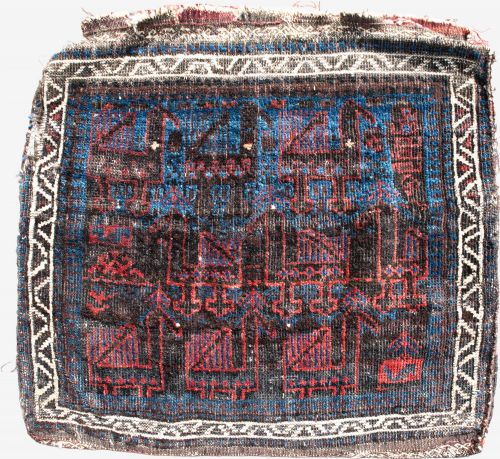


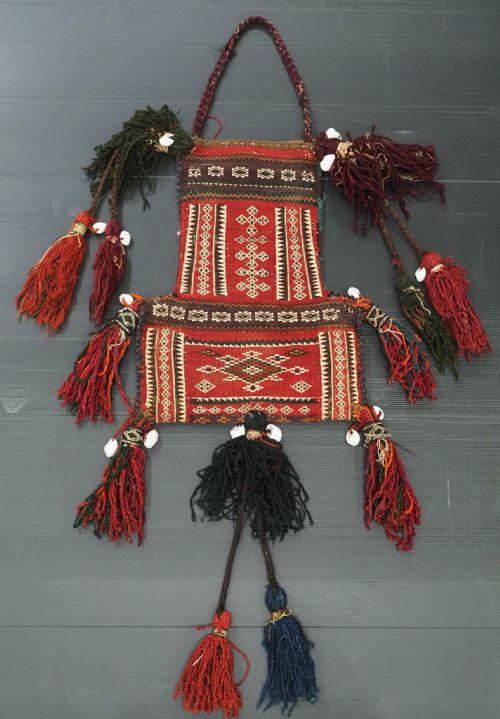


Baluch Tribal Wall Hanging
These baluch tribal wall hanging pieces bring rich nomadic textiles directly onto the modern interior wall.
Baluch Tribal Wall Hanging
A baluch tribal wall hanging originates from nomadic and semi-nomadic groups across regions such as South-West Afghanistan, North-East Persia, and Western Afghanistan. When searching for a baluch tribal wall hanging, collectors encounter diverse utilitarian forms adapted for display, including storage bags, vanity bags, eating cloths, grain bags, and saddle bag faces.
The objects span production dates from the late nineteenth century through to the early twentieth century, specifically representing periods around 1880, 1890, 1900, 1910, and 1920. Pieces such as bird bags, salt bags, prayer rugs, and pushti faces transition naturally from functional tribal items into decorative wall textiles.
Specific tribal attributions frequently appear among these pieces, highlighting groups like the Salar Khani tribe, the Timuri nomads, and the Zaggar Mengal Baluch nomads. These origins ground each textile in distinct regional aesthetics, ranging from Sistan weaves to Khorassan province craftsmanship.
Materials and construction
Makers utilised wool, cotton, and goat hair as the foundational textile elements, often incorporating natural dyes to achieve deep regional colour palettes. Supplementary materials such as glass beads and cowrie shells occasionally embellish the surfaces of specific bags.
Construction techniques vary from plain weave backs and banded weft work designs to detailed pile structures on pushti faces and prayer rugs. Surviving pieces often retain original backs, demonstrating durable utilitarian building methods intended for nomadic survival.
Salt bags served vital nomadic functions, yet many survivors retain playful animal motifs and shell fringes designed to ward off the evil eye.
Quality factors in tribal textiles
The integrity of the structural weave and the preservation of original components, such as full backs and decorative fringes, distinguish finer examples. Clarity in specific regional designs, including Herati motifs or tile patterns, adds to the visual impact.
The vibrancy and condition of natural dyes play a substantial role in visual appeal, alongside the intricacy of secondary elements like beadwork or shell ornamentation.
The Baluch Tribal Wall Hanging Glossary
- Sofreh
- A spreading cloth or dining cloth used for meals or dough preparation within nomadic households. These flatwoven textiles display striking geometric layouts.
- Pushti
- A small rug or mat intended for floor placement or sitting, often featuring finely knotted pile work. Their compact size suits vertical wall display.
- Namakdan
- A specialised salt bag woven by nomadic groups to store rock salt for livestock and household use. They typically possess a distinctive bottleneck shape.
- Herati
- A classic repeating floral and geometric pattern common in Persian and tribal weaving. It centres on a floral head framed by leaf motifs.
- Balisht
- A traditional nomadic pillow or bolster face utilised for domestic comfort. These smaller formats translate well into compact decorative wall hangings.
Baluch Tribal Wall Hanging: Frequently Asked Questions
How do I hang a textile safely?
Mounting heavy wool and goat hair pieces requires distributing the weight evenly across a custom wooden batten or mounting sleeve. Stitching a cotton support casing to the reverse prevents distortion over time.
Avoid direct puncture from nails or clips, as these methods strain the antique fibres and accelerate wear in specific spots.
Where were these bags originally made?
The pieces originate from nomadic and semi-nomadic groups inhabiting South-West Afghanistan, North-East Persia, and Western Afghanistan. Khorassan province and Sistan represent primary regions for these woven works.
Specific tribes like the Salar Khani and Zaggar Mengal produced distinct regional variations in their storage bags and eating cloths.
What period do these items date from?
The available examples span from the late nineteenth century through to the early decades of the twentieth century, specifically around 1880, 1890, 1900, 1910, and 1920.
Production during this timeframe reflects traditional nomadic methods before synthetic dyes became widespread in the region.
How do I clean an antique textile?
Gentle surface dust removal using a soft brush or low-suction vacuum through a mesh screen preserves the delicate wool and natural fibres. Professional textile conservators should handle deep washing to prevent dye bleeding.
Water exposure can destabilise older natural dyes and shrink cotton foundations if not managed by an experienced specialist.